
 WhatsApp
Expert Diagnosis and Treatment of Spinal Curvatures
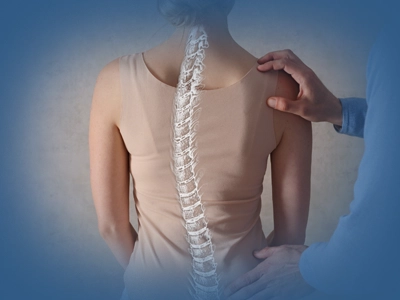
The Scoliosis and Spine Center works as an advanced centre that assesses, treats and monitors the structural curvatures and disorders of the spine over the long term with a dedicated approach. It covers scoliosis, kyphosis and degenerative spinal diseases in all age groups, from childhood to adulthood. At the Academic Hospital Scoliosis and Spine Center, a treatment protocol specific to each patient is established together with the neurosurgery, radiology and rehabilitation teams.
Contents
What Is the Scoliosis and Spine Center?
The Scoliosis and Spine Center is a multidisciplinary treatment unit that addresses lateral and rotational curvatures of the spine as well as other structural disorders. Unlike standard orthopaedic units, it focuses solely on spinal pathologies; in this way the pathway from diagnosis to treatment is managed with deeper expertise in spine surgery, physiotherapy and imaging. The centre offers an uninterrupted treatment pathway that extends from the early stage of the disease to advanced surgery.
Which Spinal Disorders Are Treated?
The centre covers all subtypes of spinal curvature and the accompanying nerve pathologies.
Subtypes of Scoliosis
- Adolescent idiopathic scoliosis: the most common type of scoliosis, whose cause is not fully known, appearing during adolescence between the ages of 10 and 18 and tending to progress more rapidly in girls in particular
- Adult idiopathic scoliosis: an adult type of curvature that either went unrecognised during adolescence and progressed, or worsened again through degeneration
- Congenital scoliosis: curvature caused by structural anomalies of the spine present from birth, such as hemivertebra or fusion defects
- Neuromuscular scoliosis: curvature developing secondary to neurological and muscular diseases such as cerebral palsy, spinal muscular atrophy or muscular dystrophy; it usually progresses more rapidly
- Degenerative adult scoliosis: curvature arising from age-related wear of the spinal discs and joints, which may lead to low back pain and leg pain
Other Spinal Disorders
- Kyphosis (hunchback): excessive forward curvature of the spine; postural kyphosis, Scheuermann kyphosis and congenital kyphosis
- Lumbar degenerative diseases: disc herniation (lumbar disc hernia), spinal stenosis (narrowing of the spinal canal), spondylolisthesis (slippage of a lumbar vertebra)
- Spinal fractures: osteoporotic fractures (wedge fractures), traumatic spinal fractures and compression (collapse) fractures
- Cervical (neck) disorders: cervical disc herniation and cervical canal stenosis
When Should You Consult Us?
The findings below are signs that require assessment and are reasons to consult the Scoliosis and Spine Center.
- The shoulders, hip bones or shoulder blades appearing at different heights from one another
- A marked prominence in the back or the low back on bending forward (the finding of the Adams test)
- Asymmetry in a child's body posture or a change in the way clothes fit
- Chronic low back or back pain, or pain radiating into the leg (sciatica-like pain)
- Difficulty walking, numbness or weakness in the legs
- Loss of height or a marked change in posture (in adults)
- Follow-up during a growth spurt in children previously diagnosed with scoliosis
Emergency: sudden weakness in the legs, or leg pain together with incontinence of urine or stool or an inability to pass them, may indicate nerve compression; please go to the emergency department.
Diagnostic and Assessment Methods
In the diagnosis of scoliosis, imaging methods and clinical measurements are used together.
| Method | What it is used for |
|---|---|
| Mapping the curvature along the whole spine; the Cobb angle is measured on this image | |
| The standard measurement method showing the degree of the curvature; the basic parameter for the treatment decision | |
| Assessment of the neural structures, disc pathologies, and investigation of syringomyelia and tethered cord syndrome | |
| Detailed evaluation of the bone structure, imaging of congenital spinal anomalies, surgical planning | |
| Detection of rotational deformity on clinical examination | |
| Assessment of reflexes and of sensory and motor function | |
| Measurement of skeletal maturation (the Risser stage) in order to determine the risk of progression in adolescent scoliosis |
Treatment Approaches
The treatment of adolescent scoliosis (the adolescent period) is carried out through three main strategies according to the Cobb angle, the age of the patient and skeletal maturity.
Observation and Follow-up (Cobb Angle Below 25°)
In children whose curvature is below 25° and whose skeletal growth is not yet complete, regular follow-up is applied instead of active treatment. Clinical and radiological check-ups are carried out every 4 to 6 months in order to monitor the rate of progression of the curvature. During this period, exercise and posture training play a supporting role.
Brace Treatment (Cobb Angle 25° to 45°)
In adolescent patients who are still growing and whose Cobb angle is between 25° and 45°, brace treatment is the primary option for preventing the curvature from progressing. The brace is worn for 16 to 23 hours a day and is generally continued until skeletal growth is complete. Different brace types such as the Boston, Milwaukee and Charleston braces are selected according to the location of the curvature.
Surgical Treatment (Cobb Angle Above 45° or Rapid Progression)
Surgical assessment is carried out in curvatures that have exceeded 45°, that are progressing rapidly or that affect the cardiopulmonary system.
| Surgical method | Scope and application |
|---|---|
| Metal rod and screw systems that correct and stabilise the spine; the most frequently performed scoliosis operation | |
| Modern surgical techniques performed through smaller incisions that reduce muscle damage; in suitable patients they allow faster recovery | |
| Adjustable implant systems that control the curvature in early onset scoliosis while allowing the spine to continue growing | |
| Realignment of the spine in advanced Scheuermann kyphosis or congenital kyphosis | |
| Partial restoration of the height of the fracture through minimally invasive cement injection in osteoporotic compression fractures in elderly patients |
Book an appointment with the Academic Hospital Scoliosis and Spine Center.
Book an AppointmentThe Scoliosis and Spine Center at Academic Hospital
At the Academic Hospital Scoliosis and Spine Center, measurement of the curvature, brace planning, the surgical decision and postoperative rehabilitation are all carried out under one roof. Separate follow-up protocols are applied for paediatric and adult patients. The centre works routinely with the following departments:
- Orthopaedics and Traumatology: assessment of skeletal problems outside the spine and of accompanying deformities
- Physical Medicine and Rehabilitation: exercise and posture programmes, postoperative rehabilitation
- Neurosurgery: joint surgical planning in cases with compression of the spinal cord or a nerve root
- Radiology: full-length spine radiography and spinal MRI and CT examinations
- Neurology: diagnosis and monitoring in curvatures secondary to neuromuscular diseases
- Anaesthesia and Reanimation: anaesthesia management in spine surgery and postoperative pain control
Frequently Asked Questions
References
The general information given on this page about spinal curvatures, diagnostic criteria and treatment thresholds is supported by the reliable health sources listed below.
- Scoliosis Research Society, "Patient Information and Clinical Guidelines", srs.org
- AO Foundation (AO Spine), "Spine Deformities: Scoliosis and Kyphosis", aofoundation.org
- American Academy of Orthopaedic Surgeons, "Idiopathic Scoliosis in Children and Adolescents", orthoinfo.aaos.org
The information on this page is for general information only; it does not replace medical examination, diagnosis or treatment. Please consult a healthcare institution regarding your symptoms.