
 WhatsApp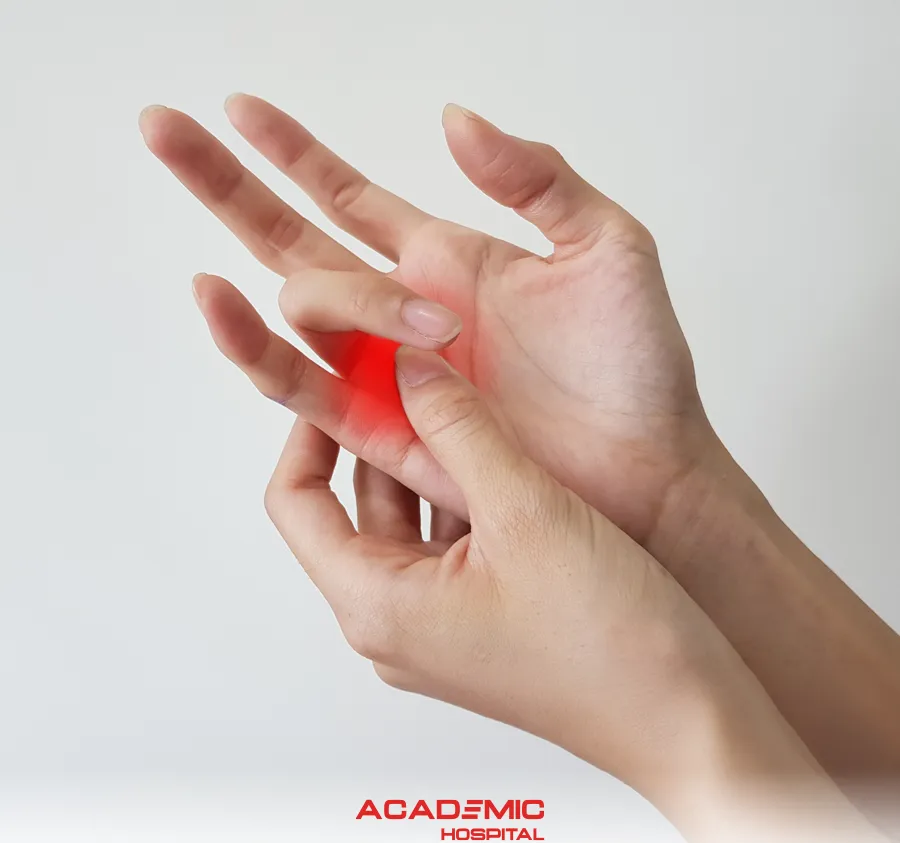
What Is Trigger Finger? Symptoms, Causes and Treatment
Contents
What Is Trigger Finger?
Trigger finger, also known as stenosing tenosynovitis, occurs when a flexor tendon cannot glide smoothly through its tendon sheath, causing painful catching, clicking or locking of the affected digit.
When the thumb is affected, the condition may be called trigger thumb.
Mild cases may cause only clicking or tenderness, while more advanced cases can leave the finger locked in a flexed position.
How Does Trigger Finger Develop?
The flexor tendons travel through connective-tissue structures known as pulleys.
Trigger finger most commonly develops around the A1 pulley at the base of the affected digit.
Narrowing around the pulley or thickening of the tendon can prevent smooth tendon gliding. The tendon catches and then suddenly releases, producing the characteristic triggering sensation.
What Causes Trigger Finger?
In many patients, no single definite cause can be identified.
Increased friction between the tendon and tendon sheath, tendon thickening or narrowing around the A1 pulley can result in triggering.
Repeated forceful gripping may aggravate symptoms, but repetitive use should not be regarded as the definite cause in every case.
What Are the Risk Factors?
- Diabetes
- Rheumatoid arthritis and certain inflammatory disorders
- Middle and older age
- Certain activities involving repeated forceful gripping
- Previous trigger finger in another digit
What Are the Symptoms?
- Pain or tenderness at the base of the digit
- Clicking, catching or popping with movement
- Morning stiffness
- A tender nodule in the palm
- Locking in a bent position
- Needing the opposite hand to straighten the digit
- Reduced movement in advanced cases
How Is Trigger Finger Diagnosed?
Diagnosis can usually be made from the clinical history and physical examination.
MRI, X-ray or ultrasound is generally unnecessary in typical cases. Additional investigations may be considered when another condition is suspected.
How Is Trigger Finger Treated?
Treatment depends on symptom duration, severity, frequency of locking and impact on hand function.
Options may include activity modification, pain management, night splinting, controlled hand exercises, corticosteroid injection and surgical release when appropriate.
Corticosteroid Injection
Corticosteroid injection is a commonly used nonsurgical treatment for trigger finger.
The medication is administered around the A1 pulley and tendon sheath to reduce local swelling and improve tendon gliding.
It can reduce pain and triggering in many patients, although symptoms may persist or recur.
When Is Surgery Needed?
Surgical release may be considered when significant triggering or pain continues despite nonsurgical treatment, symptoms recur after injection, the digit remains locked or hand function is substantially impaired.
The aim is to release the A1 pulley, allowing the flexor tendon to glide more freely.
Open release and, in selected patients, percutaneous release techniques can be used.
Can Trigger Finger Be Prevented?
Because the exact cause is unknown in many patients, there is no single proven method that completely prevents trigger finger.
Reducing prolonged forceful gripping, taking breaks during repetitive hand tasks and modifying activities that aggravate symptoms may help some patients.
Not Every Trigger Finger Requires Surgery
Treatment can be tailored according to pain, frequency of triggering, locking and the effect on everyday hand function.
Frequently Asked Questions
References
- Academic Hospital. Trigger Finger
- Kuper G, et al. Comparative Effectiveness of Corticosteroid Injections for Trigger Finger
- Pathak SK, et al. Corticosteroid Injection for the Treatment of Trigger Finger