
 WhatsApp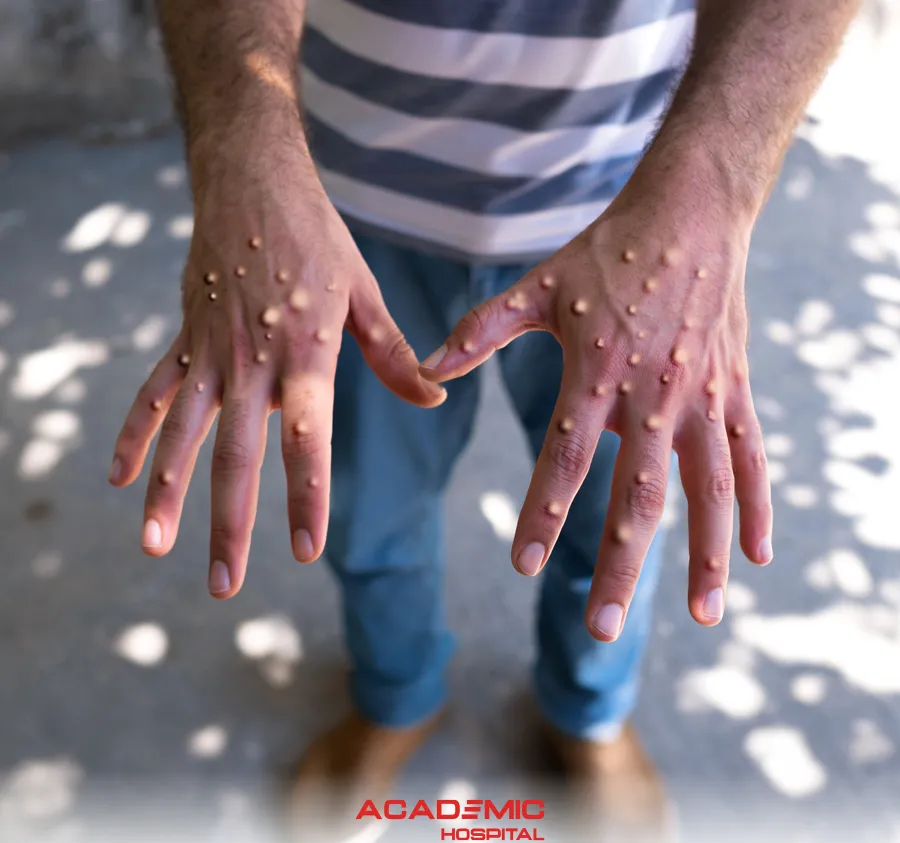
What Is Mpox? Symptoms, Transmission, Vaccination and Treatment
Contents
- What Is Mpox?
- What Are the Symptoms of Mpox?
- How Is Mpox Transmitted?
- What Is the Incubation Period?
- How Long Is Mpox Contagious?
- Who Is at Risk of Severe Disease?
- How Is Mpox Diagnosed?
- How Is Mpox Treated?
- Is There an Mpox Vaccine?
- How Long Should Someone With Mpox Isolate?
- How Can Mpox Be Prevented?
- Mpox vs Chickenpox
- Mpox vs COVID-19
- When Should You Seek Medical Care?
- Frequently Asked Questions
What Is Mpox?
Mpox, previously known as monkeypox, is an infectious disease caused by monkeypox virus (MPXV), an Orthopoxvirus in the Poxviridae family.
The virus was first identified in monkeys kept for research in 1958. The first recognised human case was reported in the Democratic Republic of the Congo in 1970.
Its natural animal reservoir has not been definitively established, although several small mammals are susceptible to infection.
Monkeypox virus is divided into:
- Clade I: including subclades Ia and Ib
- Clade II: including subclades IIa and IIb
The international outbreak that began in 2022 was primarily associated with clade IIb, while outbreaks involving clade I have also subsequently occurred.
What Are the Symptoms of Mpox?
Symptoms vary between individuals and may include:
- Skin rash or mucosal lesions
- Fever
- Headache
- Muscle aches
- Back pain
- Sore throat
- Low energy
- Swollen lymph nodes
For some people the rash is the first symptom.
Lesions can occur on the face, hands, feet, mouth, throat, genitals and around the anus. Some people develop only one or a few lesions.
Genital or anal disease may be associated with severe pain, proctitis, painful urination or painful bowel movements.
How Is Mpox Transmitted?
Mpox spreads mainly through close contact with an infected person.
Transmission can occur through:
- Direct contact with skin or mucosal lesions
- Skin-to-skin contact
- Close physical contact including sexual contact
- Kissing and mouth-to-skin contact
- Respiratory particles during prolonged close face-to-face contact
- Contaminated clothing, bedding or other objects
The virus can also be passed during pregnancy or around the time of birth and can spread from infected animals to humans.
What Is the Incubation Period?
Symptoms often begin within approximately one week of exposure but may develop 1–21 days after exposure.
How Long Is Mpox Contagious?
People with mpox can transmit the infection during the symptomatic period.
They are generally considered potentially infectious until:
- All lesions have healed
- All scabs have fallen off
- A new layer of healthy skin has formed
Symptoms typically last about 2–4 weeks but can last longer in people with weakened immune systems.
Who Is at Risk of Severe Mpox?
Severe disease is more likely in:
- People with severe immunocompromise
- People with poorly controlled HIV
- Pregnant people
- Young children
Complications can include bacterial skin infection, pneumonia, eye involvement, encephalitis, myocarditis, sepsis and severe proctitis.
How Is Mpox Diagnosed?
Mpox can resemble chickenpox, herpes, syphilis, scabies and other skin conditions.
The preferred diagnostic method is PCR detection of viral DNA.
The best specimens are generally obtained directly from skin lesions, including lesion surfaces, fluid or crust material.
How Is Mpox Treated?
Most people recover with supportive care.
Treatment focuses on:
- Pain control
- Management of fever
- Maintaining hydration and nutrition
- Appropriate skin care
- Preventing and treating secondary infection
- Early recognition of complications
Are Antiviral Medicines Available?
Several antiviral therapies are being investigated.
Tecovirimat was originally developed for smallpox and may be made available in selected severe or high-risk mpox cases under specific regulatory programmes.
However, as of 2026, its clinical effectiveness against mpox has not been definitively established. Initial randomised trial data found that it was safe but did not significantly shorten the time to lesion resolution.
Is There an Mpox Vaccine?
Yes. Vaccines that provide protection against mpox are available.
Vaccination may be considered particularly for:
- People with a high risk of exposure
- Close contacts of confirmed cases
- Certain healthcare or laboratory workers with occupational exposure
- People at high epidemiological risk during an outbreak
Vaccination recommendations and availability vary between countries and according to current epidemiology.
Can the Vaccine Be Given After Exposure?
Yes. Post-exposure vaccination can be considered.
WHO recommends vaccination preferably within 4 days after exposure. In people who have not developed symptoms, vaccination may still be considered up to 14 days after exposure.
How Long Should Someone With Mpox Isolate?
There is no universal fixed 21-day isolation period for someone who has mpox.
People with mpox should follow medical and public-health advice and take precautions to reduce close contact while infectious.
They are generally considered potentially infectious until all lesions have healed, all scabs have fallen off and healthy new skin has formed underneath.
How Can Mpox Be Prevented?
- Avoid close skin contact with someone who has suspected or confirmed mpox.
- Avoid touching lesions directly.
- Do not share bedding, towels or clothing used by an infected person.
- Practise good hand hygiene.
- Use appropriate personal protective equipment when caring for someone with mpox.
- Consider vaccination if you are in a group for whom vaccination is recommended.
Condoms can reduce some risks associated with sexual activity but do not fully prevent mpox because the virus can spread through skin-to-skin contact outside the area covered by a condom.
What Is the Difference Between Mpox and Chickenpox?
Mpox and chickenpox are caused by completely different viruses.
Mpox is caused by monkeypox virus, an Orthopoxvirus, while chickenpox is caused by varicella-zoster virus.
Swollen lymph nodes and painful lesions can be more prominent in mpox. Chickenpox is frequently associated with intensely itchy lesions at different stages of development.
Clinical appearance alone may not always reliably distinguish the two infections, so laboratory testing may be required.
What Is the Difference Between Mpox and COVID-19?
Mpox and COVID-19 are caused by different viruses and have different dominant routes of transmission.
COVID-19 is primarily a respiratory infection caused by SARS-CoV-2, while mpox predominantly spreads through close physical contact, infectious skin or mucosal lesions and contaminated materials.
Skin and mucosal lesions are characteristic of mpox, whereas COVID-19 is generally dominated by respiratory and systemic symptoms.
When Should You Seek Medical Care?
Clinical assessment is appropriate if new skin or mucosal lesions compatible with mpox develop following a relevant exposure.
Eye lesions or visual changes, severe pain, breathing difficulty, altered consciousness, rapidly worsening widespread lesions, severe dehydration or severe immunocompromise warrant more urgent medical assessment.
Have Possible Mpox Symptoms Assessed
If you have suspicious skin lesions, fever or a relevant mpox exposure, clinical assessment and appropriate PCR testing can be planned.
Frequently Asked Questions
References
- Academic Hospital. Mpox / Monkeypox
- World Health Organization. Mpox – Fact Sheet
- World Health Organization. Mpox
- European Centre for Disease Prevention and Control. Factsheet for Health Professionals on Mpox
- Centers for Disease Control and Prevention. Clinical Care of Mpox
- Centers for Disease Control and Prevention. Vaccine Considerations for Mpox