
 WhatsApp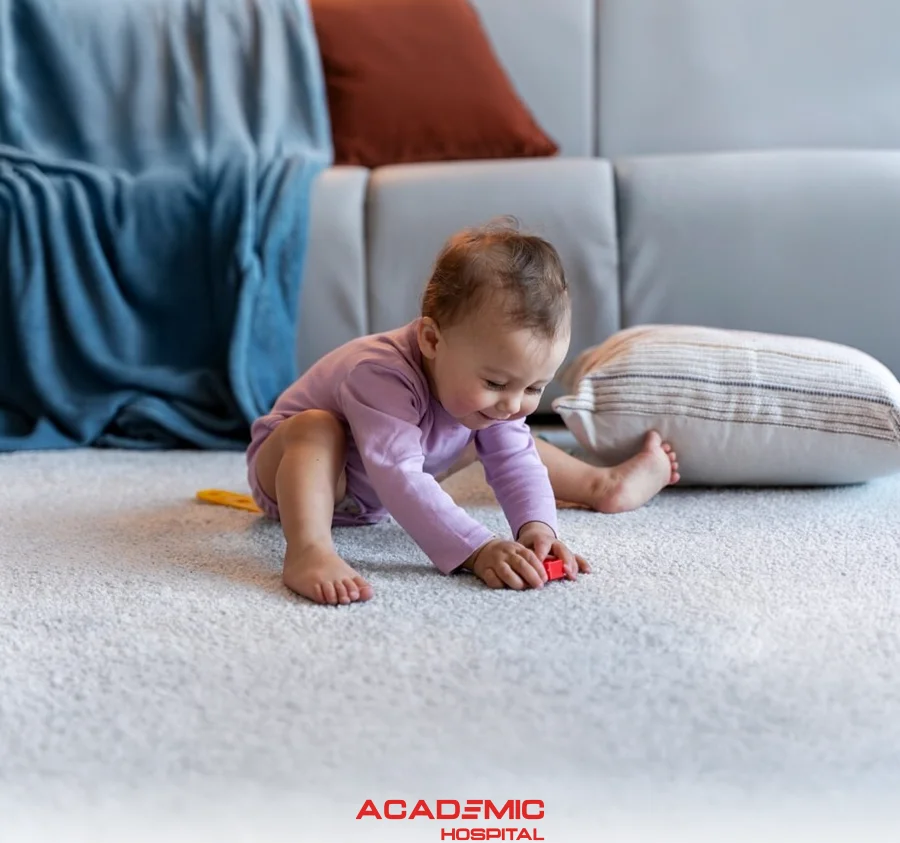
Foreign Body Ingestion in Babies and Children
Contents
- Sucking Reflex and Foreign Body Ingestion Risks in Babies
- Swallowing Harmful Liquid Substances
- Swallowing Harmful Liquids: What Are the Treatment Methods in Babies and Children?
- Swallowing Harmful Solid Objects
- What Are the Diagnostic Methods for Solid Object Ingestion in Babies and Children?
- Solid Object Ingestion: What Are the Treatment Methods in Babies and Children?
- How Can You Tell If a Child or Baby Has Swallowed a Foreign Object?
- Baby and Child Safety: What Precautions Should Be Taken?
- When Should You Seek Emergency Care?
- Frequently Asked Questions
- References
Foreign body ingestion in babies and children is a situation that may occur at home and may require urgent medical evaluation in some cases. Small toy parts, button batteries, magnets, coins, safety pins and cleaning products may pose serious risks for children.
Emergency warning:
- If a child has swallowed a button battery, magnet, sharp object or chemical substance, seek medical care without delay.
- Do not try to make the child vomit; especially after caustic chemical or sharp object ingestion, this may worsen injury.
- Call emergency services if there is difficulty breathing, bluish discoloration, altered consciousness, continuous drooling or inability to swallow.
Sucking Reflex and Foreign Body Ingestion Risks in Babies
From the moment they are born, babies tend to bring objects around them to their mouths through the sucking reflex. This natural reflex supports feeding and helps them receive the necessary nutrients from the mother's breast.
Although skills such as intelligence, walking, sitting and speaking are not yet developed, the sucking reflex is present from birth. During crawling and walking periods, babies begin to put small objects on carpets and floors into their mouths. During this period, dangerous situations increase because babies may unknowingly swallow small objects.
Swallowed or ingested harmful substances can be examined in two groups: chemical substances and hard foreign objects.
You can book an appointment for expert evaluation if foreign body ingestion is suspected in a child.
Book an AppointmentSwallowing Harmful Liquid Substances
Many liquid substances found in our homes may pose serious dangers, especially for babies. For example, dishwasher detergents, degreasers, bleach, kitchen and bathroom cleaning products, lime removers and similar chemicals are generally alkaline in nature and may have harmful effects. Although packaged and branded products may have a lower caustic effect, openly sold chemical cleaning products may be more harmful to human health.
Accidental ingestion of chemicals used in painting and painting-related work is another common situation. Paint and thinner-like irritating and tissue-burning liquids are toxic substances due to their chemical structure. These poisons may produce effects in a short time, or they may cause slow and chronic damage to organs such as the brain, nervous system, liver and kidneys due to the absorption of substances such as lead.
Substances that babies and children can easily reach at home and that are found in attractive packaging may cause serious health problems if accidentally ingested. These harmful substances may cause burns in the esophagus and stomach. Burns, inflammation and mucosal damage may lead to narrowing of the esophagus days or weeks after the harmful liquid is swallowed. This may cause persistent vomiting and feeding problems in the baby.
What not to do after chemical ingestion:
- Do not try to make the child vomit.
- Do not give milk, yogurt, lemon, vinegar or similar products without medical advice.
- If possible, take the product packaging to the healthcare facility.
Swallowing Harmful Liquids: What Are the Treatment Methods in Babies and Children?
Endoscopic examination helps determine the degree of burn and damage. The main treatment is stopping oral feeding and administering various medications intravenously in serum. X-rays are taken to investigate disorders in the lungs and digestive system. Although treatment of narrowing caused by esophageal burns is highly successful, in severe strictures the widening of the esophagus, called dilation, may need to be performed several times. Today, thanks to developments in Pediatric Gastroenterology, all these treatment methods can be applied easily.
Swallowing Harmful Solid Objects
Coins, small toy parts, LEGO pieces, nails, screws, keys and pens are frequently swallowed by children.
Swallowed objects may become stuck in the esophagus or may progress to the stomach. Solid objects that reach the stomach may begin to cause harm under the effect of stomach acid and enzymes if they cannot pass through the stomach outlet. In particular, chemically containing objects such as watch batteries may open under the effect of stomach acid and leak toxic substances, which can cause serious poisoning and organ perforation.
Plastic and metal objects do not create an immediate danger if they are not sharp or penetrating. However, gold charms, amulets and safety pins attached to babies by families also pose a danger. Thanks to the sucking reflex, babies may open these pins with their mouths and swallow them. An open pin may pierce the esophagus or stomach and cause serious injuries. Therefore, for baby and child safety, families should be careful at home and keep small and dangerous objects out of children's reach.
What Are the Diagnostic Methods for Solid Object Ingestion in Babies and Children?
The easiest diagnostic method is radiological examination of the baby. Metal objects can easily be seen on X-ray. However, since plastic, fabric or soft objects are not visible on X-ray, they are found with the help of fiber optic instruments called endoscopes.
Solid Object Ingestion: What Are the Treatment Methods in Babies and Children?
Hard and sharp objects should never be removed by inducing vomiting. A safety pin is one of the riskiest objects in this regard. With a device called an endoscope, it is possible to reach the foreign body within a few minutes even in newborn babies and remove it without harming the body.
How Can You Tell If a Child or Baby Has Swallowed a Foreign Object?
Although symptoms vary depending on where the substance is stuck, coughing and continuous drooling should usually attract the mother's attention. If there is pressure on the airway, difficulty breathing and bluish discoloration may also be added to the picture. Objects that remain in the esophagus or stomach for a while may later cause abdominal pain. The baby may refuse feeding. By causing damage and inflammation in the surrounding tissue, the object may also cause organ perforation and symptoms such as fever.
Baby and Child Safety: What Precautions Should Be Taken?
We should be aware that substances we use every day and keep within reach may pose a major danger for our babies and children. If these substances are accidentally swallowed, serious injuries, burns and chemical poisoning may occur in vital organs such as the esophagus and stomach.
As families, we should minimize dangers at home to ensure our children's safety, keep harmful substances out of their reach and keep them under continuous supervision. Storing small household items, keeping cleaning products in locked cabinets and preventing contact with potentially dangerous substances are among the most basic precautions that can be taken to protect the health of babies and children.
When Should You Seek Emergency Care?
If the type of object is unknown, if the child has symptoms or if a high-risk substance is involved, waiting at home is not appropriate when foreign body or harmful substance ingestion is suspected. Rapid medical evaluation is especially important in cases of button battery, magnet, sharp object, chemical substance or medication ingestion.
Symptoms that require urgent medical evaluation:
- Difficulty breathing, bluish discoloration or wheezing
- Inability to swallow, continuous drooling or a feeling of something stuck in the throat
- Bloody vomiting, severe abdominal pain or chest pain
- Altered consciousness, excessive sleepiness or seizure
- Suspected ingestion of a button battery, magnet, sharp object, chemical substance or medication
Do You Suspect Foreign Body Ingestion in Your Child?
You can book an appointment with Academic Hospital Pediatrics specialists for evaluation. If emergency symptoms are present, call emergency medical services or go to the nearest emergency department without delay.
Frequently Asked Questions
References
The information in this article about foreign body ingestion, button batteries, caustic ingestion and child safety is supported by the following authoritative health sources.
- NASPGHAN, "Management of Ingested Foreign Bodies in Children", naspghan.org
- The Royal Children's Hospital Melbourne, "Foreign Body Ingestion", rch.org.au
- The Royal Children's Hospital Melbourne, "Corrosives - Caustic Poisoning", rch.org.au
- National Capital Poison Center, "Button Battery Ingestion Triage and Treatment Guideline", poison.org
- NHS, "Poisoning", nhs.uk