

 WhatsApp
Diagnosis and Treatment of Benign Prostatic Hyperplasia, Prostate Cancer and Prostatitis
Academic Hospital carries out the diagnosis, treatment and follow-up of all prostate conditions, including benign prostatic hyperplasia, prostate cancer, prostatitis and prostatic cysts. It offers a broad range of services extending from PSA assessment to robot-assisted surgery and adopts a holistic, personalised approach for every patient. Where necessary, work is coordinated with the urology, medical oncology and radiation oncology units.
Contents
What Are Prostate Diseases?
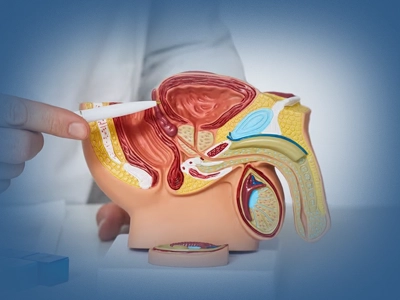
The prostate gland is a small organ located just below the bladder in men and surrounding the urethra. The Prostate Diseases unit is a urological subspecialty service that identifies and treats both benign enlargement and cancer processes of this gland, as well as its inflammatory conditions and cystic changes. The unit brings together early diagnosis tests, advanced imaging methods and treatment options directed at different risk groups.
Which Diseases and Conditions Are Treated?
The unit manages prostate diseases at first hand across a broad spectrum, from benign prostatic enlargement to cancer and inflammatory conditions.
- Benign prostatic hyperplasia (BPH): Age-related enlargement of the gland that causes pressure at the bladder outlet
- Prostate cancer: Management at every stage, from early to advanced disease
- Acute prostatitis: Inflammation of the prostate with sudden onset of fever, pain and difficulty passing urine
- Chronic prostatitis and chronic pelvic pain syndrome: A picture accompanied by long-standing pain in the groin, perineum or lower abdomen
- Prostatic cyst: Management of fluid-filled structures forming within the prostate and of their complications
- Investigation of a raised PSA value: Including PSA elevations arising from causes other than cancer
When Should You Consult Us?
- Waiting a long time at the toilet, a weak or intermittent urinary stream
- Waking more than twice a night to pass urine (nocturia)
- A renewed sense of urgency immediately after passing urine, a feeling that the bladder has not emptied completely
- Blood in the urine (haematuria): this finding must be assessed without delay
- Difficulty passing urine accompanied by pain in the groin, lower back or hip
- Sudden inability to pass urine (acute urinary retention): this requires emergency attention
- A PSA value found to be high at a routine check or rising rapidly
- Annual prostate screening in men aged 50 and over (from the age of 40 if a first-degree relative has a history of prostate cancer)
Diagnostic Methods
For an accurate diagnosis, a comprehensive assessment process is applied that extends from blood tests such as PSA to advanced imaging and tissue biopsy.
| Method | What it provides |
|---|---|
| Age-specific reference ranges, PSA density and PSA velocity are interpreted together | |
| Provides the first information about the size, consistency and shape of the prostate | |
| Measures the volume of the gland and images cystic and solid structures | |
| Allows suspicious foci to be mapped precisely before biopsy; helps to avoid unnecessary biopsies | |
| Targeted tissue sampling with standard biopsy under TRUS guidance or with mpMRI-TRUS fusion biopsy | |
| Assesses the effect of BPH on the bladder |
Treatment Approaches
The choice of treatment is individualised according to the diagnosis, the severity of the symptoms, the prostate volume, kidney function and the general health of the patient.
Treatment of BPH (benign prostatic hyperplasia)
| Method | How it is applied |
|---|---|
| Restricting fluids in the evening, reducing caffeine, regular bladder emptying habits | |
| Improve urinary flow by relaxing the muscles of the urethra | |
| Provide long-term symptom control by shrinking the prostate gland | |
| Use of the two drug groups together in moderate to severe symptoms | |
| Minimally invasive methods that vaporise or remove prostate tissue through the urinary tract without a scrotal incision | |
| A catheter method that opens the urethra by retracting the prostate with implants rather than shrinking it | |
| A procedure that shrinks prostate tissue with water vapour and can be applied in an office setting | |
| Endoscopic surgery applied in patients who do not respond to drug therapy or who develop complications |
Treatment of prostate cancer
| Method | How it is applied |
|---|---|
| Close follow-up with PSA, MRI and biopsy in low-risk, slow-growing cancers; treatment is not started immediately | |
| Minimally invasive and precise surgery; short recovery time, high rate of preservation of continence and potency | |
| External radiation or brachytherapy (seed sources placed within the prostate) options | |
| Applied in advanced-stage or high-risk cases in addition to surgery or radiotherapy |
Treatment of prostatitis
| Condition | How it is applied |
|---|---|
| Antibiotic treatment and, where necessary, hospital admission | |
| A combination of long-term antibiotics, alpha blockers, pelvic floor physiotherapy and pain management |
Book an appointment for the diagnosis and treatment of prostate diseases.
Book an AppointmentProstate Diseases at Academic Hospital
At Academic Hospital, PSA assessment and screening for prostate enlargement and prostate cancer are carried out by our specialist urology team as part of the diagnosis and treatment of prostate diseases. The unit works routinely with the following departments:
- Urology: general assessment and surgical management of urinary tract and prostate conditions
- Urological Oncology: staging and surgical treatment planning in prostate cancer
- Medical Oncology: hormonal and systemic treatment management in advanced disease
- Radiology: multiparametric prostate MRI and fusion biopsy under imaging guidance
- Pathology: histopathological assessment of prostate biopsies and surgical materials
- Urinary Incontinence and Bladder Health: assessment of continence after prostate surgery
- Andrology: follow-up of sexual function and reproductive health after treatment
Frequently Asked Questions
The answers to the questions most frequently asked about prostate diseases are given below.
References
The general information given on this page about the diagnostic methods and treatment options for prostate diseases is supported by the reliable health sources listed below.
- European Association of Urology, "EAU Guidelines on Benign Prostatic Hyperplasia (Non-neurogenic Male LUTS)", uroweb.org
- National Cancer Institute, National Institutes of Health, "Prostate Cancer", cancer.gov
- Cornford P et al., "EAU-EANM-ESTRO-ESUR-SIOG Guidelines on Prostate Cancer", European Urology, pubmed.ncbi.nlm.nih.gov
The information on this page is for informational purposes only; it does not replace medical examination, diagnosis or treatment. Please consult a healthcare institution regarding your complaints.