
 WhatsApp
When Is Fever Dangerous in Children?
Contents
- What Is Normal Body Temperature in Children?
- When Does Fever Become Dangerous in Children?
- How Should Fever Be Measured Correctly?
- When Should Fever-Reducing Medicine Be Given to Children?
- Can Fever Cause Seizures? (The Truth About Febrile Seizures)
- When Should I Go to the Emergency Department?
- Frequently Asked Questions
- References
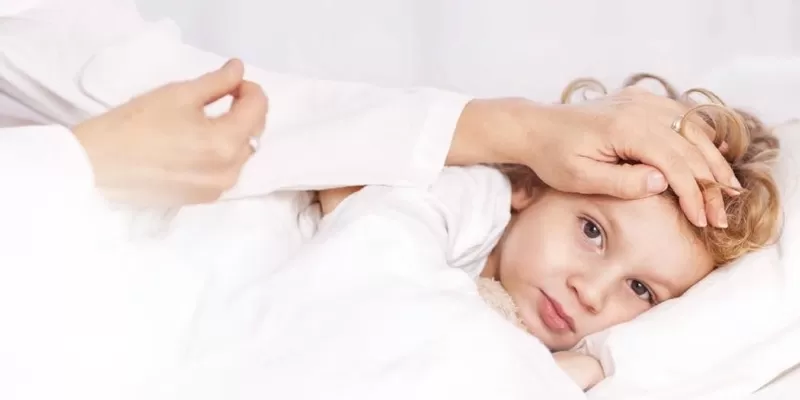
Fever is one of the most common health symptoms in childhood. But the critical point is this: Not every fever is dangerous. What determines the risk is not only the temperature; it is the duration of the fever, the child’s age, and the child’s general condition. Especially in infants and young children, fever may be the first and only sign of serious infections. Because the immune system is not fully developed, the risk can grow more rapidly.
What Is Normal Body Temperature in Children?
In a healthy child, normal body temperature varies depending on where it is measured:
- Armpit: 36.0 – 37.2 °C
- Oral: 36.5 – 37.5 °C
- Ear / forehead: 36.5 – 37.8 °C
Values above these ranges are considered fever. However, the number alone is not enough to make a decision.
What Temperature Is Considered High Fever?
Fever is generally classified as follows:
There is a critical fact here:
A child who is playing with a fever of 38.5 °C
may be at lower risk than a child who is weak and unresponsive with a fever of 37.8 °C.
Would you like to receive an expert assessment about your child’s fever and general condition?
Book an AppointmentWhen Does Fever Become Dangerous in Children?
If any of the following situations are present, waiting is not appropriate and medical evaluation is needed:
- Fever of 38 °C or higher in a baby younger than 3 months
- Fever lasting longer than 48–72 hours
- Fever that does not go down despite fever-reducing medicine
- Weakness, tendency to sleep, unresponsiveness
- Shortness of breath, rapid breathing, bluish discoloration
- Severe vomiting, diarrhea, or inability to take fluids
- Fever together with a rash
- Having a seizure
- Neck stiffness, severe headache
- Moaning, continuous crying, or change in consciousness
These symptoms point not so much to the fever itself, but to the cause of the fever. This is where the real danger lies.
Warning:
- If a baby younger than 3 months has a fever, a healthcare facility should be contacted without delay.
- If fever is accompanied by shortness of breath, altered consciousness, bluish discoloration, rash, or seizure, urgent evaluation is required.
What Are the Most Common Mistakes When Measuring Fever?
- Checking by hand
- Not placing the thermometer in full contact with the skin
- Measuring while the child is sweating
- Ending the measurement too early
- Comparing different measurement methods
These mistakes can cause fever to be evaluated falsely low or falsely high.
How Should Fever Be Measured Correctly?
To assess fever correctly, it must first be measured correctly. Incorrect measurement can cause unnecessary panic or dangerous delays.
Armpit Measurement: This is the most reliable method for babies and young children. The armpit should be dry, and the thermometer should be in full contact with the skin.
Ear Measurement: This is suitable for older children. It is fast, but if it is not placed at the correct angle, it can give misleading results.
Forehead (Non-contact) Measurement: It is practical and ideal for night measurements. The forehead should be dry. If measurement is taken from areas other than the forehead and temple region, the result may be misleading.
Oral and rectal measurement should be performed when considered necessary.
When Should Fever Measurement Be Repeated?
- If the first measurement is high
- If fever-reducing medicine has been given
- If the child’s general condition has changed
Measurement should be repeated after 30–60 minutes. Instead of measuring continuously, the child’s behavior and general condition should always be taken into account.
When Should Fever-Reducing Medicine Be Given to Children?
Fever-reducing medicines target the child’s discomfort, not the fever itself. In other words, the main question should be: “My child has a fever, but is my child well, or does my child have a fever and look unwell?”
Situations in which fever-reducing medicine should be given:
- If the child is restless, in pain, or unable to sleep
- If the fever is 38–38.5 °C or above
- If headache, sore throat, or muscle pain is present
- If feeding and fluid intake have clearly decreased
Can Fever Cause Seizures? (The Truth About Febrile Seizures)
Yes, fever can cause febrile seizures in some children. But this situation is not as common as assumed and does not happen with every fever. It may be triggered more often in children with a genetic predisposition or in children who have a history of febrile seizures in first-degree relatives. Every child who has a seizure must be evaluated by a doctor.
How Can You Tell If a Child Is Having a Seizure? (Symptoms of Febrile Seizure)
During a seizure, the following may be observed in the child:
- The body stiffening and relaxing (rhythmic or sudden)
- Involuntary contractions in the arms and legs
- Eyes rolling upward or staring at a fixed point
- Loss of consciousness or loss of contact with the surroundings
- Brief irregular breathing
- Drooling from the mouth
- Bluish discoloration or paleness
- Loss of urine or stool control (not always)
This episode usually lasts 1–3 minutes and often ends on its own.
What Should Be Done at Home for a Child With Fever?
The right steps that can be taken at home are simple but effective:
- Keep the child in light clothing
- Keep the room neither too hot nor too cold
- Give plenty of fluids (water, breast milk, appropriate fluids)
- Measure the fever using the correct method
- If necessary, use fever-reducing medicine at the dose recommended by the doctor
When Should I Go to the Emergency Department?
If any of the following symptoms are present, a healthcare facility should be contacted without delay:
- Fever in a baby younger than 3 months
- Shortness of breath with fever
- Confusion, continuous sleepiness
- Bluish discoloration, color change in the lips
- Seizure
- Severe vomiting, inability to take fluids
- Rash + fever together
Do Not Delay Your Child’s Fever Evaluation
You can contact Academic Hospital Pediatrics specialists for an evaluation.
Frequently Asked Questions
References
The general information in this article about fever in children, fever measurement, urgent warning signs, and febrile seizures is supported by the following reliable health sources.
- American Academy of Pediatrics / HealthyChildren.org, "Fever and Your Baby", healthychildren.org
- American Academy of Pediatrics / HealthyChildren.org, "Fever Without Fear: Information for Parents", healthychildren.org
- NHS, "High temperature (fever) in children", nhs.uk
- Mayo Clinic, "Fever: First aid", mayoclinic.org