
 WhatsApp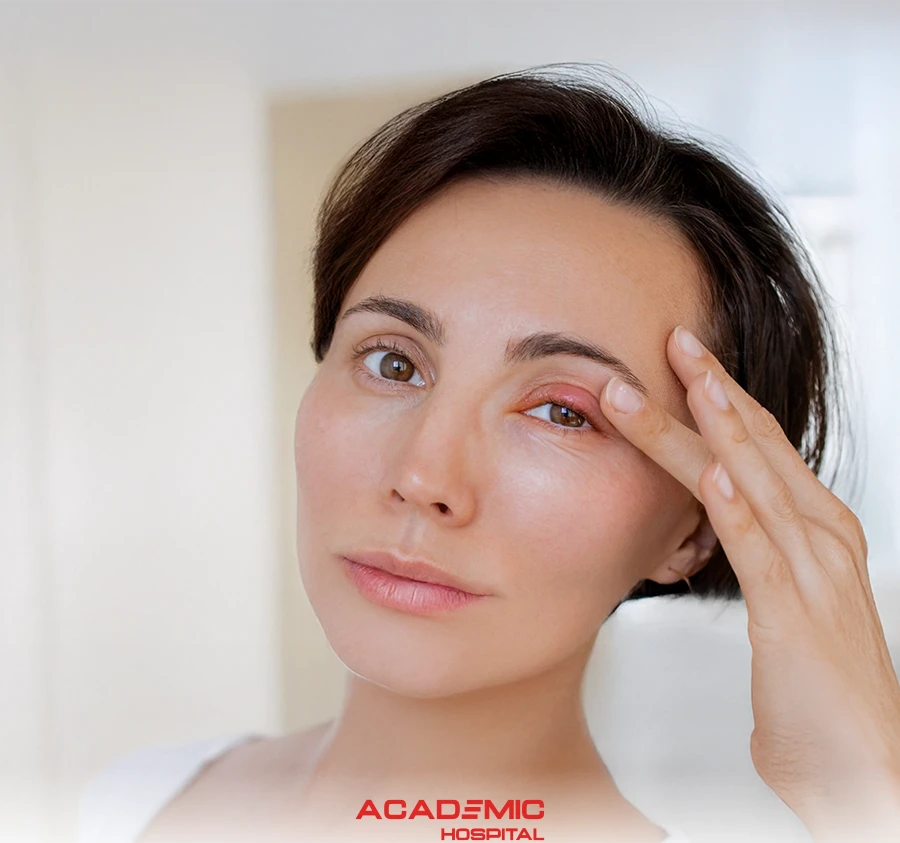
What Is a Stye? Symptoms, Causes and Treatment Methods
Contents
What Is a Stye?
A stye, medically called hordeolum, is a red, painful, pimple-like swelling that occurs when an oil gland in the eyelid becomes blocked and inflamed due to bacterial infection. It most commonly appears at the base of the eyelashes.
Why Does a Stye Occur?
A stye often occurs due to a combination of factors related to eye hygiene and immune function:
- Poor eye hygiene
- Makeup residue
- Touching the eye with dirty hands
- Stress, insomnia and fatigue
- Weakened immune system
- Oily skin or eyelid inflammation (blepharitis)
Regular eyelid hygiene and healthy lifestyle habits play an important role in helping prevent styes.
You can contact us for evaluation of painful eyelid swelling, redness or recurrent styes.
Book an AppointmentCan You Feel a Stye Developing? What Are the Symptoms?
A stye is usually easy to recognize because it often starts with mild pain, stinging and tenderness on the eyelid. Redness and swelling develop within a short time, followed by a small pus-filled bump.
- Redness and swelling of the eyelid
- Pain and tenderness that increase with touch
- Watery eye and stinging sensation
- Sensitivity to light
- Yellowish or white tip at the base of the eyelashes
- Discomfort when blinking or when pressure is applied to the eyelid
How Is a Stye Diagnosed?
A stye is diagnosed through a simple eye examination by an ophthalmologist. Redness, swelling and a painful nodule on the eyelid are usually sufficient for diagnosis. Additional testing is generally not required. The doctor examines the eyelid to distinguish a stye from other eyelid problems such as chalazion.
Are Stye and Chalazion the Same Thing?
A stye and chalazion are two different eyelid conditions. Although they may look similar, their causes, symptoms and treatment processes are different. A stye is infection-related and painful. A chalazion forms when an oil gland is blocked, and active infection is usually not the main feature. Therefore, the swelling is often firmer, painless, less red and longer-lasting.
| Feature | Stye | Chalazion |
|---|---|---|
| Cause | Usually bacterial infection | Blocked oil gland |
| Pain | Usually painful and tender | Usually painless |
| Course | May develop over a shorter time | May last longer |
Is a Stye Contagious?
A stye itself is not directly contagious; however, bacteria that contribute to infection may be transferred by contact. Shared towels, pillowcases, makeup products or hands may increase the risk of bacterial transfer.
Does a Stye Affect Only One Eye?
A stye usually appears on one eyelid. However, if risk factors are present or hygiene rules are not followed, styes may develop in both eyes. Having styes on two eyelids at the same time is uncommon but possible.
Can a Stye Go Away on Its Own?
Yes, a stye often goes away on its own. In many cases, the pus drains, swelling decreases and the eyelid returns to normal. However, if the pus does not drain completely or the duct remains blocked, the swelling may turn into a chalazion.
How Is Home Care for a Stye Done?
The most effective home-care method for a stye is applying a warm compress. Wetting a clean cloth with warm water and placing it on the eyelid 3–4 times a day for 5–10 minutes may help the pus drain more easily and reduce the risk of the stye turning into a chalazion. Frequent handwashing, avoiding touching the eye and not wearing eye makeup are important. Contact lenses should not be used until the stye improves.
When Should You See a Doctor for a Stye?
- If the stye lasts longer than one week
- If the swelling is very large and closes the eyelid
- If there is severe pain or vision disturbance
- If styes recur frequently
- If the eyelid swelling does not resolve and turns into a chalazion
In these situations, an ophthalmologist should be consulted.
What Is the Medical Treatment for a Stye?
Antibiotic eye drops or ointments prescribed by an eye doctor may help control the bacteria causing the stye. If swelling and inflammation are severe, the doctor may recommend additional treatments when appropriate. In large, painful styes that do not drain on their own, the content may be drained with a minor surgical procedure. This is usually done quickly under local anesthesia.
If a stye turns into a chalazion, medication may not be sufficient. Surgical drainage or, if the physician considers it appropriate, steroid injection may be needed.
Do Not Ignore Recurrent or Persistent Styes
If painful eyelid swelling enlarges, affects vision or recurs frequently, ophthalmology evaluation is important.
Frequently Asked Questions
References
- Mayo Clinic. Stye - Symptoms and Causes
- Mayo Clinic. Stye - Diagnosis and Treatment
- American Academy of Ophthalmology EyeWiki. Stye
- NHS. Stye