
 WhatsApp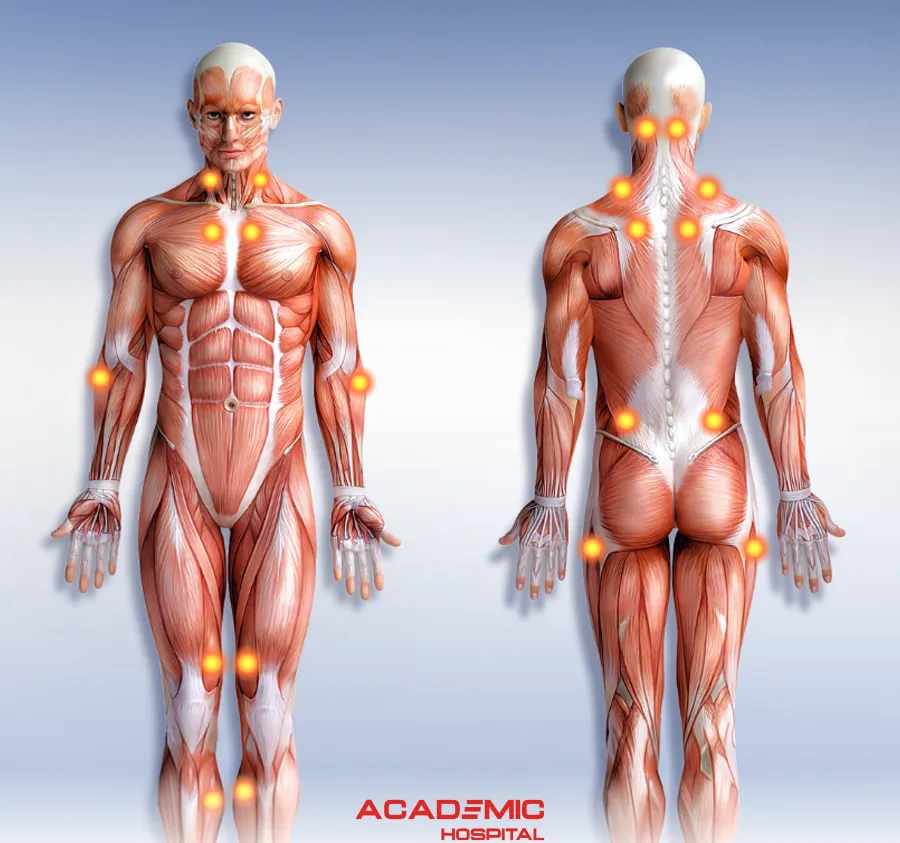
What Is Fibromyalgia? Symptoms, Diagnosis and Treatment
Contents
- What Is Fibromyalgia?
- What Causes Fibromyalgia?
- What Are the Symptoms?
- How Is Fibromyalgia Diagnosed?
- Is the 11 of 18 Tender-Point Test Still Required?
- Who Is More Likely to Develop Fibromyalgia?
- Which Specialists Treat Fibromyalgia?
- How Is Fibromyalgia Treated?
- What Exercise Is Recommended?
- Can People With Fibromyalgia Do Pilates or Yoga?
- Does Sleep Affect Fibromyalgia?
- Can Stress Worsen Fibromyalgia?
- What Diet Is Recommended?
- Are There Specific Food Triggers?
- When Should You Seek Medical Assessment?
- Frequently Asked Questions
What Is Fibromyalgia?
Fibromyalgia is a chronic pain condition characterised by widespread pain and tenderness, often accompanied by fatigue, sleep disturbance and cognitive symptoms.
It does not necessarily cause structural damage to muscles or joints. Current research suggests that altered processing of pain signals and increased pain sensitivity within the nervous system play an important role.
Fibromyalgia is not the same condition as chronic fatigue syndrome or burnout syndrome, although some symptoms can overlap.
What Causes Fibromyalgia?
The exact cause is not fully understood.
Research suggests that several factors may contribute, including altered central pain processing, genetic susceptibility, sleep disturbance, other chronic pain conditions and certain physical or emotional stressors.
What Are the Symptoms of Fibromyalgia?
- Chronic widespread pain
- Tenderness to touch
- Fatigue
- Unrefreshing sleep
- Morning stiffness
- Problems with concentration and memory, sometimes called “fibro fog”
- Headaches
- Numbness or tingling
- Increased sensitivity to light, sound, smell or temperature
- Digestive symptoms such as bloating or constipation
How Is Fibromyalgia Diagnosed?
There is no single blood test, MRI scan or X-ray that confirms fibromyalgia.
Diagnosis is based on the pattern and duration of pain together with fatigue, sleep problems, cognitive symptoms and clinical assessment.
Current criteria may use the Widespread Pain Index (WPI) and Symptom Severity Scale (SSS).
The 2016 revised criteria generally include:
- WPI ≥7 and SSS ≥5, or WPI 4–6 and SSS ≥9
- Pain in at least 4 of 5 body regions
- Symptoms present at a similar level for at least 3 months
Fibromyalgia can coexist with other medical conditions and does not automatically exclude diagnoses such as rheumatoid arthritis or lupus.
Is the 11 of 18 Tender-Point Test Still Required?
No.
The requirement for pain in at least 11 of 18 specific tender points comes from older classification criteria.
Modern diagnostic criteria no longer require an 11-of-18 tender-point examination. The overall distribution of pain and symptom burden are now considered.
Who Is More Likely to Develop Fibromyalgia?
Fibromyalgia is more common in women but can occur in men, children and older adults.
It often begins in middle age, and family clustering suggests that genetic susceptibility may contribute.
It can also occur more frequently alongside conditions such as rheumatoid arthritis, lupus, ankylosing spondylitis, chronic back pain, irritable bowel syndrome, anxiety and depression.
Which Specialists Treat Fibromyalgia?
Management can be multidisciplinary and may involve Physical Medicine and Rehabilitation, rheumatology, pain specialists, physiotherapy and, when appropriate, psychology or psychiatry.
How Is Fibromyalgia Treated?
There is no single treatment that removes all symptoms in every patient.
Management aims to improve pain, fatigue, sleep, physical function and quality of life.
A treatment plan may include:
- Graduated exercise and physical activity
- Patient education
- Sleep management
- Activity pacing
- Cognitive behavioural or other psychological therapies
- Medication for selected symptoms when appropriate
- Multimodal rehabilitation for selected patients
What Exercise Is Recommended for Fibromyalgia?
Exercise should begin at a low intensity and gradually increase according to tolerance.
Suitable options can include walking, swimming, water-based exercise, cycling, low-to-moderate aerobic exercise, gradual strengthening and flexibility exercises.
The aim is to develop a form of physical activity that can be maintained over the long term rather than pushing through severe symptoms.
Can People With Fibromyalgia Do Pilates or Yoga?
Pilates does not need to be routinely avoided in people with fibromyalgia.
Appropriately modified Pilates, yoga, tai chi and breathing or relaxation exercises can be suitable for some patients.
The intensity should be adapted to physical capacity, particularly when starting a new programme.
Does Sleep Affect Fibromyalgia?
Sleep disturbance is one of the most common symptoms of fibromyalgia.
Poor or unrefreshing sleep can increase fatigue, pain sensitivity and cognitive difficulties.
A regular sleep schedule, limiting caffeine and nicotine near bedtime, reducing evening screen exposure and maintaining a quiet, comfortable sleeping environment may help.
Can Stress Worsen Fibromyalgia?
Stress can worsen pain, sleep disturbance and fatigue in some patients, but this does not mean fibromyalgia is a psychological illness.
Stress-management strategies, cognitive behavioural therapy, acceptance and commitment therapy, mindfulness and relaxation techniques may help some people manage symptoms.
What Diet Is Recommended for Fibromyalgia?
There is no single diet that has been proven to treat fibromyalgia.
A balanced Mediterranean-style dietary pattern including vegetables, fruit, whole grains, legumes, fish, nuts and olive oil can support general health.
Some studies suggest potential improvements in fibromyalgia symptoms with Mediterranean-style eating, but evidence is not yet strong enough to consider a specific diet a standard treatment.
Are There Specific Food Triggers?
There is no strong evidence that MSG, aspartame, gluten, yeast, sugar or specific preservatives universally trigger fibromyalgia symptoms.
Individual patients may notice personal food-related symptom patterns. A symptom and food diary can be useful, and restrictive diets should ideally be discussed with a healthcare professional or dietitian.
When Should You Seek Medical Assessment?
Medical assessment may be appropriate when widespread pain, fatigue, sleep disturbance and cognitive symptoms persist for more than three months or interfere with daily life.
Symptoms that should not automatically be attributed to fibromyalgia include:
- Unexplained significant weight loss
- Persistent fever
- Clearly swollen or inflamed joints
- Progressive muscle weakness
- New significant neurological symptoms
- Rapid or major change in the pattern of pain
Fibromyalgia Treatment Should Be Individualised
Pain, fatigue, sleep problems and their effect on daily life vary between patients. Treatment should therefore be tailored to symptoms and physical capacity.
Frequently Asked Questions
References
- Academic Hospital. Fibromyalgia
- American College of Rheumatology. Fibromyalgia Diagnostic Criteria
- National Institute of Arthritis and Musculoskeletal and Skin Diseases. Fibromyalgia
- EULAR. Revised Recommendations for the Management of Fibromyalgia
- PubMed. Restrictive Diets in Patients with Fibromyalgia