
 WhatsApp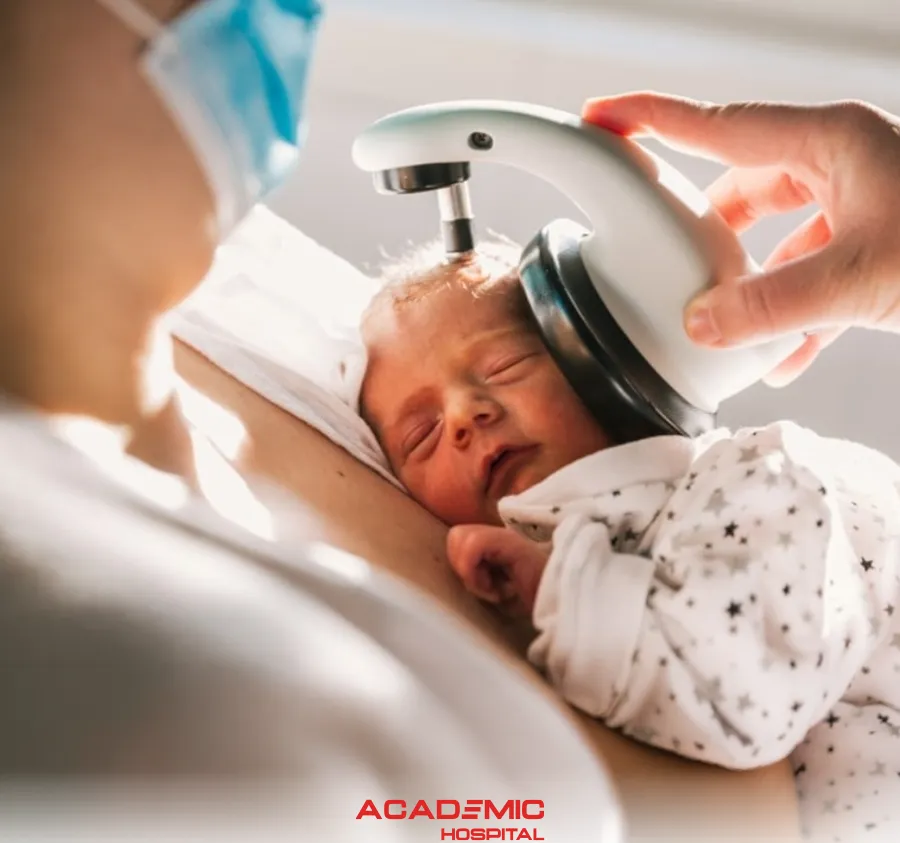
Newborn Hearing Screening: When and How Is It Performed?
Contents
- What Is Newborn Hearing Screening?
- Why Is Newborn Hearing Screening Important?
- When Should Hearing Screening Be Performed?
- How Is Newborn Hearing Screening Performed?
- What Are AABR and OAE?
- What Does It Mean If a Baby Does Not Pass?
- How Is Hearing Loss Diagnosed?
- What Is the 1-3-6 Benchmark?
- What Happens If Hearing Loss Is Confirmed?
- Which Babies Have a Higher Risk of Hearing Loss?
- Can Hearing Loss Develop After a Baby Passes Screening?
- What Is the Purpose of Newborn Hearing Screening?
- Frequently Asked Questions
Hearing plays an essential role in the development of speech, language, learning and social communication. Because hearing loss in newborn babies may not be obvious from observation alone, systematic hearing screening is important.
What Is Newborn Hearing Screening?
Newborn hearing screening is a quick and painless assessment performed shortly after birth to determine whether the baby's auditory system responds appropriately to sound.
The purpose of screening is not to make a definitive diagnosis of hearing loss. It identifies babies who may require repeat screening or a comprehensive diagnostic audiological evaluation.
Why Is Newborn Hearing Screening Important?
Babies begin listening to speech and environmental sounds long before they learn to speak.
Undetected hearing loss during infancy can affect:
- Speech and language development
- Communication skills
- Learning
- Social and emotional development
Earlier identification and appropriate intervention can help support a child's communication and language development.
When Should Hearing Screening Be Performed?
Newborn hearing screening is ideally completed before the baby leaves the birth hospital.
International Early Hearing Detection and Intervention programmes recommend that all babies complete hearing screening before 1 month of age.
If screening cannot be completed before discharge, it should be arranged as soon as possible rather than being postponed for several months.
How Is Newborn Hearing Screening Performed?
Newborn hearing screening is painless and does not require the baby to actively respond to sounds.
It is generally easiest to perform while the baby is asleep or calm.
Depending on the screening method, a small probe or earphone is placed in or around the ear. With AABR screening, small electrodes are also placed on the baby's head to record electrical responses to sound.
The test usually takes only a short time. Movement, environmental noise or temporary fluid in the ear may occasionally make repeat testing necessary.
What Are AABR and OAE?
Automated Auditory Brainstem Response – AABR
AABR measures electrical responses generated by the auditory nerve and brainstem following sound stimulation.
Small electrodes placed on the baby's head record these responses automatically.
Otoacoustic Emissions – OAE
OAE measures sounds generated by the outer hair cells of the inner ear in response to auditory stimulation.
It is a quick and painless test. However, because it mainly assesses cochlear function, OAE alone may not identify certain neural hearing disorders such as auditory neuropathy.
What Does It Mean If a Baby Does Not Pass Hearing Screening?
Not passing the first screening does not necessarily mean that the baby has permanent hearing loss.
Possible explanations include:
- Temporary fluid or debris in the ear canal
- Middle-ear fluid
- Movement during testing
- Environmental noise
- Permanent or temporary hearing loss
The baby should therefore complete the recommended repeat screening or diagnostic evaluation without unnecessary delay.
How Is Hearing Loss Diagnosed?
Babies who do not pass screening require a more detailed audiological assessment to determine whether hearing loss is present and, if so, its type and degree.
Testing may include:
- Diagnostic ABR
- Otoacoustic emissions
- Tympanometry and other acoustic immittance measures
- Ear, Nose and Throat examination
- Age-appropriate behavioural hearing tests
Additional medical, genetic or imaging investigations may be appropriate in selected children to investigate the cause of confirmed hearing loss.
What Is the 1-3-6 Benchmark?
| Age | Goal |
|---|---|
| Before 1 month | Complete newborn hearing screening |
| Before 3 months | Complete diagnostic audiological evaluation when screening is not passed |
| Before 6 months | Begin appropriate early intervention when permanent hearing loss is confirmed |
Programmes capable of meeting the 1-3-6 benchmarks are encouraged to move toward even earlier 1-2-3 targets where possible.
What Happens If Hearing Loss Is Confirmed?
When permanent hearing loss is confirmed, management is individualised according to the type and degree of hearing loss and the baby's developmental needs.
Options can include:
- Hearing aids
- Early auditory and communication intervention
- Speech and language monitoring
- Audiology and ENT follow-up
- Cochlear implant assessment in appropriate children
- Family-centred communication and early-intervention programmes
Not every child with hearing loss requires the same device or treatment. Management is based on the individual hearing profile and family-centred goals.
Which Babies Have a Higher Risk of Hearing Loss?
Hearing loss can occur even when no known risk factor is present, which is why universal newborn screening is important.
Factors that may require closer audiological follow-up include:
- Family history of permanent childhood hearing loss
- Prolonged neonatal intensive-care admission
- Certain congenital infections
- Some craniofacial abnormalities
- Genetic syndromes associated with hearing loss
- Certain serious infections such as meningitis
- Head trauma
- Exposure to selected ototoxic medicines
Can Hearing Loss Develop After a Baby Passes Newborn Screening?
Yes.
Newborn screening reflects hearing status around the time the test is performed. Some types of hearing loss can develop or progress later in childhood.
Further hearing assessment is appropriate if a child:
- Does not respond consistently to sounds
- Does not turn when their name is called at an appropriate developmental age
- Has delayed speech or language development
- Appears to lose previously observed responses to sound
What Is the Purpose of Newborn Hearing Screening?
The main purpose is to identify infants with permanent hearing loss as early as possible and minimise delays between screening, diagnosis and intervention.
Early identification can support timely planning of audiological management, communication development, rehabilitation and family education.
Assess Your Baby's Hearing Early
Babies who do not pass newborn hearing screening or who have concerns regarding hearing development should receive timely audiological assessment.
Frequently Asked Questions
References
- Academic Hospital. Newborn Hearing Screening Tests
- Republic of Türkiye Ministry of Health. Clinical Guideline for Hearing Loss in Children, 2026
- Centers for Disease Control and Prevention. Screening for Hearing Loss
- Centers for Disease Control and Prevention. Newborn Hearing Screening
- Joint Committee on Infant Hearing. Position Statements and Early Hearing Detection and Intervention Guidance