

 WhatsApp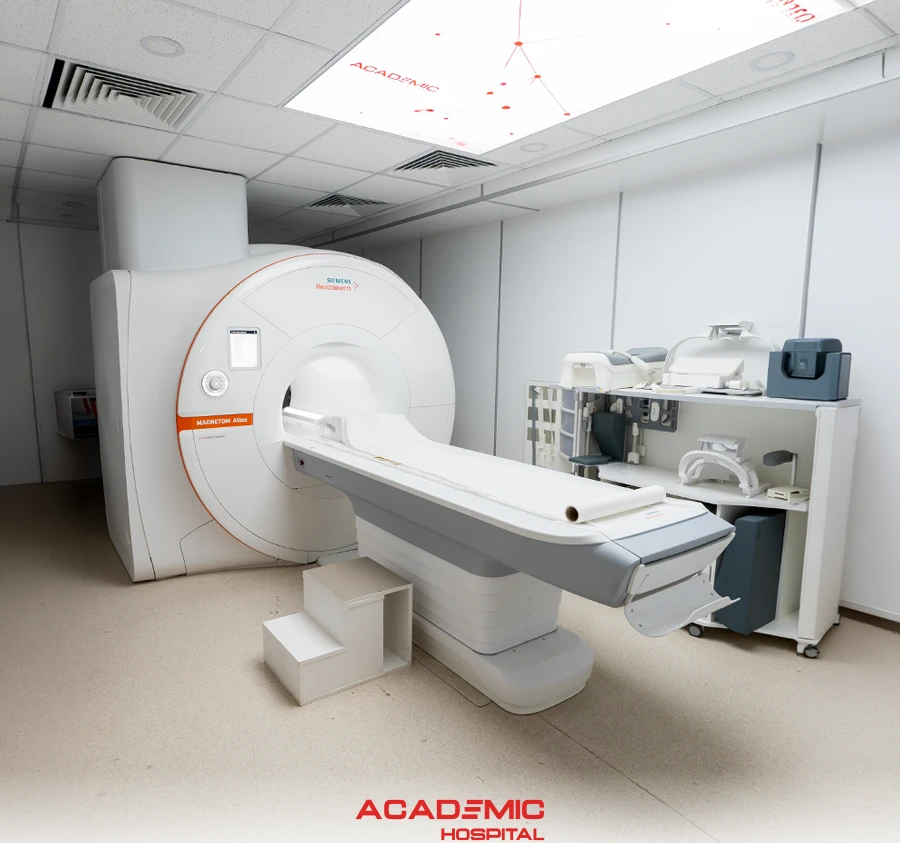
What Is Magnetic Resonance Imaging (MRI)? Differences Between Open and Closed MRI
Contents
What Is Magnetic Resonance Imaging (MRI)?
Magnetic Resonance Imaging (MRI) is an advanced medical imaging method that uses strong magnetic fields and radio waves to obtain high-resolution images of internal body structures. Unlike X-ray and computed tomography (CT), MRI does not use ionizing radiation.
MRI can examine the following structures in detail:
- Brain and spinal cord
- Musculoskeletal system and joints
- Internal organs
- Vascular structures
What Are the Differences Between Open MRI and Closed MRI?
| Feature | Closed MRI | Open MRI |
|---|---|---|
| Device structure | The patient lies inside a tube-shaped scanner. | A more open-sided design may reduce the tunnel feeling. |
| Image quality | Usually provides more detailed images with higher magnetic field strength. | Magnetic field strength may be lower; detail level may be limited depending on the examination. |
| Scan duration | Results may be obtained in a shorter time in many examinations. | Scan time may be longer. |
| Patient comfort | May be challenging for patients with claustrophobia. | May be more comfortable for children, elderly patients, individuals with obesity or patients with claustrophobia. |
| Movement limitation | The patient must remain still for clear images. | May be easier in selected cases for patients with limited mobility. |
MRI Technology Used in Our Institution
Our institution uses a closed MRI device.
- More detailed results can be obtained thanks to high magnetic field strength.
- Systems designed to reduce the loud sounds during scanning are available.
- A comfortable environment is supported with relaxing visuals and music.
You can contact us to receive information about MRI, contrast-enhanced MRI or the scan process if you have claustrophobia.
Book an AppointmentIn Which Situations Is MRI Used?
MRI is an effective imaging method for early diagnosis of diseases that may occur in different body regions. It is especially preferred because it allows detailed examination of soft tissues.
Main areas of use include:
- Brain and nervous system diseases: Tumor, epilepsy, stroke, multiple sclerosis (MS)
- Spine and lower back diseases: Herniated disc, spinal problems
- Joint and muscle injuries: Meniscus, ligament tears, muscle injuries
- Internal organ diseases: Evaluation of the liver, kidneys, heart and other organs
- Cancer evaluation and treatment follow-up
- Vascular imaging: MR angiography
MRI is widely used not only for diagnosis, but also for treatment planning and follow-up after treatment.
What Are the Advantages of Magnetic Resonance Imaging?
- Provides detailed and clear imaging.
- Does not use ionizing radiation.
- Enables high-resolution examination of soft tissues.
- Can be used in the early diagnosis and follow-up of many diseases.
Why Is MRI Important?
MRI is an important method for early and accurate diagnosis of many diseases. It differs from other imaging methods because it does not use ionizing radiation, shows soft tissues in detail and can be used for a wide range of diseases.
MRI is also a non-invasive imaging method, meaning it does not require surgery. High-resolution images guide physicians in diagnosis, treatment planning and follow-up.
What Should Be Considered Before MRI?
Because the MRI device works with a strong magnetic field, some important points should be considered before the scan:
- Metal objects should be removed.
Jewelry, glasses, watches, hairpins, credit cards, hearing aids and phones should not be taken into the MRI room. - Medical devices must be reported.
If the patient has a pacemaker, cochlear implant, neurostimulator, vascular stent, prosthesis or metal fragment in the body, they must inform the MRI technologist and physician. - Pregnancy or suspected pregnancy should be discussed with the doctor.
In pregnant patients or those who may be pregnant, the decision is made according to medical necessity and benefit-risk assessment. - If contrast material will be used, pre-evaluation is required.
Allergy history, kidney function and previous reactions to contrast material should be evaluated. - The patient must remain still during the scan.
Remaining still is necessary for clear images. Headphones, pillows or blankets may be requested if needed.
Share Safety Information Before MRI
Information such as implants, pacemakers, metal fragments, suspected pregnancy or contrast allergy is important for scan safety.
Frequently Asked Questions
References
- RadiologyInfo. MRI Safety
- RadiologyInfo. How to Prepare for MRI Exam
- RadiologyInfo. Magnetic Resonance Imaging (MRI) of the Body
- RadiologyInfo. MRI Safety During Pregnancy