
 WhatsApp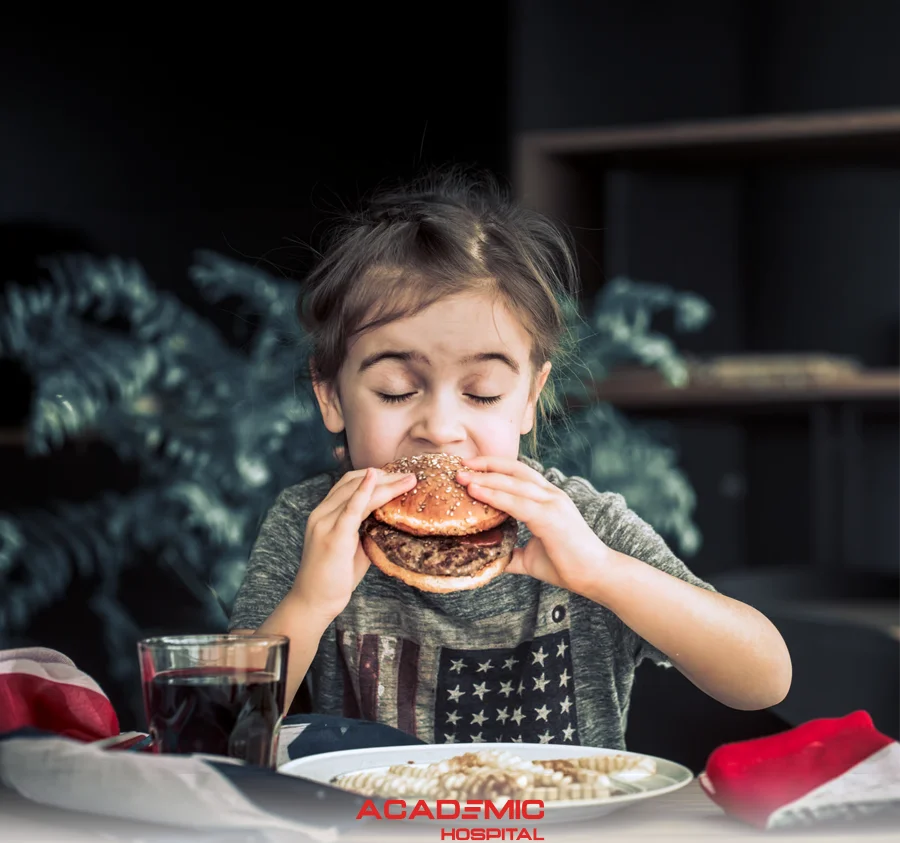
Prevention of Childhood Obesity
Contents
Preventing obesity can prevent the development of diseases caused by obesity. Therefore, it helps people live healthier lives and provides both material and non-material benefits by preventing the consequences that these diseases may cause.
Many of the diseases mentioned in adults with obesity are commonly seen. For this reason, obesity should be prevented during childhood before it develops.
The prevention of obesity should be addressed on two levels: the individual and society.
I. Prevention of Obesity at the Individual Level:
In the preschool period, families and preschool educators have important responsibilities in providing nutrition education for the child. Regulating nutrition is one of the main functions in reducing obesity. Before preparing a nutrition plan, the family and child should be interviewed, and it should be determined how many calories the child consumes and how many calories the child expends in one day.
- All babies should be ensured to receive breast milk,
- Simple sugars should not be given to babies,
- Weight gain in toddlers and young children should be prevented,
- Children should be encouraged to consume plenty of fruit, vegetables (5 portions), and fiber-rich foods,
- Meals should be prepared at home and eaten at the table; high-calorie foods should not be brought into the home or consumed. Parents should be specifically reminded that changing eating habits should be done as a family. No secondary activity should be performed while eating. Bites should be small and chewed for a long time. After each bite, the fork and spoon should be put down. Meals should be served on small plates. Plenty of water should be consumed.
- Caregivers and preschool education institutions such as nurseries and kindergartens should ensure that children exercise regularly every day, through activities such as playing ball, running games, and similar activities.
- Special celebrations such as children’s birthdays should not be held at fast-food restaurants,
- Children should not be rewarded with foods such as “hamburgers, cola, chips, chocolate,” and similar items.
Prevention of Obesity in School-Age Children
Families, school administrators, and media outlets have very important responsibilities in preventing obesity among school-age children. During this period, children spend a significant part of the day outside the home, and it becomes much easier for them to access foods sold outside that may have negative effects on health. Obesity that may develop during this period, especially in adolescents, may continue into adolescence, and diseases caused by obesity may occur more easily. Measures that can be recommended for this period include:
- If there is a television or video games in the child’s room, they should be removed. The child should not be allowed to play games on the computer.
- Exercise and nutrition education should be included in the school curriculum.
- The content of school meals should be prepared in a way that supports healthy development.
- Vending machines should not be allowed in schools.
- School canteens must be inspected.
- Children should be encouraged to participate in sports through after-school programs.
- Student transportation services should be regulated.
Since schools are places where children consume almost half of their daily calories, school canteens must be kept under control. School canteens should be operated by parent-teacher associations, and healthy foods such as milk, ayran, fresh fruit, cheese, and whole wheat bread should be offered to children. Vending machines that work with coins and provide “empty-calorie foods” such as cola, chips, and candy should not be placed in schools; existing ones should be removed.
In full-day schools, meals should be prepared by the school, or home-prepared foods should be placed in the child’s lunch bag. The child’s consumption of ready-made, fast foods at lunch should be prevented.
There are currently 1-2 hours of physical education classes in our country. These hours must be increased. Children should be encouraged to join sports teams (children who do sports may be given extra points). If possible, after school, the child should be enabled to do sports for 1-2 hours, 3-4 days per week.
Children should walk to school as much as possible.
Schools should provide information about the diseases caused by obesity through presentations and film screenings, and free brochures on this subject should be prepared and distributed in classrooms.
In particular, the Ministry of National Education and the Ministry of Health should carry out joint studies to support better nutrition and increased physical activity among school children.
II. Prevention of Obesity at the Societal Level:
A. Visual and print media have important responsibilities in the prevention of obesity. These can be listed as follows:
- Advertising of empty-calorie foods and campaigns designed to increase the sale of these foods should be prevented.
- Fast foods, cola, chips, and similar foods should never be used as promotional materials and should not be given as “gifts” alongside any purchased item.
- Food and beverage advertisements on radio and television should be prohibited during the hours when children watch television.
- In cinema halls during film intervals, and also during the hours when children and families watch television the most, films explaining the diseases caused by obesity and methods for preventing obesity should be shown.
B. Responsibilities of Local Governments:
Parks and green areas where people can easily move and walk should be created, and existing ones should be improved. When new zoning plans are prepared, attention should be paid to increasing the proportion of green areas.
It would be appropriate for schoolyards to be opened on weekends for use by people living in the area for sports activities. Areas where games such as basketball, volleyball, and tennis can be played should be increased. Access to swimming pools should be provided under more affordable payment conditions.
Competitions that encourage sports, such as running, walking, basketball, volleyball, and similar activities, should be organized, and prizes should be given to the winners.
Frequently Asked Questions
References
- World Health Organization (WHO). Obesity and overweight. 8 December 2025. https://www.who.int/news-room/fact-sheets/detail/obesity-and-overweight
- Hampl SE, et al. American Academy of Pediatrics. Clinical Practice Guideline for the Evaluation and Treatment of Children and Adolescents With Obesity. Pediatrics. 2023;151(2):e2022060640 https://publications.aap.org/pediatrics/article/151/2/e2022060640/190443/Clinical-Practice-Guideline-for-the-Evaluation-and
- Republic of Türkiye Ministry of Health. Healthy Eating – Prevention of Obesity. https://www.saglik.gov.tr/TR-22537/saglikli-beslen.html