
 WhatsApp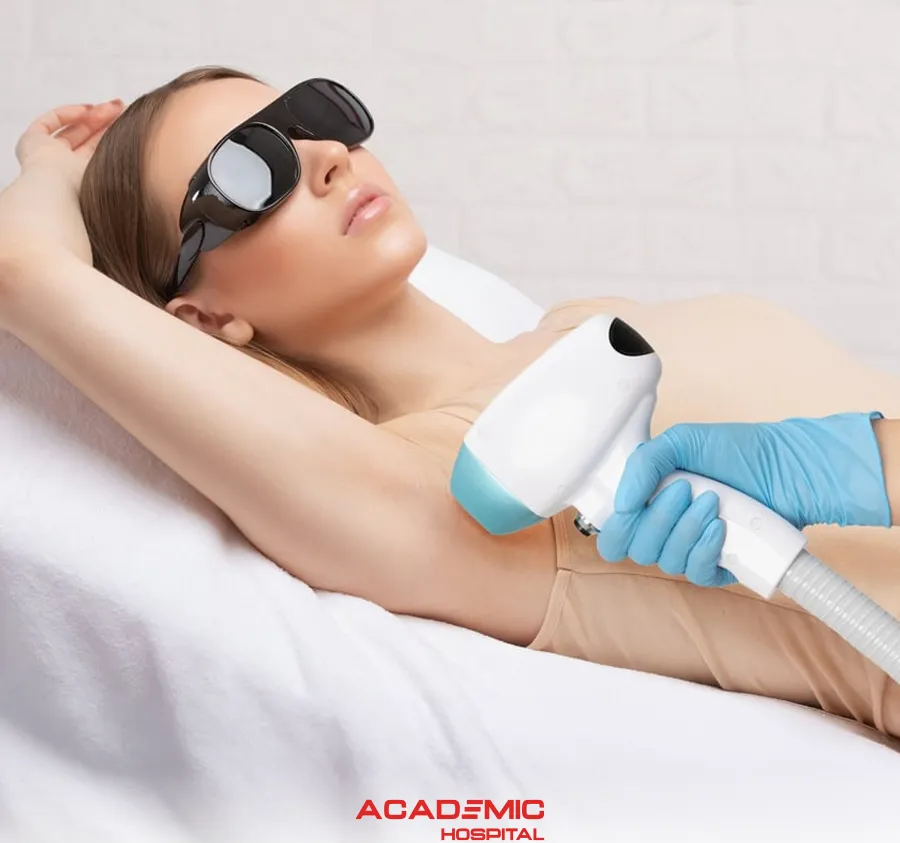
What Is Laser Hair Removal? Soprano Titanium, Treatment Sessions and Safety
Contents
- What Is Laser Hair Removal?
- How Does It Work?
- Types of Hair Removal Lasers
- What Is Soprano Titanium?
- What Do the Three Wavelengths Mean?
- Who May Be Suitable?
- Which Hair Colours Respond Less Well?
- Does Laser Hair Removal Hurt?
- How Many Sessions Are Needed?
- Is It Permanent?
- Can It Be Performed in Summer?
- Preparation
- Side Effects
- Aftercare
- Frequently Asked Questions
What Is Laser Hair Removal?
Laser hair removal uses specific wavelengths of laser energy to target melanin within the hair follicle and achieve long-term reduction of unwanted hair.
The light energy absorbed by pigment in the hair is converted into heat, which damages structures involved in future hair production while aiming to minimise injury to the surrounding skin.
A more accurate expectation is therefore long-term or permanent hair reduction rather than a guarantee that every hair will disappear permanently.
How Does Laser Hair Removal Work?
The primary chromophore targeted during laser hair removal is melanin within the hair.
Not all hairs are in the same stage of the growth cycle at the same time. Laser treatment is most effective when susceptible hairs are in an active growth phase, which is why multiple treatment sessions are required.
What Types of Lasers Are Used for Hair Removal?
Alexandrite – 755 nm
Alexandrite laser can be particularly effective when there is good contrast between relatively light skin and dark, pigmented hair.
Diode – approximately 800–810 nm
Diode systems are widely used across different treatment areas and skin types when appropriate parameters are selected.
Nd:YAG – 1064 nm
Because the 1064 nm wavelength is less strongly absorbed by epidermal melanin and penetrates more deeply, long-pulsed Nd:YAG systems are an important option for darker skin types.
Ruby – 694 nm
Ruby lasers were among the earlier systems used for hair removal. Their high melanin absorption limits their suitability across skin types, and they are now used less frequently than Alexandrite, diode and Nd:YAG systems.
No single wavelength is automatically best for every patient. Skin tone, tanning, hair colour, hair thickness and treatment area should all be considered.
What Is Soprano Titanium?
Soprano Titanium is a laser hair-removal platform manufactured by Alma.
Its Trio applicator is designed to deliver three wavelengths simultaneously:
- 755 nm
- 810 nm
- 1064 nm
The system also incorporates ICE Plus continuous surface cooling and can use an SHR In-Motion technique in which the applicator is moved continuously across the treatment area.
Soprano Titanium appears in the U.S. FDA 510(k) database under K222064. A 510(k) clearance means that the device was found substantially equivalent within the applicable regulatory framework; it should not be interpreted as a guarantee of a particular clinical result.
What Do the Three Wavelengths Mean?
Different wavelengths vary in melanin absorption and depth of penetration.
Combining 755, 810 and 1064 nm in one applicator is intended to address different depths and structures of the hair follicle and provide flexibility across different skin and hair characteristics.
However, the device itself does not determine treatment success. Skin type, tanning, hair characteristics, treatment parameters and operator experience are also important.
Who May Be Suitable for Laser Hair Removal?
Laser hair removal can be performed in people with a wide range of skin tones when an appropriate device, wavelength and treatment parameters are selected.
Assessment should consider:
- Skin tone and phototype
- Hair colour and thickness
- Treatment area
- Recent tanning or sun exposure
- Current medication
- Skin conditions and scarring history
- Hormonal factors
Which Hair Colours Respond Less Well?
Because laser hair removal relies on melanin as its primary target, dark and coarse hair generally absorbs laser energy more effectively.
White, grey, very light blonde and some red hair contains little target pigment, so response to laser treatment may be poor.
Does Laser Hair Removal Hurt?
Discomfort varies between patients and treatment areas. Some people experience warmth or mild stinging, while more sensitive areas may be more uncomfortable.
Soprano Titanium uses ICE Plus technology to cool the skin surface during treatment. SHR In-Motion techniques use repeated energy delivery while the applicator moves across the skin.
These features may improve comfort, but treatment cannot be guaranteed to be completely painless for every patient.
How Many Laser Hair Removal Sessions Are Needed?
There is no fixed number of sessions that applies to everyone.
The number required depends on factors including:
- Body area
- Hair colour and thickness
- Skin type
- Hair-growth cycle
- Age
- Hormonal factors
- Laser system and parameters
- Individual treatment response
Multiple sessions are usually required. Around 6–8 treatments is a commonly used initial treatment range, but some patients require fewer or additional sessions.
A fixed rule such as “everyone aged 16–24 requires exactly eight sessions” is not medically appropriate.
Is Laser Hair Removal Permanent?
Laser treatment can provide long-term and sometimes permanent hair reduction.
It does not guarantee that no hair will ever grow again in the treated area. Remaining or recurrent hairs may be finer and less dense.
Hormonal changes, age and anatomical area can influence future hair growth, and maintenance treatments may occasionally be required.
Can Soprano Titanium Be Used During Summer?
Laser hair removal is not inherently restricted to a particular season. Recent sun exposure and tanning are more important than the month of the year.
A tan increases epidermal melanin, which can increase absorption of laser energy by the skin and raise the risk of burns or pigmentary changes.
If treatment is planned during summer:
- Avoid intentional tanning and excessive sun exposure.
- Inform the practitioner about any recent tan.
- Protect treated skin from the sun.
- Use an appropriate broad-spectrum sunscreen.
Treatment may need to be postponed when there is an active or recent tan.
How Should You Prepare for Laser Hair Removal?
Individual instructions should be provided before treatment.
General precautions may include:
- Avoid tanning and excessive sun exposure.
- Avoid tanning beds.
- Stop hair-removal methods that remove the follicle, such as waxing or plucking, according to the treatment plan.
- Shave the area at the recommended time before treatment.
- Inform the practitioner about medicines and skincare products.
- Report active skin infections or wounds.
What Are the Side Effects?
Temporary reactions can include redness, mild swelling around follicles, warmth, stinging and tenderness.
Less common complications include burns, blistering, crusting, temporary or persistent pigment changes and scarring.
Risk can increase when inappropriate settings are used, treatment is performed on recently tanned skin or the procedure is carried out by an inexperienced operator.
What Should You Do After Laser Hair Removal?
Follow the individual aftercare instructions provided by your healthcare professional.
In general:
- Protect the treated area from intense sun exposure.
- Use appropriate broad-spectrum sunscreen.
- Avoid excessive heat, sauna or similar activities temporarily if the skin is irritated.
- Avoid products or procedures that irritate the treated skin.
- Seek medical advice for unexpected blistering, severe pain or marked pigment changes.
Laser Hair Removal Should Be Individualised
Skin tone, hair colour and thickness, treatment area and sun exposure should be assessed before selecting the laser system, parameters and treatment schedule.
Frequently Asked Questions
References
- Academic Hospital. Laser Hair Removal Applications at Academic Clinic
- American Academy of Dermatology. Laser Hair Removal and Unwanted Hair
- American Academy of Dermatology. Laser Hair Removal: Preparation
- Mayo Clinic. Laser Hair Removal
- Saleh D, et al. Efficacy of Lasers and Light Sources in Long-Term Hair Reduction: A Systematic Review
- U.S. Food and Drug Administration. 510(k) Premarket Notification – Alma Soprano Titanium, K222064
- Alma. Soprano Titanium Technical Information