
 WhatsApp
Surgical Treatment of Joint Damage
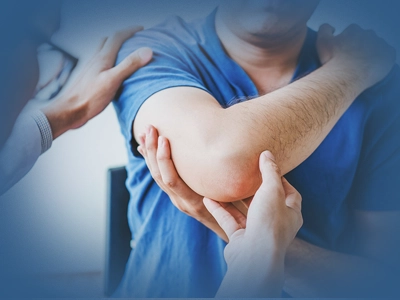
The Shoulder and Elbow Surgery department provides surgical treatment for damage, tears and degenerative changes in the shoulder and elbow joints. Covering a broad spectrum from acute sports injuries to advanced joint destruction, the department uses both arthroscopic (keyhole) and open surgical techniques. It works in coordination with the orthopaedics and traumatology team, and the recovery period is planned jointly with physical medicine and rehabilitation.
Contents
- What Is Shoulder and Elbow Surgery?
- Which Diseases and Conditions Are Treated Surgically?
- When Should You Consult Us?
- Preoperative Assessment and Diagnostic Methods
- Operations and Surgical Procedures Performed
- The Postoperative Process
- Shoulder and Elbow Surgery at Academic Hospital
- Frequently Asked Questions
- References
What Is Shoulder and Elbow Surgery?
Shoulder and Elbow Surgery is an orthopaedic subspecialty focused on the surgical treatment of diseases affecting the muscles, tendons, ligaments and joint surface of the shoulder girdle and the elbow joint. The department covers both sports injuries and age-related joint wear. Arthroscopy (minimally invasive surgery performed by entering the joint with a camera) now makes many procedures in this region possible; as a result, patients recover with less pain and in a shorter time.
Which Diseases and Conditions Are Treated Surgically?
Conditions requiring surgery in the shoulder and elbow region are generally degenerative, traumatic or related to instability.
- Rotator cuff tears (full-thickness supraspinatus and infraspinatus tendon tears)
- SLAP lesion (labral tear at the biceps attachment)
- Bankart lesion (recurrent shoulder dislocation)
- Shoulder instability (chronic tendency to dislocate)
- Shoulder osteoarthritis (advanced wear of the joint cartilage)
- Arthropathy due to rotator cuff deficiency
- Lateral epicondylitis (tennis elbow; cases unresponsive to conservative treatment)
- Medial epicondylitis (golfer's elbow; cases requiring surgery)
- Cubital tunnel syndrome (compression of the ulnar nerve at the elbow)
- Elbow osteoarthritis
- Olecranon bursitis (chronic cases requiring surgery)
- Distal biceps tendon rupture
When Should You Consult Us?
Consulting a shoulder and elbow surgery specialist is recommended if you have any of the following symptoms.
- Shoulder or elbow pain that persists despite conservative treatment (physiotherapy, injections)
- Loss of strength in the shoulder; difficulty raising the arm or carrying objects
- Repeated shoulder dislocations or a feeling that the shoulder is slipping out of place
- Numbness, tingling or weakness in the arm (signs of nerve compression)
- Sudden severe pain and restricted movement following an impact
- A sensation of locking or catching inside the joint
- Chronic joint pain that interferes with daily activities
Emergency: Marked deformity of the shoulder after trauma, sudden complete loss of movement or a suspected vascular injury are situations that require going to the emergency department.
Preoperative Assessment and Diagnostic Methods
A comprehensive diagnostic and clinical assessment is carried out before surgery; this stage is critical for determining the most suitable surgical technique.
- Orthopaedic examination: range of motion, muscle strength, special provocation tests
- Shoulder or elbow X-ray (assessment of the bone structure)
- Magnetic resonance imaging (MRI): demonstration of tendon, ligament and labral tears
- Ultrasonography: dynamic soft tissue assessment
- Computed tomography (CT): in the presence of bone deformity or a fracture
- Electromyography (EMG): nerve conduction velocity testing when nerve compression is suspected
- Preoperative anaesthetic assessment
Operations and Surgical Procedures Performed
Arthroscopic methods are at the forefront of shoulder and elbow surgery, although open surgery is also performed depending on the nature of the condition.
Arthroscopic Rotator Cuff Repair
Torn shoulder tendons are repaired by stitching them in a minimally invasive way, using a camera and instruments inserted into the joint. Performed through portals (small incisions), this method causes less muscle damage and allows faster recovery.
SLAP Repair
Arthroscopic repair of a tear in the upper part of the glenoid labrum (the lip of the shoulder socket), where the biceps tendon attaches. It is performed particularly in athletes involved in throwing sports and in cases of recurrent shoulder trauma.
Bankart Repair
Arthroscopic closure of the anterior labral tear that causes recurrent shoulder dislocation. It is the standard method for the surgical correction of instability; in cases with a large bone defect, the open Latarjet procedure may be preferred.
Total Shoulder Arthroplasty
Replacement of both damaged joint surfaces with a prosthesis in advanced shoulder arthritis. High success rates have been reported in terms of pain relief and functional gain.
Reverse Total Shoulder Arthroplasty
A special prosthesis system that reverses the joint surfaces, used in advanced shoulder arthritis accompanied by rotator cuff deficiency. By using the strength of the deltoid muscle, it restores the ability to raise the arm.
Elbow Arthroplasty
A procedure in which the joint surfaces are replaced with a prosthesis, performed in advanced elbow osteoarthritis or in joint destruction caused by rheumatoid arthritis.
Lateral Epicondylitis Surgery
In cases of what is known as tennis elbow that do not respond to conservative treatment, the affected tendon tissue is cleaned or repaired so that the pain is relieved permanently. It can be performed arthroscopically or with a mini-open technique.
Cubital Tunnel Release (Ulnar Nerve Decompression)
Release of the tissues surrounding the tunnel, or moving the nerve to a new position, in order to relieve pressure on the ulnar nerve compressed at the elbow. It is effective in treating numbness in the hand and weakness of grip.
The Postoperative Process
Recovery varies according to the type and extent of the operation; all patients are supported with a rehabilitation programme.
- After arthroscopic procedures a same-day discharge or a single overnight stay is sufficient, whereas a hospital stay of 2-3 days may be needed after joint replacement surgery.
- Arm sling (splint/support): recommended for 4-6 weeks after rotator cuff and Bankart repair.
- Physiotherapy: starts with passive exercises from the first week; active exercises begin at 6-8 weeks.
- Return to sport: varies between 3 and 6 months depending on the type of operation; the physical medicine specialists and the surgeon decide together.
- Follow-up visits: clinical assessment at 2 weeks, 6 weeks, 3 months and 6 months.
Book an appointment with the Shoulder and Elbow Surgery Department.
Book an AppointmentShoulder and Elbow Surgery at Academic Hospital
The Academic Hospital Shoulder and Elbow Surgery Department plans the diagnostic assessment, surgery and postoperative rehabilitation stages under one roof. The following departments are involved throughout the process:
- Orthopaedics and Traumatology: orthopaedic assessment of shoulder and elbow complaints and non-surgical treatment options
- Physical Medicine and Rehabilitation: planning and follow-up of the postoperative passive and active exercise programme
- Sports Medicine: assessment of sports injuries and planning of the return to sport
- Radiology: shoulder and elbow X-rays, MRI, ultrasonography and CT examinations
- Neurology: neurological assessment of nerve compression symptoms such as numbness, tingling and weakness in the arm
- Anaesthesia and Reanimation: preoperative anaesthetic assessment and general or regional anaesthesia
- Rheumatology: treatment and follow-up of inflammatory diseases affecting the joints, such as rheumatoid arthritis
Frequently Asked Questions
Answers to the most frequently asked questions about the Shoulder and Elbow Surgery Department are given below.
References
The general information given on this page about shoulder and elbow conditions, surgical methods and the postoperative process is supported by the reliable health sources listed below.
- National Institutes of Health (MedlinePlus), "Rotator Cuff Repair", medlineplus.gov
- American Academy of Orthopaedic Surgeons (OrthoInfo), "Rotator Cuff Tears", orthoinfo.aaos.org
- Mayo Clinic, "Rotator Cuff Injury: Diagnosis and Treatment", mayoclinic.org
- American Academy of Orthopaedic Surgeons (OrthoInfo), "Shoulder Joint Replacement", orthoinfo.aaos.org
The information on this page is for informational purposes only; it does not replace medical examination, diagnosis or treatment. Please consult a healthcare institution regarding your complaints.