

 WhatsApp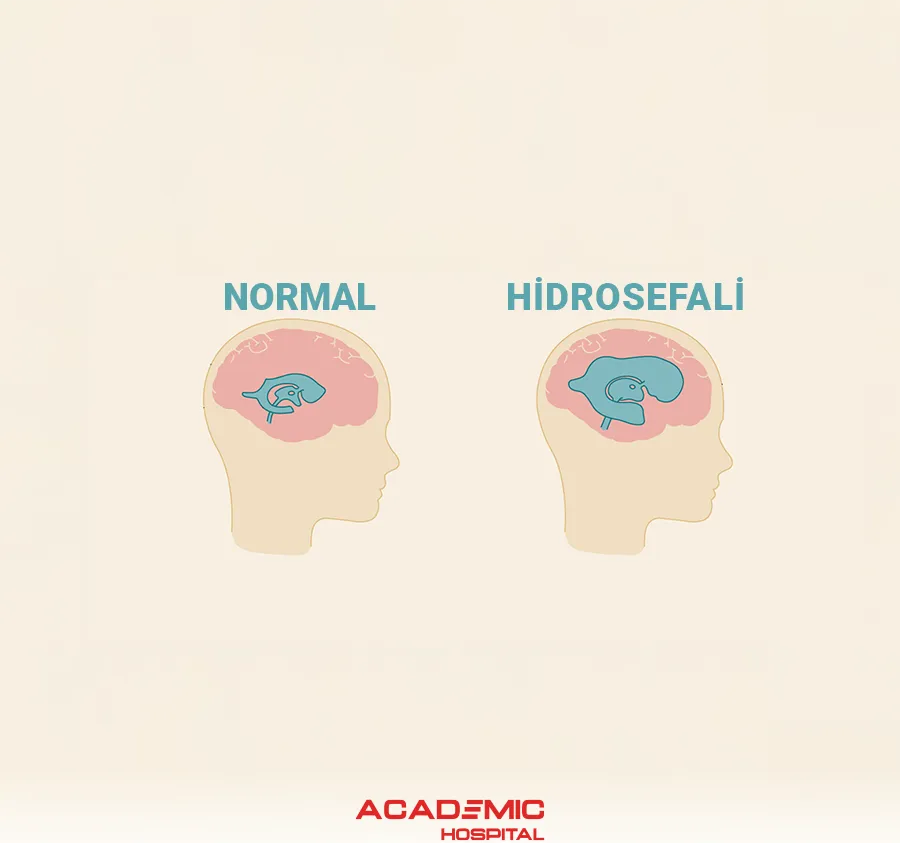
What Is Hydrocephalus? Symptoms, Causes and Treatment Methods
Contents
Hydrocephalus, commonly described as “water on the brain,” may create pressure on brain tissue and lead to various physical and neurological problems. Early diagnosis and appropriate treatment are important to reduce permanent effects.
What Is Hydrocephalus?
The brain and spinal cord are surrounded by a clear fluid called cerebrospinal fluid (CSF). This fluid protects the brain, carries nutrients and helps remove waste products. Hydrocephalus may occur when CSF is produced in excess, cannot be absorbed adequately or its circulation is blocked.
In hydrocephalus, the fluid spaces inside the brain, called ventricles, may enlarge. This may increase intracranial pressure and compress nervous tissue, causing symptoms that vary by age.
At What Ages Is Hydrocephalus More Common?
Hydrocephalus can occur at any age, but it is more often diagnosed in infants and older adults. Congenital brain anomalies, infections during pregnancy or spina bifida may be important in infants. In older adults, normal pressure hydrocephalus may be considered, especially when gait disturbance, urinary incontinence and cognitive changes occur together.
What Causes Hydrocephalus?
Causes may vary according to age group. The main mechanism is disruption of the balance between CSF production, circulation and absorption.
In Infants
- Congenital brain anomalies
- Infections during pregnancy, such as toxoplasmosis
- Birth trauma
- Nervous system disorders such as spina bifida
In Children and Adults
- Infections such as meningitis
- Brain tumors
- Head trauma
- Brain hemorrhage
- Blockage in CSF circulation pathways
You can contact us for evaluation if there is rapid head growth, walking difficulty, urinary incontinence, memory problems or severe headache.
Book an AppointmentWhat Are the Symptoms of Hydrocephalus?
Symptoms vary according to the patient’s age. In infants, head enlargement may be prominent because the skull bones have not fully closed. In children and adults, symptoms may occur due to increased intracranial pressure or nervous system involvement.
In Infants
- Rapid increase in head circumference
- Tension or bulging of the fontanelle
- Vomiting, irritability and persistent crying
- Downward deviation of the eyes
- Feeding difficulty or excessive sleepiness
In Children and Adults
- Headache
- Nausea and vomiting
- Walking difficulty
- Urinary incontinence
- Balance problems
- Memory and attention problems
- Visual disturbances
How Is Hydrocephalus Diagnosed?
The first step in diagnosis is careful evaluation of symptoms, which may vary by age. The physician evaluates neurological parameters such as reflexes, muscle strength, coordination, gait pattern, visual findings and mental status.
Imaging methods are important to support the diagnosis and plan treatment.
- Brain ultrasound, especially in infants whose fontanelle has not closed
- Computed tomography (CT)
- Magnetic resonance imaging (MRI)
These imaging techniques can help assess whether the ventricles inside the brain are enlarged and where fluid accumulation is prominent. In some cases, additional tests such as lumbar puncture may be used to examine CSF pressure and content; however, this decision depends on the patient’s clinical condition and should be made by the physician.
How Is Hydrocephalus Treated?
Treatment is planned to safely drain the fluid, prevent reaccumulation and address any underlying cause. Treatment is most often evaluated by neurosurgery.
- Shunt surgery: A thin tube system is placed to divert excess cerebrospinal fluid from the brain to another part of the body, such as the abdominal cavity, where it can be absorbed. Shunt treatment is one of the most commonly used surgical methods for hydrocephalus and requires regular follow-up.
- Endoscopic third ventriculostomy (ETV): This is a surgical procedure performed with an endoscope to allow the fluid inside the brain to flow through an alternative pathway. It may be considered especially in some obstructive hydrocephalus cases.
- Treatment of the underlying disease: In hydrocephalus related to tumors, infections, bleeding or another cause, treatment of the primary condition is also an important part of the plan.
Surgical methods such as shunt or ETV can be effective; however, they require follow-up for possible complications such as blockage, infection or need for additional surgery. Regular postoperative control is therefore important.
What Happens If Hydrocephalus Is Not Treated?
Increased intracranial pressure due to cerebrospinal fluid buildup can damage brain cells. This may cause permanent effects such as cognitive delay, learning difficulty and memory problems. Pressure on visual nerves and balance centers may lead to double vision, blurred vision, dizziness and walking difficulty.
Untreated hydrocephalus may increase seizure risk and seriously reduce quality of life. In children, it may cause developmental delay and intellectual impairment. Advanced hydrocephalus may become a severe condition that threatens vital functions and may lead to coma or death.
Hydrocephalus can be managed with early diagnosis. Routine head circumference measurements are especially important in infants. When symptoms are noticed, timely consultation with neurology or neurosurgery specialists can support diagnosis and treatment.
Early Evaluation Is Important in Hydrocephalus
Head growth, walking difficulty, memory-attention problems, urinary incontinence and visual disturbances should be evaluated together.
Frequently Asked Questions
References
- Academic Hospital. Hidrosefali Nedir? Belirtileri, Nedenleri ve Tedavi Yöntemleri Nelerdir?
- NINDS. Hydrocephalus
- Mayo Clinic. Hydrocephalus - Symptoms and Causes
- Mayo Clinic. Hydrocephalus - Diagnosis and Treatment
- Hydrocephalus Association. Hydrocephalus: Helpful Answers to Common Questions