
 WhatsApp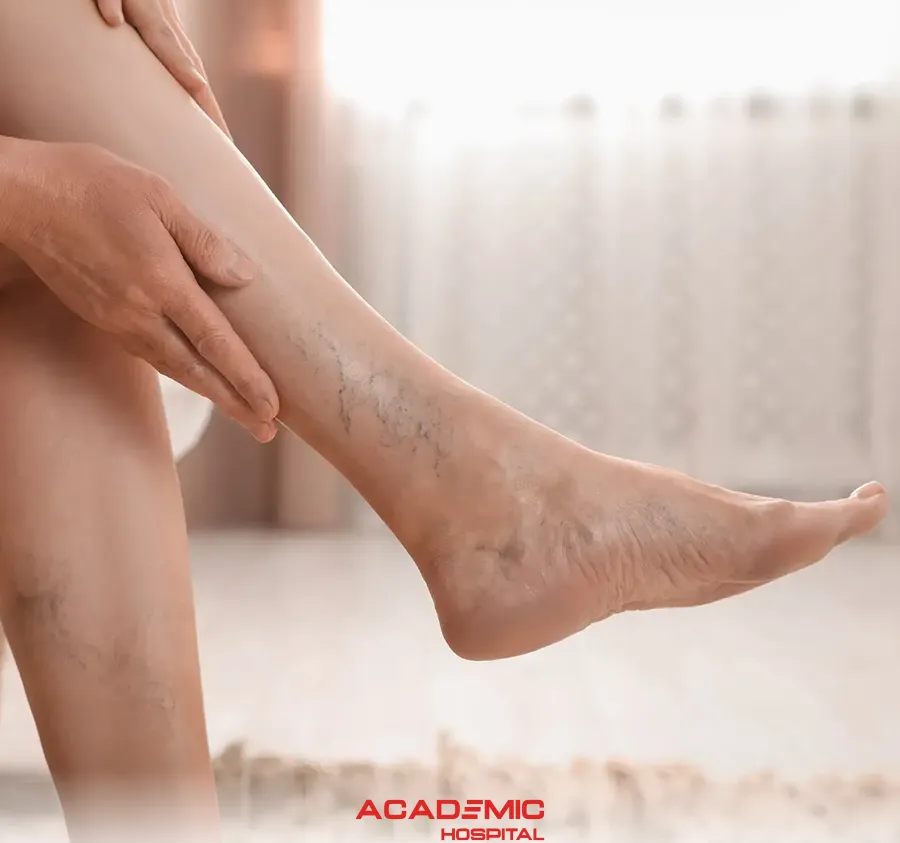
What Are Varicose Veins? Symptoms, Causes and Treatment
Contents
- What Are Varicose Veins?
- What Are Venous Reflux and Venous Insufficiency?
- What Causes Varicose Veins?
- What Are the Risk Factors?
- What Are the Symptoms?
- Types of Varicose and Superficial Veins
- What Is the CEAP Classification?
- When Is Duplex Ultrasound Needed?
- Varicose Veins During Pregnancy
- How Are Varicose Veins Treated?
- What Is Endovenous Ablation?
- Sclerotherapy and Foam Treatment
- Treatment of Spider Veins
- How Can Symptoms Be Reduced?
- What Are the Complications?
- When Should You See a Doctor?
- Frequently Asked Questions
Varicose veins are enlarged, tortuous superficial veins, most commonly affecting the legs. They are part of the spectrum of chronic venous disease and may be associated with backward blood flow caused by inadequate venous valve function.
For some people, varicose veins are primarily a cosmetic concern. Others experience aching, heaviness, itching, swelling or night cramps. More advanced chronic venous disease can cause skin changes and venous leg ulcers.
What Are Varicose Veins?
Veins in the legs return blood towards the heart. Venous valves and the calf-muscle pump help move blood upwards against gravity.
When superficial veins become dilated and venous pressure increases, the veins may become enlarged, tortuous and visible beneath the skin.
In contemporary venous classification, true varicose veins are generally dilated subcutaneous veins larger than 3 mm when assessed in the dependent or standing position.
What Are Venous Reflux and Venous Insufficiency?
Venous reflux means that blood flows backwards within a vein instead of consistently returning towards the heart.
When valves do not close adequately, venous pressure can increase while standing. Over time this may contribute to:
- Dilated superficial veins
- Varicose veins
- Leg oedema
- Inflammatory skin changes and pigmentation
- Venous leg ulcers in advanced disease
Reflux is not confined to the groin or the great saphenous vein. Different patterns can involve the great or small saphenous veins, accessory veins, perforating veins or, in selected patients, veins of pelvic origin.
What Causes Varicose Veins?
Varicose veins develop through a combination of changes in the vein wall, venous valve function, inherited susceptibility and factors that influence venous pressure.
Primary varicose veins can occur without a previous major venous disorder.
Secondary chronic venous disease may develop after conditions such as deep vein thrombosis (DVT), which can damage venous valves or obstruct venous outflow.
What Are the Risk Factors for Varicose Veins?
Family History
A family history of varicose veins or chronic venous disease can increase susceptibility, although having affected relatives does not mean that varicose veins will inevitably develop.
Age
The likelihood of varicose veins increases with age as the vein wall and venous valves undergo structural and functional changes.
Pregnancy
Increased blood volume, hormonal changes and pressure from the enlarging uterus can all increase venous pressure during pregnancy.
Many pregnancy-related varicose veins improve during the months after delivery, although repeated pregnancies and other risk factors may increase the likelihood of persistent disease.
Obesity
Excess body weight is associated with an increased risk of chronic venous disease and can contribute to higher venous pressure.
Prolonged Standing or Sitting
Long periods without movement can reduce the effectiveness of the calf-muscle pump and contribute to increased venous pressure in the legs.
Do Heat or Tight Clothing Cause Varicose Veins?
Hot weather, saunas or steam rooms may temporarily dilate blood vessels and worsen sensations of heaviness or swelling in some people, but heat alone is not considered a primary cause of varicose veins.
Tight clothing is likewise not established in major guidelines as a primary cause of varicose veins.
What Are the Symptoms of Varicose Veins?
Varicose veins may cause no symptoms.
When symptoms occur they can include:
- Visible blue or purple tortuous veins
- Leg heaviness or tightness
- Aching or pain
- Burning
- Itching
- Night cramps
- Ankle or leg swelling
- Symptoms that worsen after prolonged standing
Advanced chronic venous disease can cause brown pigmentation around the ankle, venous eczema, hardening of the skin and subcutaneous tissue, and venous leg ulceration.
Types of Varicose and Superficial Veins
Telangiectasias / Spider Veins
These are small red, blue or purple superficial vessels generally measuring less than 1 mm.
Reticular Veins
Reticular veins are subdermal blue-green veins generally measuring approximately 1–3 mm.
Varicose Veins
True varicose veins are enlarged, tortuous subcutaneous veins generally measuring more than 3 mm.
What Is the CEAP Classification?
| Class | Clinical Finding |
|---|---|
| C0 | No visible or palpable signs |
| C1 | Telangiectasias or reticular veins |
| C2 | Varicose veins |
| C3 | Oedema |
| C4 | Skin changes related to venous disease |
| C5 | Healed venous ulcer |
| C6 | Active venous ulcer |
The CEAP class does not by itself determine treatment. Symptoms, duplex findings and the individual clinical situation must be considered together.
When Is Duplex Ultrasound Needed?
Venous duplex ultrasound is the principal imaging test used to evaluate reflux in symptomatic varicose veins and to plan an intervention.
It can assess:
- Superficial venous reflux
- Patency and function of the deep venous system
- Evidence of previous venous thrombosis
- The source and extent of reflux
- Venous anatomy before treatment
Reflux assessment is ideally performed with the veins in a dependent position, usually with the patient standing whenever possible.
Duplex ultrasound uses sound waves rather than ionising radiation and usually requires no fasting preparation.
Is a Minimum Vein Diameter Required for Reflux?
A saphenous vein does not need to be at least 5 mm in diameter for pathological reflux to be present.
Contemporary guidelines assess the duration and anatomical extent of backward flow together with symptoms, clinical class and venous anatomy.
Treatment decisions should therefore not be based on vein diameter alone.
Varicose Veins During Pregnancy
Varicose veins and venous symptoms are common during pregnancy.
Management generally focuses on:
- Regular movement
- Avoiding prolonged immobility
- Elevating the legs while resting
- Appropriate compression hosiery when required for symptom relief
Interventional treatment of varicose veins is not routinely performed during pregnancy. Ablation, sclerotherapy and surgery are generally deferred until after delivery except in exceptional clinical circumstances.
How Are Varicose Veins Treated?
Treatment is individualised according to:
- Symptoms
- Clinical CEAP class
- Duplex ultrasound findings
- The vein responsible for reflux
- Venous anatomy
- Previous thrombosis or treatment
- Pregnancy and other medical conditions
Lifestyle and Compression
Walking, regular activity, weight management, avoiding prolonged immobility and leg elevation can help manage symptoms.
Compression stockings can reduce aching, heaviness or oedema in selected patients, but people with symptomatic superficial axial reflux who are suitable for intervention do not necessarily need a mandatory prolonged compression trial before treatment.
What Is Endovenous Ablation?
When clinically significant symptomatic superficial truncal reflux is confirmed, the abnormal vein can often be closed with a minimally invasive endovenous procedure.
Endovenous Laser Ablation
Endovenous laser ablation uses laser energy to close the refluxing vein from within.
Radiofrequency Ablation
Radiofrequency ablation uses controlled thermal energy to close the vein.
Non-Thermal Techniques
Selected patients may also be treated with non-thermal techniques such as cyanoacrylate closure or mechanochemical ablation.
For suitable symptomatic saphenous reflux, contemporary guidelines frequently favour endovenous treatment over traditional high ligation and stripping. Surgery remains appropriate in selected anatomical or clinical circumstances.
Sclerotherapy and Foam Treatment
Sclerotherapy involves injecting a sclerosant into a superficial vein to cause controlled closure of that vein.
The sclerosant may be administered in liquid or foam form.
Ultrasound-guided foam sclerotherapy can be used for selected varicose tributaries and certain patterns of venous reflux.
There is no fixed three-session treatment schedule for every patient. One or several sessions may be required depending on the number, size and distribution of veins and the response to treatment.
How Are Spider Veins Treated?
Treatment of telangiectasias and reticular veins aims to reduce visible superficial vessels that cause symptoms or cosmetic concern.
Options may include:
- Liquid sclerotherapy
- Foam sclerotherapy
- Transcutaneous laser treatment
Sclerotherapy is one of the principal recommended treatments for symptomatic telangiectasias and reticular veins. Surface laser treatment can be considered for very small vessels, sclerosant allergy, needle phobia or inadequate response to sclerotherapy.
How Can Varicose-Vein Symptoms Be Reduced?
- Walk regularly
- Avoid remaining in one position for long periods
- Take regular movement breaks when working at a desk
- Exercise the calf muscles
- Maintain a healthy body weight
- Elevate the legs while resting
- Use properly fitted compression stockings when medically appropriate
What Are the Complications of Varicose Veins?
Most varicose veins are not limb- or life-threatening, but chronic venous disease can progress in some patients.
Possible complications include:
- Chronic oedema
- Brown skin pigmentation
- Venous eczema and inflammation
- Lipodermatosclerosis
- Venous leg ulcers
- Superficial vein thrombosis
- Bleeding from a varicose vein
Varicose veins and chronic venous disease have also been associated with deep vein thrombosis in observational studies, but this does not mean that every person with varicose veins will develop DVT or pulmonary embolism. Thrombotic risk should be assessed in the context of age, immobility, previous thrombosis, pregnancy, cancer, surgery and other risk factors.
Sudden marked swelling, pain, warmth or discolouration in one leg requires assessment for DVT. Sudden shortness of breath, chest pain, coughing up blood, fainting or severe breathing difficulty requires urgent medical assessment.
When Should You See a Doctor?
Vascular assessment may be appropriate for:
- Varicose veins causing pain, heaviness or itching
- Persistent ankle or leg oedema
- Brown pigmentation or venous eczema
- A leg ulcer that does not heal
- A hard, red and painful superficial vein
- Bleeding from a varicose vein
- Previous deep vein thrombosis
- Recurrent varicose veins after previous treatment
Assess Your Varicose Veins and Venous Circulation
Symptoms, swelling, skin changes and the anatomical source of venous reflux on duplex ultrasound can be assessed together when planning treatment.
Frequently Asked Questions
References
- Academic Hospital. Varis Nedir? Belirtileri ve Tedavileri Nelerdir?
- Society for Vascular Surgery, American Venous Forum and American Vein and Lymphatic Society. Clinical Practice Guidelines for the Management of Varicose Veins of the Lower Extremities
- Gloviczki P, et al. 2023 SVS/AVF/AVLS Clinical Practice Guidelines – Part II
- European Society for Vascular Surgery. 2022 Clinical Practice Guidelines on the Management of Chronic Venous Disease of the Lower Limbs
- National Institute for Health and Care Excellence. Varicose Veins: Diagnosis and Management
- Society for Vascular Surgery. Varicose Veins