
 WhatsApp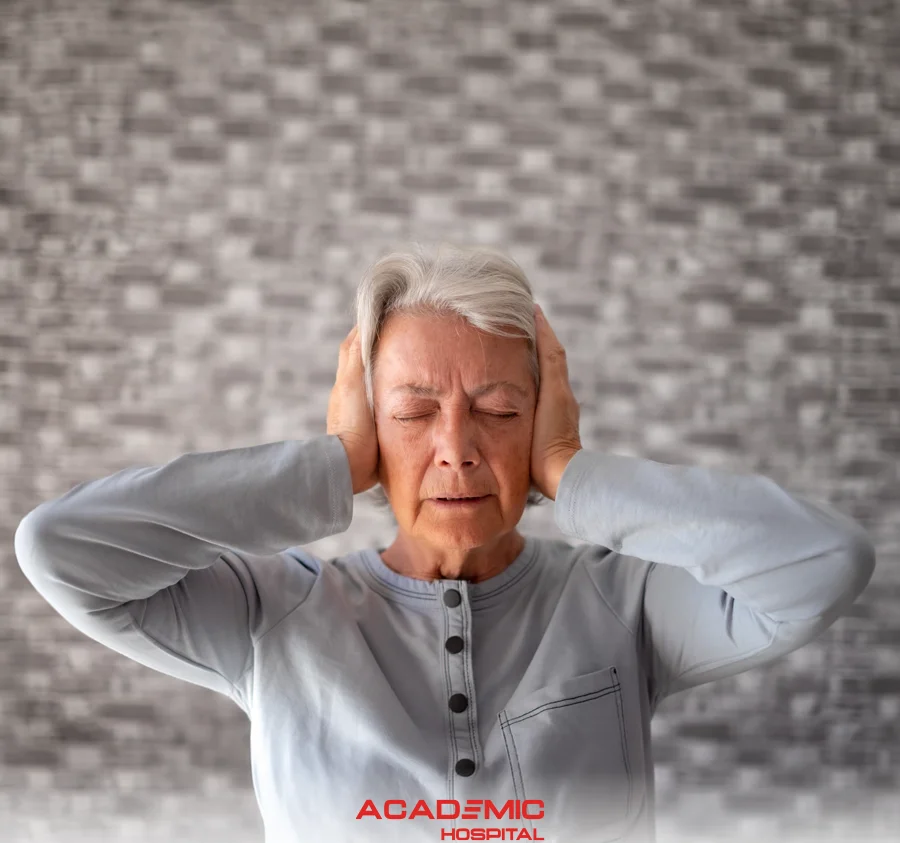
What Is Tinnitus? Causes, Diagnosis, and Treatment Methods
Contents
Imagine hearing a whistling, humming, or ringing sound in your ears in the silence of the night. Around 750 million people worldwide experience this, and in medical language, this condition is called "tinnitus". Tinnitus, that is, ringing in the ears, can sometimes be a sign of a serious disease.
What Is Tinnitus?
It is the perception of ringing, humming, whistling, or buzzing in the ear or inside the head even though there is no external sound source. It is not a disease, but a symptom of another underlying condition.
According to data from the National Institutes of Health (NIH), approximately 10-15% of adults live with chronic tinnitus, and in approximately 20% of these people, the sound is at a level that negatively affects daily life.
Tinnitus is not limited to a single type of sound. Some people hear a high-frequency, thin ringing sound, while others may perceive a low-pitched humming sound or rhythmic sounds similar to a heartbeat. The sound may be continuous or intermittent. It may be felt in one ear, both ears, or in the middle of the head.
Detailed hearing tests performed in the Audiology department help determine the nature and severity of tinnitus.
The Difference Between Subjective and Objective Tinnitus
There are two main types of tinnitus.
- Subjective Tinnitus: It is a sound heard only by the person themselves and accounts for more than 95% of cases.
- Objective Tinnitus: It is rare, and the doctor can also hear this sound with a stethoscope or special devices. It usually results from blood vessel anomalies or muscle spasms.
Tinnitus Causes and Risk Factors
The most common cause of tinnitus is noise-induced hearing loss. The outer hair cells in the inner ear (cochlea) are generally damaged when exposed to intense or prolonged noise and begin sending incorrect signals to the brain. The brain interprets these signals as "sound". However, tinnitus may also result from many different conditions.
Ear-Related Causes
- Noise-Induced Hearing Loss: Factors such as concerts, factory environments, and listening to music loudly with headphones may cause permanent damage to the outer hair cells of the inner ear. Sounds above 85 dB may cause damage within 8 hours. However, the damage varies depending on the intensity and duration of the sound and from person to person.
- Age-Related Hearing Loss (Presbycusis): It occurs as a result of the natural wear of inner ear structures in individuals due to various factors and age.
- Earwax Buildup: Excessive earwax may block the ear canal and cause temporary tinnitus. When it is cleaned, the sound usually disappears.
- Middle Ear Infection (Otitis Media): Infection and fluid buildup may impair the vibration of the eardrum and cause tinnitus.
- Otosclerosis: Otosclerosis, which is seen most commonly in women and during pregnancy, may cause hearing loss by blocking conduction due to calcification in the middle ear ossicles. Tinnitus occurs in advanced stages.
- Menière’s Disease: In diseases that develop due to fluid imbalance in the inner ear, dizziness and hearing loss are seen together.
Non-Ear Causes
- Temporomandibular Joint (TMJ) Disorders: Jaw joint problems may trigger tinnitus because of their proximity to the ear.
- Head and Neck Trauma: Impacts affecting the inner ear structures, auditory nerve, or hearing center in the brain may cause tinnitus.
- Medications (Ototoxic Medications): High-dose aspirin, some antibiotics (aminoglycosides), antidepressant medications, chemotherapy drugs (cisplatin), and some diuretics may trigger or worsen tinnitus.
- Cardiovascular Problems: High blood pressure, atherosclerosis (hardening of the arteries), and vascular anomalies may especially lead to pulsatile tinnitus.
- Stress and Anxiety: Although they do not directly cause tinnitus, they are among the most important factors that intensify the perception of existing tinnitus.
Risk Factors
Tinnitus Symptoms and Types
Tinnitus symptoms vary greatly from person to person. Some people notice it only in quiet environments, while others are aware of the sound throughout the day, and this may have a serious effect on concentration, sleep, and emotional balance.
Types of Sounds Heard
- Ringing: It is the most common type. It is described as a thin, high-frequency, continuous sound.
- Humming/buzzing: A low-pitched continuous sound similar to the buzzing of a bee.
- Whistling sound: It may be compared to the sound of wind or boiling water.
- Clicking: Rhythmic, short-lasting sounds. It may be associated with muscle spasms.
- Pulsatile sound: A rhythmic sound synchronized with the heartbeat. It may indicate vascular causes and requires additional evaluation.
The Effect of Tinnitus on Quality of Life
Tinnitus is not only a "sound". According to data from the American Speech-Language-Hearing Association (ASHA), approximately 30% of people with chronic tinnitus experience sleep difficulty, 25% have concentration problems, and 15% have symptoms of anxiety or depression. Even if the sound itself is not dangerous, its effect on quality of life cannot be ignored.
- If tinnitus that starts suddenly in one ear occurs together with sudden hearing loss, urgent medical evaluation is required.
- Pulsatile tinnitus heard in the rhythm of the pulse may indicate a vascular pathology and must be investigated.
- If tinnitus is accompanied by imbalance, dizziness, or facial numbness, consult a doctor without delay.
How Is Tinnitus Diagnosed?
1. Patient History (Anamnesis)
Your doctor may ask the following questions: What is the character of the sound? (ringing, humming, heartbeat) Is it one-sided or two-sided? How long has it been continuing? Is it continuous or intermittent? Do you have a history of noise exposure? Which medications are you using? What is your stress level? Your answers to these questions guide the diagnostic process.
2. Physical Examination
The ear, nose, and throat (ENT) specialist evaluates the ear canal, eardrum, middle ear structures, and jaw joint. Listening to the neck vessels (auscultation) is very important in suspected pulsatile tinnitus.
3. Audiological Tests
- Pure tone audiometry: It determines hearing thresholds. It shows at which frequencies hearing loss is present.
- Tympanometry: It measures middle ear pressure and eardrum mobility.
- Otoacoustic emission (OAE): It evaluates the function of the outer hair cells in the inner ear.
- Tinnitus pitch and loudness matching: It attempts to determine the frequency and severity of tinnitus.
- Minimal masking level test: It measures whether tinnitus can be masked by an external sound and the sound level required for this.
4. Imaging Methods
If unilateral tinnitus, pulsatile tinnitus, or neurological findings accompany the condition, magnetic resonance imaging (MRI) or computed tomography (CT) may be requested. These tests are used to rule out acoustic neuroma (auditory nerve tumor), vascular anomalies, or structural problems.
Would you like to get an expert opinion?
Tinnitus Treatment Methods
Tinnitus treatment is planned according to the underlying cause, the severity of the sound, and its effect on the person’s quality of life. There is no single "magic solution" in treatment.
Treatment of the Underlying Cause
Tinnitus is a symptom; therefore, the first step of treatment is to address the underlying cause. When earwax buildup is cleaned, medication dosage is adjusted, or middle ear infection is treated, tinnitus may disappear completely. Surgical intervention may be required for structural problems such as otosclerosis, while interventional radiological treatment may be required for vascular anomalies.
Hearing Aids
The condition most commonly accompanying tinnitus is hearing loss. Hearing aids reduce the perceived severity of tinnitus by amplifying environmental sounds. When the brain is occupied with amplified external sounds, the tinnitus sound falls into the background. Many of today’s hearing aids also include built-in tinnitus masking programs.
Sound Therapy
Its basic principle is to reduce the perceived level of tinnitus with external sounds. It has different forms:
- White noise devices: They mask tinnitus by producing a continuous, low-level background sound.
- Desktop sound generators: These are devices that are effective especially for patients who have difficulty falling asleep at night. They produce relaxing sounds such as nature sounds, rain, and waves.
- Notched music therapy: After the frequency of tinnitus is identified, this frequency is removed from music and the music is played. It aims to reduce the related neural activity in the brain.
Tinnitus Retraining Therapy (TRT)
Cognitive Behavioral Therapy (CBT)
CBT does not aim to eliminate tinnitus itself. Instead, it aims to change the person’s emotional response to tinnitus. Catastrophic scenarios such as "This sound will never go away" and "I am going to lose my mind" are replaced by more realistic and constructive thought patterns. Research has shown that CBT is effective in reducing tinnitus-related distress, sleep problems, and depressive symptoms.
Medication Treatment
There is currently no medication specifically approved for tinnitus itself. However, when tinnitus causes accompanying symptoms, medication treatment may help:
- Antidepressants: They may be used if anxiety or depression accompanies tinnitus. However, these types of medications may also cause tinnitus.
Living with Tinnitus: What You Can Do in Daily Life
In tinnitus management, your daily habits make a great difference in addition to professional treatment. The recommendations below may help reduce the effect of tinnitus and improve overall quality of life.
Protection from Noise
In loud environments (concerts, construction sites, workshops), be sure to use ear protection. When listening to music with headphones, adjust the volume so that it does not exceed 60% of your device. The "60/60 rule" is a useful guide: the volume should be at most 60%, and the listening time should be at most 60 minutes.
Stress Management
Stress is one of the strongest triggers that increase the perceived severity of tinnitus. Regular physical activity, deep breathing exercises, meditation, and stress management techniques help break the tinnitus cycle.
Sleep Hygiene
Tinnitus becomes most noticeable in quiet environments, especially at bedtime. Therefore:
- Add a low-level background sound to the room (fan, white noise app, nature sounds).
- Keep regular sleep hours.
- Reduce screen use 1 hour before bedtime.
Nutrition and Lifestyle
Some foods and habits may worsen tinnitus. Excessive salt consumption may disrupt the fluid balance of the inner ear. Alcohol and caffeine may increase tinnitus in some people (this varies individually; observe your own triggers). Smoking impairs the blood circulation of the inner ear, so quitting smoking is an important step in tinnitus management.
When Should You Consult a Doctor?
Not every tinnitus indicates an emergency, but in some situations, medical evaluation is required without delay. If you experience any of the following symptoms, consult a specialist physician:
Medical evaluation is recommended in the following situations:
- If tinnitus started suddenly, especially in one ear and is accompanied by hearing loss (the first 72 hours are critical)
- If you hear a pulsating sound in the rhythm of your pulse
- If tinnitus is accompanied by dizziness, imbalance, or nausea
- If facial numbness, weakness, or speech disorder develops
- If tinnitus gradually worsens or its character changes
- If it seriously affects your sleep, concentration, or emotional state
Conclusion
Although tinnitus is a common symptom affecting millions of people, it can be managed with the correct diagnosis and an individualized treatment approach. When hearing aids, sound therapy, TRT, cognitive behavioral therapy, and lifestyle changes are applied together, the majority of patients experience significant improvement in quality of life.
Frequently Asked Questions
References
- Mayo Clinic, "Tinnitus – Symptoms and Causes", mayoclinic.org
- National Institute on Deafness and Other Communication Disorders (NIDCD), "Tinnitus", nidcd.nih.gov
- American Speech-Language-Hearing Association (ASHA), "Tinnitus", asha.org
- World Health Organization (WHO), "Deafness and Hearing Loss – Fact Sheet", who.int
- Republic of Türkiye Ministry of Health, "Ear, Nose, and Throat Diseases Service Standards", saglik.gov.tr