

 WhatsApp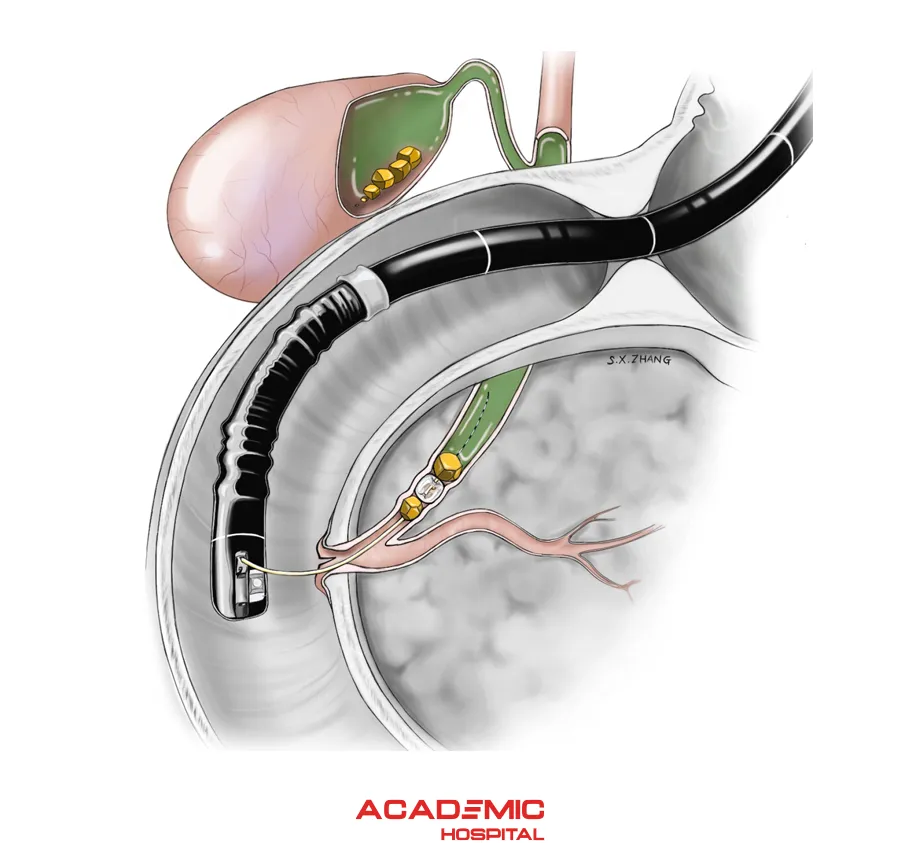
What Is ERCP? How It Is Performed, Indications and Possible Risks
Contents
- What Is ERCP?
- Why Is ERCP Performed?
- Is ERCP Diagnostic or Therapeutic?
- How Is ERCP Performed?
- What Is Sphincterotomy?
- How Are Bile Duct Stones Removed?
- Why Is a Stent Placed?
- Who May Need ERCP?
- How Do You Prepare for ERCP?
- How Is Sedation Used?
- How Long Does ERCP Take?
- What Happens After ERCP?
- What Are the Complications?
- How Is Post-ERCP Pancreatitis Prevented?
- Which Symptoms Require Urgent Care?
- Frequently Asked Questions
What Is ERCP?
Endoscopic retrograde cholangiopancreatography (ERCP) is an advanced endoscopic procedure that combines endoscopy and fluoroscopic X-ray imaging to evaluate and, particularly, treat selected disorders of the bile and pancreatic ducts.
A specialised side-viewing endoscope is passed through the mouth into the duodenum. Thin catheters and guidewires are then used to access the opening of the bile or pancreatic duct.
Contrast can be injected when necessary to visualise the ducts, while stone removal, dilation, drainage, stent placement or tissue sampling can be performed during the same procedure.
Why Is ERCP Performed?
ERCP is mainly performed when a bile-duct or pancreatic-duct problem is expected to require an intervention.
- Removal of common bile duct stones
- Relief of biliary obstruction
- Biliary drainage in acute cholangitis
- Treatment of benign or malignant biliary strictures
- Placement of biliary or pancreatic stents
- Treatment of bile leaks
- Selected pancreatic-duct disorders
- Tissue sampling from selected strictures
Is ERCP Diagnostic or Therapeutic?
ERCP was historically used more often as a diagnostic procedure.
Today, ultrasound, magnetic resonance cholangiopancreatography (MRCP) and endoscopic ultrasound (EUS) can evaluate many bile and pancreatic duct disorders without the same procedural risks.
How Is ERCP Performed?
An intravenous line is placed and sedation or, in selected patients, general anaesthesia is administered.
- The specialised ERCP endoscope is passed through the mouth, oesophagus and stomach into the duodenum.
- The papilla, where the bile and pancreatic ducts enter the intestine, is identified.
- A catheter and usually a guidewire are introduced into the appropriate duct.
- Contrast and fluoroscopic imaging may be used when required.
- Stones, strictures or obstruction can then be treated during the same procedure.
What Is Sphincterotomy?
Endoscopic sphincterotomy involves making a controlled incision in the muscular opening of the bile duct to enlarge access to the duct.
It is commonly used during bile duct stone removal but is not necessary in every ERCP.
How Are Bile Duct Stones Removed During ERCP?
Gallstones can migrate from the gallbladder into the common bile duct and cause obstruction.
During ERCP, stones can be removed using balloon catheters or basket devices. Difficult stones may require additional fragmentation techniques.
If complete removal is not possible at the first procedure, a temporary biliary stent may be inserted to maintain drainage.
Why Is a Stent Placed During ERCP?
Plastic or metal stents can be placed to maintain drainage when the bile or pancreatic duct is narrowed or obstructed.
Stents may be used for benign strictures, tumour-related obstruction, difficult bile duct stones, bile leaks and selected pancreatic-duct disorders.
The type of stent and whether it needs to be removed or exchanged depend on the underlying condition.
Who May Need ERCP?
ERCP may be considered when clinical assessment, blood tests and imaging suggest a bile-duct or pancreatic-duct problem that is likely to require intervention.
Common examples include common bile duct stones, obstructive jaundice, acute cholangitis, biliary or pancreatic strictures, tumour-related obstruction, bile leaks and selected complications of pancreatic disease.
How Do You Prepare for ERCP?
Patients should follow the fasting instructions provided by the endoscopy and anaesthesia teams.
The medical team should be informed about all medicines, particularly anticoagulants, antiplatelet medicines and diabetes treatments, as well as drug or contrast allergies, major medical conditions and any possibility of pregnancy.
How Are Sedation and Anaesthesia Used?
Sedation is commonly used during ERCP to maintain comfort and safety. General anaesthesia may be appropriate in selected patients or complex procedures.
The depth of sedation depends on the patient's medical condition, airway and respiratory risk, and the expected duration and complexity of the procedure.
How Long Does ERCP Take?
Procedure time varies according to complexity.
Many ERCP procedures can be completed in approximately 30–60 minutes, while difficult stones, strictures or complex stent procedures can take longer.
Recovery and observation after sedation add additional time to the overall hospital stay.
What Happens After ERCP?
Patients are monitored while the effects of sedation or anaesthesia wear off.
Temporary sore throat, bloating, gas or mild nausea may occur.
Some patients can go home after several hours of observation, while others may require overnight monitoring depending on the treatment performed, complication risk and overall health.
Patients should not drive or operate dangerous machinery on the day of sedation or anaesthesia.
What Are the Complications of ERCP?
ERCP has a higher adverse-event risk than routine diagnostic upper endoscopy because treatment is performed within the bile and pancreatic ducts.
- Post-ERCP pancreatitis
- Bleeding, particularly after sphincterotomy
- Cholangitis
- Gallbladder infection
- Perforation
- Sedation- or anaesthesia-related respiratory or cardiovascular problems
The risk varies according to the patient and the procedure, so a single fixed complication or mortality percentage should not be applied to every ERCP.
How Is Post-ERCP Pancreatitis Prevented?
Post-ERCP pancreatitis is one of the most important adverse events associated with ERCP.
Preventive strategies in appropriate patients can include:
- Periprocedural rectal NSAIDs such as indomethacin or diclofenac
- Guidewire-assisted cannulation
- Prophylactic pancreatic stenting in selected high-risk patients
- Appropriate intravenous fluid management
These strategies are individualised because some patients have contraindications.
Which Symptoms Require Urgent Medical Care After ERCP?
Seek prompt medical assessment for:
- Severe or worsening abdominal pain
- Fever or chills
- Persistent or severe vomiting
- Vomiting blood
- Black, tarry stools
- Difficulty breathing
- A significant deterioration in general condition
Assessment for Bile and Pancreatic Duct Disorders
The suitability of ERCP for bile duct stones, jaundice, cholangitis, biliary strictures or stent treatment is determined according to clinical and imaging findings.
Frequently Asked Questions
References
- Academic Hospital. ERCP
- American Society for Gastrointestinal Endoscopy. Post-ERCP Pancreatitis Prevention Strategies
- European Society of Gastrointestinal Endoscopy. ERCP-related Adverse Events Guideline