
 WhatsApp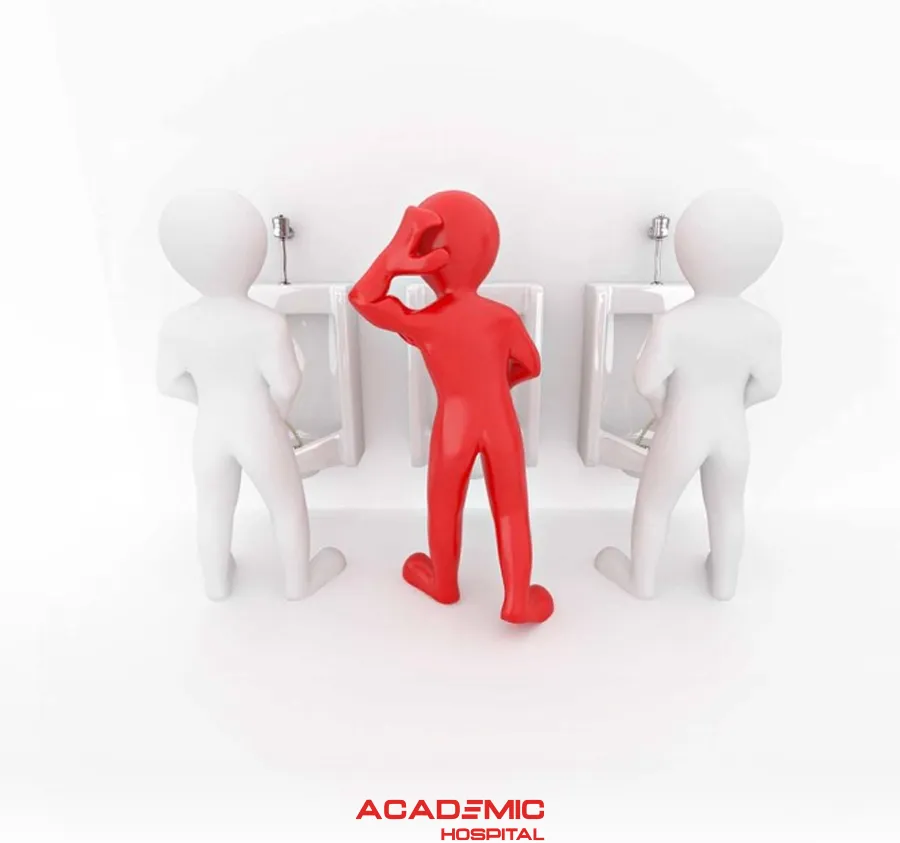
What Is Shy Bladder Syndrome (Paruresis)? Symptoms, Causes and Treatment
Contents
- What Is Paruresis?
- What Are the Symptoms?
- When Do Symptoms Occur?
- What Causes Paruresis?
- Does All Urinary Hesitancy Mean Paruresis?
- What Else Can Cause Difficulty Urinating?
- What Is Dysfunctional Voiding?
- How Is Paruresis Diagnosed?
- Which Tests May Be Used?
- How Is Paruresis Treated?
- What Is Graduated Exposure?
- Is Pelvic Floor Therapy Needed?
- When Is Urgent Assessment Needed?
- Frequently Asked Questions
What Is Shy Bladder Syndrome (Paruresis)?
Paruresis, or shy bladder syndrome, describes marked difficulty starting urination or an inability to urinate when other people are nearby or when a person feels that they may be heard or observed.
Symptoms commonly occur in public toilets, crowded environments or when another person is nearby. The same person may urinate normally at home or in an environment where they feel completely private and comfortable.
Paruresis can be closely related to anxiety and fear of social evaluation. However, urinary and neurological causes should be considered before assuming that difficulty urinating is caused by anxiety alone.
What Are the Symptoms of Paruresis?
- Difficulty initiating urination in public toilets
- Inability to urinate when someone is in a nearby cubicle
- Anxiety about being heard while urinating
- Needing a long time before urine flow begins
- Avoiding busy public toilets
- Planning travel or social activities around toilet access
- Restricting fluid intake to avoid needing a public toilet
- Interference with work, education, travel or social life
When Do Symptoms Occur?
A characteristic feature is that symptoms vary considerably according to the social environment.
A person may urinate normally when completely alone but have increasing difficulty when another person is nearby, waiting outside the toilet or using an adjacent cubicle.
Severity varies from mild situational hesitation to an inability to use toilets outside the home.
What Causes Paruresis?
There is no single established cause.
Anxiety, fear of being evaluated by others, anticipation of being unable to urinate and previous distressing toilet experiences may contribute to the condition.
Increasing anxiety can make relaxation of the urinary outlet and pelvic floor more difficult. A previous unsuccessful attempt can then create an expectation of failure in future situations, reinforcing the anxiety cycle.
Does All Urinary Hesitancy Mean Paruresis?
No.
Difficulty starting the urinary stream is known as urinary hesitancy and can result from many different conditions.
In paruresis, difficulty is usually strongly linked to specific social settings and improves in private. Persistent difficulty urinating even at home should prompt investigation for other causes.
What Else Can Cause Difficulty Urinating?
- Benign prostate enlargement
- Urethral stricture
- Bladder outlet obstruction
- Tight or poorly relaxing pelvic floor muscles
- Urinary tract infection or prostatitis
- Urinary tract stones
- Severe constipation
- Pelvic organ prolapse
- Underactive bladder
- Diabetes-related bladder dysfunction
- Spinal cord disease or injury
- Neurological conditions including multiple sclerosis, Parkinson's disease or stroke
- Certain medicines
- Temporary urinary retention following surgery or anaesthesia
What Is Dysfunctional Voiding?
During normal urination, the bladder contracts while the pelvic floor and urinary sphincter relax.
Dysfunctional voiding can occur when the pelvic floor or sphincter fails to relax appropriately during urination in the absence of a neurological disorder.
It may begin during childhood and can persist into adulthood. Symptoms can include an intermittent stream, straining, incomplete emptying or recurrent urinary tract infections.
How Is Paruresis Diagnosed?
There is no single blood test or scan that confirms paruresis.
Assessment considers the circumstances in which symptoms occur, whether urination is normal in private, urinary stream quality, incomplete emptying, pain or infection symptoms, medication use and neurological or surgical history.
When appropriate, urinary and neurological causes should be excluded before symptoms are attributed to paruresis.
Which Tests May Be Used?
Not every patient requires every test. Depending on symptoms, assessment may include:
- Urinalysis
- Post-void residual urine measurement
- Uroflowmetry
- Ultrasound
- Urodynamic testing in selected patients
- Cystoscopy when structural obstruction is suspected
How Is Paruresis Treated?
Treatment is planned after ensuring that another urinary disorder does not better explain the symptoms.
Approaches can include:
- Education about paruresis and the anxiety cycle
- Cognitive behavioural therapy (CBT)
- Graduated exposure
- Working with anxiety-related thoughts
- Relaxation and breathing strategies as supportive techniques
- Treatment of coexisting social anxiety or other mental-health conditions
There is limited evidence for a specific medication that directly treats paruresis. Medication may be considered separately when a coexisting anxiety disorder requires treatment.
What Is Graduated Exposure?
Graduated exposure involves repeatedly practising urination in increasingly challenging environments, beginning with situations that produce relatively little anxiety.
A personalised hierarchy might progress from urinating alone at home to having a trusted person elsewhere in the home, then closer to the toilet, followed by quiet public toilets and eventually busier environments.
The aim is not to force the person into the most difficult situation immediately, but to create repeated successful experiences while anxiety remains manageable.
Is Pelvic Floor Therapy Needed?
Pelvic floor therapy is not required for every person with paruresis.
If assessment shows that the pelvic floor fails to relax appropriately during urination, physiotherapy focusing on pelvic-floor relaxation, coordination or biofeedback may be useful.
When Is Urgent Assessment Needed?
A sudden inability to urinate despite a full bladder, especially with severe lower abdominal pain or swelling, requires urgent medical assessment. This may represent acute urinary retention and should not simply be attributed to shy bladder syndrome.
The Cause of Difficulty Urinating Should Be Identified
Urinary hesitancy is not always caused by paruresis. Urological assessment can help distinguish obstruction, pelvic-floor dysfunction, neurological causes and bladder-emptying problems.
Frequently Asked Questions
References
- Academic Hospital. Shy Bladder Syndrome
- National Institute of Diabetes and Digestive and Kidney Diseases. Symptoms & Causes of Urinary Retention
- National Institute of Diabetes and Digestive and Kidney Diseases. Diagnosis of Urinary Retention
- PubMed. Paruresis (Shy Bladder Syndrome): A Cognitive-Behavioral Treatment Approach
- PubMed. Paruresis: Cognitive Behavioral Formulation and Treatment