
 WhatsApp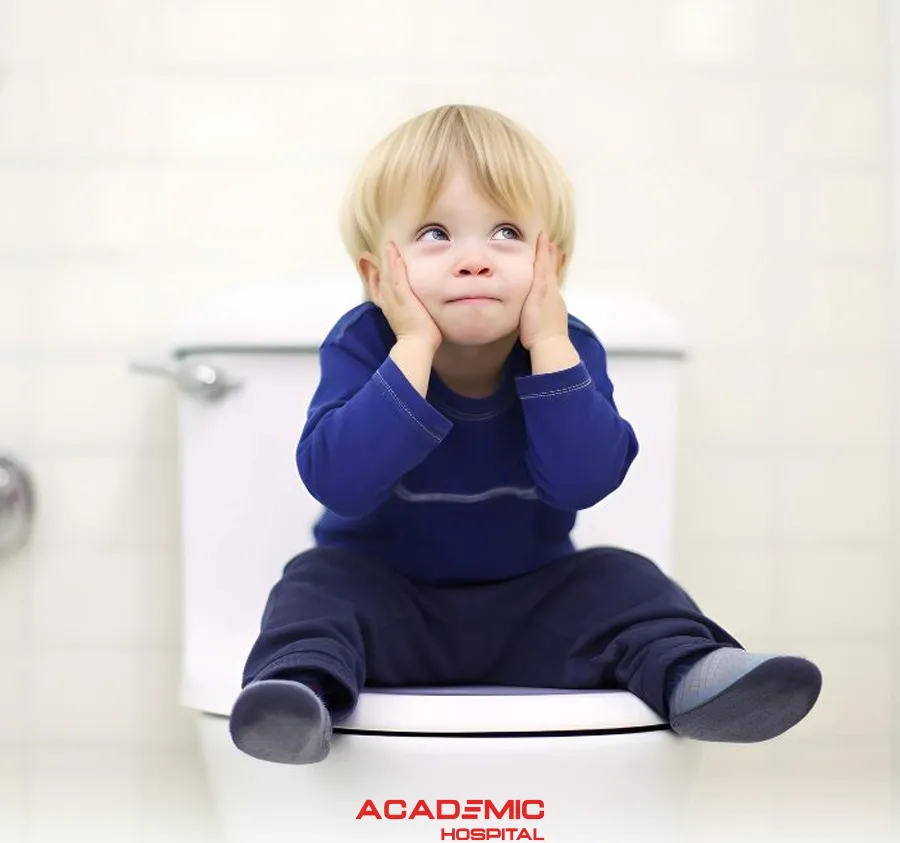
Constipation in Children: Symptoms, Causes and Treatment
Contents
- What Is Constipation in Children?
- What Causes Constipation?
- How Does Stool Withholding Develop?
- What Are the Symptoms?
- How Often Should a Child Have a Bowel Movement?
- How Is Constipation Diagnosed?
- Which Symptoms May Suggest an Underlying Condition?
- How Is Constipation Treated?
- How Long Are Laxatives Used?
- What Should a Child Eat?
- How Can Toilet Habits Be Improved?
- When Should a Child See a Doctor?
- Frequently Asked Questions
What Is Constipation in Children?
Constipation in children is not defined only by infrequent bowel movements. It can involve hard or dry stools, painful or difficult defecation, stool-withholding behaviour, unusually large stools or accumulation of stool in the rectum or colon.
Constipation is common during childhood. In most children there is no structural or serious underlying disease, and the condition is classified as functional constipation.
A painful bowel movement can cause a child to avoid passing stool. The longer stool remains in the colon, the more water is absorbed from it, making it harder and more difficult to pass.
What Causes Constipation in Children?
Most childhood constipation is functional, meaning that no specific structural or biochemical disease explains the symptoms.
Common contributing factors include:
- Withholding stool after a painful bowel movement
- Toilet-training transitions
- Starting nursery or school
- Avoiding unfamiliar or uncomfortable toilets
- Changes in diet
- Insufficient age-appropriate dietary fibre
- Inadequate fluid intake or dehydration
- Changes in daily routine
Less commonly, constipation can be associated with Hirschsprung disease, hypothyroidism, coeliac disease, neurological or metabolic disorders, anorectal abnormalities or certain medicines.
How Does Stool Withholding Develop?
Stool withholding is one of the central mechanisms in functional constipation.
- The child experiences a hard or painful bowel movement.
- The child begins delaying defecation to avoid pain.
- Stool remains in the colon for longer.
- More water is absorbed and the stool becomes harder.
- The next bowel movement becomes even more painful.
- Withholding behaviour becomes reinforced.
Children may stand on tiptoe, cross their legs, tighten their buttocks, rock backwards and forwards or hide when trying to suppress the urge to pass stool.
What Are the Symptoms of Constipation in Children?
Symptoms may include:
- Infrequent bowel movements
- Hard, dry or lumpy stools
- Painful or difficult defecation
- Stool withholding
- Very large stools
- Abdominal pain or bloating
- Avoiding the toilet
- Faecal soiling
- Pain around the anus during defecation
Can Constipation Cause Faecal Soiling?
Yes. When a large mass of hard stool remains in the rectum, softer stool may pass around it and leak into the child's underwear.
This is not deliberate behaviour and the child should not be punished or embarrassed for it.
How Often Should a Child Have a Bowel Movement?
Normal stool frequency varies according to age and between individual children, particularly during infancy.
There is therefore no rule that every child must open their bowels every day or that one particular frequency is normal for all children.
Stool consistency, pain, withholding behaviour and stool accumulation are often more informative than frequency alone.
How Is Constipation Diagnosed in Children?
Constipation can usually be assessed from a detailed history and physical examination.
The clinician may ask about:
- Bowel-movement frequency
- Stool consistency and size
- Painful defecation
- Withholding behaviour
- Faecal soiling
- Diet and fluid intake
- Toilet training
- Current medicines
- Growth and development
Routine laboratory tests and imaging are not generally required for typical functional constipation. Tests may be considered if the history or examination suggests another underlying condition.
Which Symptoms May Suggest an Underlying Condition?
Features that may require further investigation include:
- Failure of a full-term newborn to pass meconium within the first 48 hours
- Constipation beginning from birth or the first weeks of life
- Marked abdominal distension
- Bilious vomiting
- Poor growth or inadequate weight gain
- Neurological abnormalities
- Anorectal or sacral abnormalities
- Constipation that remains resistant to appropriate treatment
Constipation beginning in the neonatal period, delayed passage of meconium beyond 48 hours, significant abdominal distension or bilious vomiting should not simply be assumed to be functional constipation.
How Is Constipation Treated in Children?
The goal is not simply to produce one bowel movement. Treatment aims to restore regular, comfortable defecation and break the cycle of painful stool withholding.
1. Treating Faecal Impaction
If a significant amount of stool has accumulated, this may need to be cleared first. This process is known as disimpaction.
The method and medication are selected according to the child's age and clinical condition.
2. Maintenance Treatment
The aim is to maintain soft, painless bowel movements and prevent stool from accumulating again.
Osmotic laxatives containing polyethylene glycol (PEG) are commonly used as first-line medication for functional constipation in children. The appropriate product and dose should be determined by a healthcare professional.
3. Establishing a Toilet Routine
For toilet-trained children, sitting on the toilet regularly after meals can help use the body's natural gastrocolic response.
4. Diet and Fluids
An age-appropriate diet containing adequate fibre and sufficient fluids should be encouraged.
How Long Are Laxatives Used in Children?
There is no single treatment duration for every child.
Some children may need treatment for several months, while chronic functional constipation can require longer management.
Treatment aims to achieve:
- Regular soft stools
- Painless defecation
- Resolution of withholding
- Resolution of faecal soiling when present
- A reliable toilet routine
Laxatives should not automatically be stopped as soon as bowel movements become regular. Reduction and discontinuation should be planned according to the child's progress.
Do not give a child laxatives, enemas or herbal remedies without appropriate medical advice. The medication, dose and duration depend on age and clinical circumstances.
What Should a Child Eat When Constipated?
Children should consume an age-appropriate amount of dietary fibre.
Sources include:
- Vegetables
- Fruit
- Whole grains
- Lentils, beans and chickpeas
- Age-appropriate nuts
Fibre should be increased gradually and accompanied by adequate fluid intake.
Fluid requirements vary according to the child's age, size, physical activity, health and climate. A single fixed amount of water is not appropriate for every child.
How Can Toilet Habits Be Improved?
For toilet-trained children, sitting on the toilet for around 5–10 minutes after meals may help establish a routine.
The child's feet should be supported rather than left dangling, helping create a more effective position for defecation.
Children should not be forced, punished or embarrassed for withholding or soiling. Positive reinforcement is generally more appropriate.
When Should a Child See a Doctor for Constipation?
Medical assessment is appropriate when constipation persists, repeatedly returns or causes significant symptoms.
Assessment should be considered for:
- Constipation lasting more than two weeks
- Significant pain with bowel movements
- Repeated faecal soiling
- Blood in the stool
- Persistent or severe abdominal pain
- Poor appetite or problems with weight gain
- Failure to improve with appropriate home measures
Have Your Child's Constipation Assessed
Hard or painful stools, withholding, recurrent abdominal pain or faecal soiling can be assessed by a paediatric gastroenterology team.
Frequently Asked Questions
References
- Academic Hospital. Çocuklarda Kabızlık: Nedenler, Belirtiler ve Tedavi Yöntemleri
- National Institute for Health and Care Excellence. Constipation in Children and Young People: Diagnosis and Management
- National Institute of Diabetes and Digestive and Kidney Diseases. Symptoms & Causes of Constipation in Children
- National Institute of Diabetes and Digestive and Kidney Diseases. Diagnosis of Constipation in Children
- National Institute of Diabetes and Digestive and Kidney Diseases. Treatment for Constipation in Children
- ESPGHAN / NASPGHAN. Evaluation and Treatment of Functional Constipation in Infants and Children