

 WhatsApp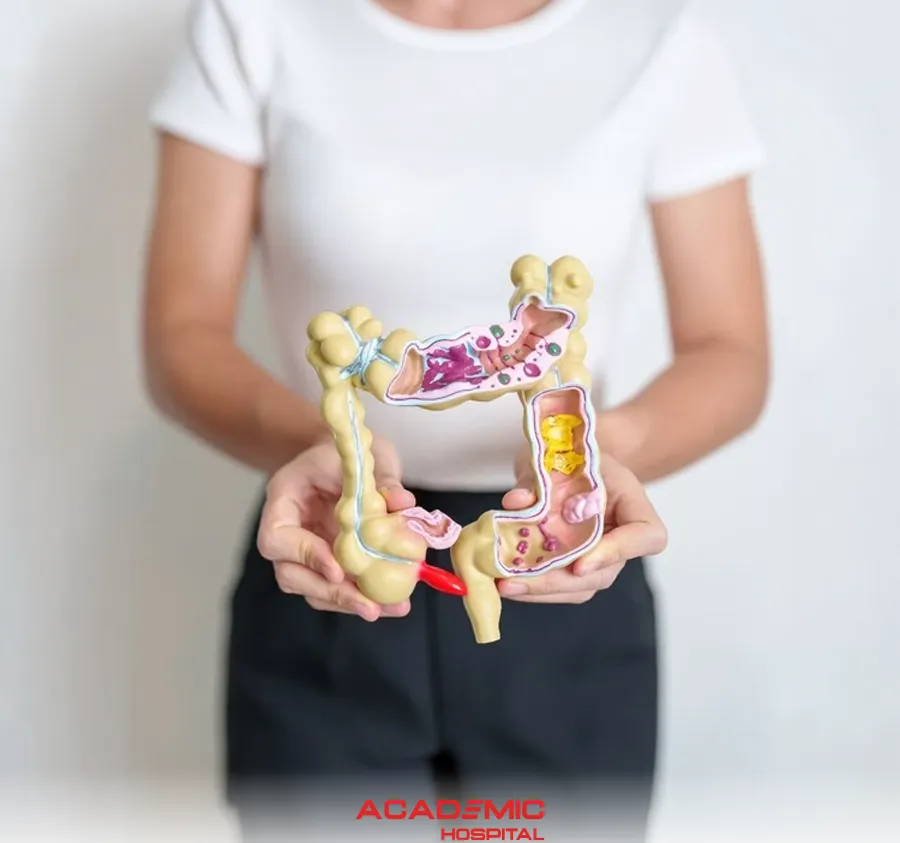
What Are Colon Polyps? Symptoms, Types, Diagnosis and Treatment
Contents
- What Is a Polyp?
- What Is a Colon Polyp?
- What Are the Types of Colon Polyps?
- Do All Colon Polyps Become Cancerous?
- What Causes Colon Polyps and Who Is at Risk?
- What Are the Symptoms?
- How Are Colon Polyps Diagnosed?
- Why Is Colonoscopy Important?
- How Are Colon Polyps Treated?
- How Is Polypectomy Performed?
- Is Polyp Removal Painful?
- Why Are Polyps Sent for Pathology?
- When Is the Next Colonoscopy Needed?
- When Should Colorectal Cancer Screening Begin?
- When Should You See a Doctor?
- Frequently Asked Questions
Colon polyps are growths that develop from the inner lining of the colon or rectum. Most polyps are initially benign and cause no symptoms.
However, some types have the potential to develop into colorectal cancer over time. Identifying and removing appropriate precancerous polyps during colonoscopy can therefore help prevent colorectal cancer.
What Is a Polyp?
A polyp is a growth of tissue projecting from the inner lining of an organ.
Polyps may occur in different parts of the body, including the colon and rectum, stomach, nose and sinuses, and uterus.
The biological behaviour of a polyp depends on the organ involved and its histological type. The term “polyp” by itself does not mean cancer or precancer.
What Is a Colon Polyp?
Colon polyps are growths arising from the inner lining of the colon or rectum.
They may appear as:
- Pedunculated polyps: Attached to the bowel wall by a stalk
- Sessile polyps: Growing from a broader base on the bowel surface
Although appearance can provide useful information during colonoscopy, the definitive type is determined by microscopic examination of the removed tissue.
What Are the Types of Colon Polyps?
Adenomatous Polyps
Adenomas are important precursors of colorectal cancer.
They may be classified as:
- Tubular adenomas
- Tubulovillous adenomas
- Villous adenomas
Larger size, villous features and high-grade dysplasia can be associated with a higher risk profile.
Serrated Lesions
Serrated colorectal lesions include:
- Hyperplastic polyps
- Sessile serrated lesions
- Traditional serrated adenomas
Sessile serrated lesions and traditional serrated adenomas can act as precursors to colorectal cancer.
In contrast, some small hyperplastic polyps, particularly those in the rectosigmoid colon, have very low malignant potential.
Other Polyps
Other lesions include inflammatory and hamartomatous polyps. Certain inherited hamartomatous polyposis syndromes may be associated with an increased cancer risk.
Do All Colon Polyps Become Cancerous?
No. Many colorectal polyps will never become cancerous.
Risk varies according to:
- Histological type
- Size
- Number of polyps
- Degree of dysplasia
- Villous features
- Characteristics of serrated lesions
A substantial proportion of colorectal cancers develop over time from certain precancerous polyps. Because this process generally takes time, screening provides an opportunity to detect and remove these lesions before cancer develops.
What Causes Colon Polyps and Who Is at Risk?
There is no single cause of colorectal polyps. Genetic changes in bowel cells interact with age, inherited susceptibility and environmental or lifestyle factors.
Factors associated with increased risk include:
- Increasing age
- A previous adenoma or clinically important serrated lesion
- A personal history of colorectal cancer
- A first-degree relative with colorectal cancer or certain advanced polyps
- Familial adenomatous polyposis
- Lynch syndrome and other inherited colorectal cancer syndromes
- Smoking
- Obesity
- Physical inactivity
- Dietary patterns high in processed and red meat
- Excessive alcohol consumption
What Are the Symptoms of Colon Polyps?
Most colon polyps cause no symptoms. They are therefore often detected during colorectal cancer screening or colonoscopy performed for another reason.
Possible symptoms include:
- Visible rectal bleeding or blood in the stool
- Occult gastrointestinal bleeding
- Iron-deficiency anaemia
- Persistent change in bowel habits
- Occasionally abdominal discomfort or cramping
These symptoms are not specific to polyps and may occur with haemorrhoids, anal fissures, inflammatory bowel disease or colorectal cancer.
Repeated rectal bleeding should not automatically be assumed to be caused by haemorrhoids. Persistent bleeding, unexplained iron-deficiency anaemia, a persistent change in bowel habits or unexplained weight loss requires medical assessment.
How Are Colon Polyps Diagnosed?
Several methods may be used for colorectal screening and investigation, including:
- Colonoscopy
- Stool-based colorectal cancer screening tests
- CT colonography
- Flexible sigmoidoscopy in some screening programmes
Stool tests do not directly visualise or remove a polyp. A positive stool screening test generally requires diagnostic colonoscopy.
CT colonography can demonstrate colorectal lesions but cannot remove them during the same examination. A subsequent colonoscopy may therefore be required if an abnormality is identified.
Why Is Colonoscopy Important for Colon Polyps?
Colonoscopy allows direct examination of the lining of the colon and rectum.
A major advantage is that suitable polyps can be:
- Identified
- Biopsied when appropriate
- Removed during the same procedure
- Sent for pathological examination
Colonoscopy can therefore provide diagnostic, preventive and therapeutic benefits.
The quality of colonoscopy is important. Adequate bowel preparation, complete examination of the colon, careful lesion detection and complete removal of identified polyps all affect the reliability of the procedure.
How Are Colon Polyps Treated?
Most colorectal polyps can be removed endoscopically during colonoscopy.
The removal technique depends on:
- Polyp size
- Shape
- Location
- Features suggesting possible malignancy
Small lesions may be removed with snare polypectomy. Larger or broad-based lesions may require advanced techniques such as endoscopic mucosal resection (EMR) or, in selected cases, endoscopic submucosal dissection (ESD).
Surgery may be required when a lesion cannot be safely or completely removed endoscopically or when invasive cancer is identified.
How Is Polypectomy Performed?
Polypectomy is the endoscopic removal of a colorectal polyp.
Depending on the lesion, a wire snare may be used with:
- Cold-snare technique
- Electrocautery-assisted hot-snare technique
For larger lesions, fluid may be injected beneath the polyp to lift it away from the deeper bowel wall before controlled resection.
The aim is to achieve safe and complete removal and to obtain tissue suitable for pathological assessment.
Is Polyp Removal Painful?
Polyp removal is generally performed during colonoscopy, which is commonly carried out under sedation. Most patients therefore do not experience the polypectomy itself as a painful procedure.
Temporary effects after colonoscopy can include:
- Gas
- Bloating
- Mild abdominal cramping or discomfort
Polypectomy is generally safe, but complications such as bleeding or bowel perforation can occur. The risk can be higher with larger or technically complex lesions.
Seek medical attention after polypectomy if you develop severe or increasing abdominal pain, fever, faintness, or heavy or persistent rectal bleeding.
Why Are Removed Polyps Sent for Pathology?
The appearance of a polyp during colonoscopy can provide useful clues, but its definitive characteristics are established by pathological examination.
A pathology report may assess:
- Histological type
- Adenomatous or serrated characteristics
- Degree of dysplasia
- Whether cancer is present
- Resection margins when relevant
The pathology result helps determine whether further treatment is required and when surveillance colonoscopy should be performed.
When Is the Next Colonoscopy Needed After Polyp Removal?
There is no single surveillance interval for everyone.
Timing depends on:
- Number of polyps
- Size
- Histological type
- Presence of dysplasia
- Whether removal was complete
- Quality of bowel preparation
- Completeness and quality of the colonoscopy
- Personal and family colorectal cancer risk
Examples from the U.S. Multi-Society Task Force recommendations following a high-quality complete colonoscopy include:
| Baseline Finding | Example Surveillance Interval |
|---|---|
| 1–2 tubular adenomas smaller than 10 mm | 7–10 years |
| 3–4 adenomas smaller than 10 mm | 3–5 years |
| 5–10 adenomas, an adenoma 10 mm or larger, or certain advanced histological features | Usually 3 years |
| More than 10 adenomas | Approximately 1 year; genetic assessment may also be considered |
Serrated lesions have separate surveillance recommendations according to number, size and the presence of dysplasia.
When Should Colorectal Cancer Screening Begin?
Screening is designed to identify colorectal cancer and precancerous lesions before symptoms develop.
Screening programmes differ between countries.
Under Türkiye's national programme, average-risk men and women aged 50–70 years are offered:
- Faecal occult blood testing every 2 years
- Colonoscopy every 10 years within the national screening framework
Other international guidelines use different ages. For example, the USPSTF and American College of Gastroenterology recommend beginning average-risk colorectal cancer screening at age 45.
The appropriate starting age should therefore reflect the person's country, screening programme and individual risk.
Who May Need Earlier or More Intensive Screening?
A personalised programme may be required for people with:
- A first-degree relative with early colorectal cancer
- A significant family history of advanced colorectal polyps
- A previous adenomatous or high-risk serrated polyp
- Previous colorectal cancer
- Lynch syndrome
- Familial adenomatous polyposis or another inherited polyposis syndrome
- Long-standing ulcerative colitis or Crohn's colitis
When Should You See a Doctor About Colon Polyps?
Gastroenterology assessment may be appropriate if you have:
- Repeated blood in the stool
- Unexplained iron-deficiency anaemia
- A new or persistent change in bowel habits
- Unexplained weight loss
- A previous colorectal polyp
- A family history of colorectal polyps or cancer
- Reached the appropriate age for colorectal cancer screening
Assess Your Colorectal Polyp and Cancer Risk
Age, family history, previous polyps, colonoscopy findings and pathology results can be assessed together to determine an appropriate screening or surveillance plan.
Frequently Asked Questions
References
- Academic Hospital. Kolon Polipleri Nedir ve Nasıl Tedavi Edilir?
- Republic of Türkiye Ministry of Health, General Directorate of Public Health. Cancer Screening Programmes
- World Health Organization. Colorectal Cancer
- U.S. Preventive Services Task Force. Colorectal Cancer: Screening
- U.S. Multi-Society Task Force on Colorectal Cancer / ASGE. Recommendations for Follow-Up After Colonoscopy and Polypectomy
- Centers for Disease Control and Prevention. Screening for Colorectal Cancer