
 WhatsApp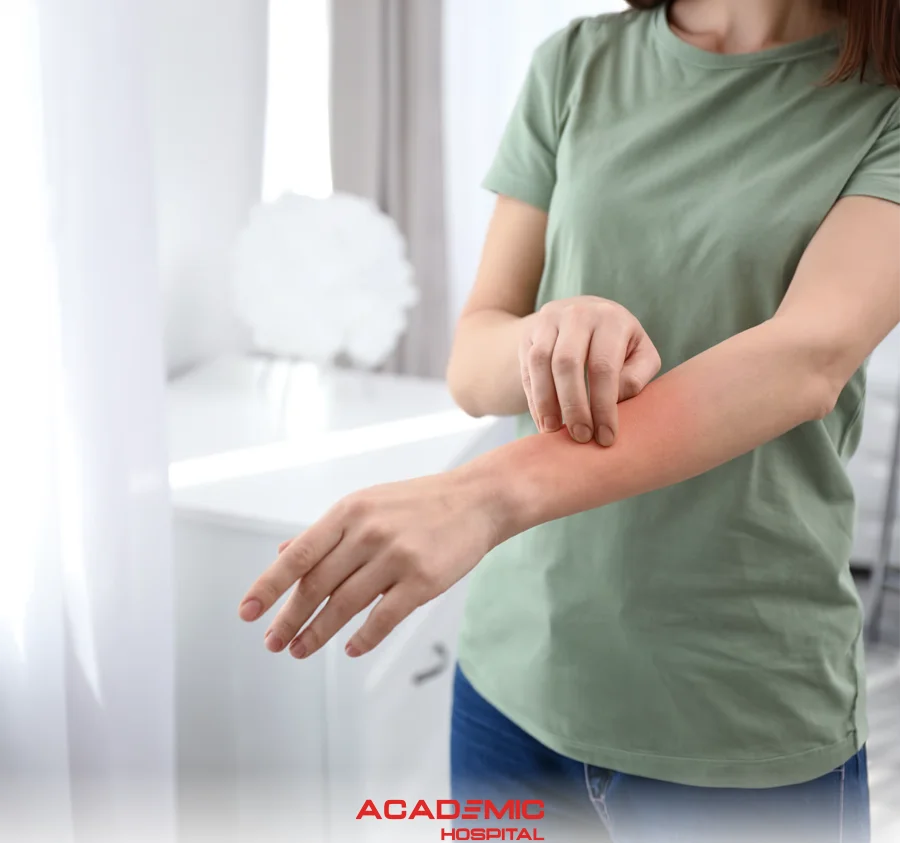
What Is Eczema? Symptoms, Types and Treatment
Contents
Eczema is a group of inflammatory, itchy skin diseases that may progress with dryness, redness, scaling, fluid-filled blisters or oozing on the skin. Eczema and dermatitis are two terms that are often used interchangeably. Eczema is one of the most common skin diseases; it can be seen at any age, from infancy to older adulthood.
It is not contagious. It develops depending on the person’s own internal structure and environmental factors.
Get Information from Our Specialists for Eczema and Skin Health Complaints!
Book an AppointmentWhat Is Eczema?
Eczema is a group of inflammatory, itchy skin diseases that may progress with dryness, redness, scaling, fluid-filled blisters or oozing on the skin. Eczema and dermatitis are two terms that are often used interchangeably. Eczema is one of the most common skin diseases; it can be seen at any age, from infancy to older adulthood.
It is not contagious. It develops depending on the person’s own internal structure and environmental factors.
What Are the Types of Eczema?
Eczema can be classified as exogenous (related to external factors) and endogenous (related to internal factors).
Allergic contact eczema, which occurs when a substance that comes into contact with the skin causes an allergic reaction, or irritant contact dermatitis, which occurs when it causes irritation, are the most common exogenous eczemas. Sunlight (ultraviolet) and medications may also cause eczema. Among endogenous eczemas, atopic dermatitis and seborrheic dermatitis are the leading types; nummular dermatitis, lichen simplex chronicus, dyshidrosis and stasis dermatitis are also included in this group. Although they are mainly associated with internal factors, there are many external factors that trigger endogenous eczemas, such as dry air, hot baths and irritating chemical substances.
In addition, eczemas are divided into acute and chronic eczema according to their duration.
- Atopic dermatitis: It is the most common type of eczema. It usually begins in infancy or childhood. Patients have overly reactive immune systems, and stimulation by internal factors, such as psychological stress, and external factors causes inflammation in the skin. In addition, some patients have a genetic disorder that impairs the function of the skin’s protective barrier.
- Seborrheic dermatitis: It is seen in oily areas of the skin such as the scalp and face. Seasonal changes, genetic predisposition, stress and the Malassezia fungus found in the skin flora play a role in its development.
- Dyshidrotic eczema: It appears as itchy small bumps and blisters on the hands and feet. Excessive sweating, smoking, metal allergies, stress and seasonal changes are among the contributing factors.
- Nummular (discoid) eczema: Round, coin-shaped, oozing or dry, very itchy lesions are seen on the arms and legs. Atopic constitution, dry skin, drug allergy and sensitivity to contact substances may be responsible.
- Stasis dermatitis: It develops due to venous circulation insufficiency in the legs.
- Lichen simplex chronicus (neurodermatitis): It develops as a result of a severe itching and scratching cycle. It occurs especially in areas that the hand can easily reach, such as the nape of the neck and the lower legs. Stress is a very important factor.
- Contact dermatitis: Allergic contact dermatitis develops through sensitization to many chemical substances such as nickel, chromium, perfume and dye. Irritant contact dermatitis, on the other hand, is related to contact with acidic substances, detergents, degreasers and similar substances that wear down the skin’s protective barrier.
What Are the Symptoms of Eczema?
Itching is the most prominent symptom of eczema. In acute eczema, redness, swelling, small blisters, oozing and crusts are seen. In chronic eczema, the skin is dry and scaly, and thickening may occur.
Findings that should be monitored:
- Severe itching that disrupts sleep
- Widespread redness, oozing or crusting of the skin
- Skin thickening, cracking or bleeding
- Pain, increased warmth, pus or suspicion of infection
- Recurrent flare-ups or complaints that do not resolve despite treatment
How Is Eczema Treated?
Eczema treatment requires a personalized approach. Different treatments are applied according to the patient’s age, the type, severity and extent of eczema. It is necessary to avoid the factors that cause or trigger eczema and to use appropriate moisturizers to relieve skin dryness. Creams and lotions containing cortisone and other active substances, oral medications and light therapies are applied according to the severity of the disease.
The treatment plan should be determined by a dermatologist, and the patient should be followed up regularly. The patient should be informed that eczema may recur from time to time and that avoiding triggers is important for disease control.
In daily care, using cleansers that do not dry the skin, avoiding long baths with very hot water, applying moisturizer after bathing and staying away from known triggers may support disease control.
When Should You See a Dermatologist for Eczema?
If eczema symptoms recur frequently, if itching disrupts daily life and sleep, or if oozing, crusting, pain or signs of infection develop on the skin, a dermatologist should be consulted. In infants, children, widespread involvement and eczema occurring in sensitive areas such as the face, around the eyes and hands, it is important that the treatment plan is made by a specialist physician.
Do Not Delay Your Eczema Complaints
You can book an appointment with Academic Hospital specialists for a personalized assessment and the necessary treatment plan.
Frequently Asked Questions
References
The information in this article about the definition of eczema, types of eczema, symptoms, triggers, treatment approach and warnings for consulting a physician is supported by the following authoritative health sources.
- American Academy of Dermatology Association, "Eczema types: Atopic dermatitis overview", aad.org
- American Academy of Dermatology Association, "Eczema types: Atopic dermatitis symptoms", aad.org
- Mayo Clinic, "Atopic dermatitis (eczema) - Symptoms and causes", mayoclinic.org
- Mayo Clinic, "Atopic dermatitis (eczema) - Diagnosis and treatment", mayoclinic.org
- NHS, "Atopic eczema", nhs.uk