
 WhatsApp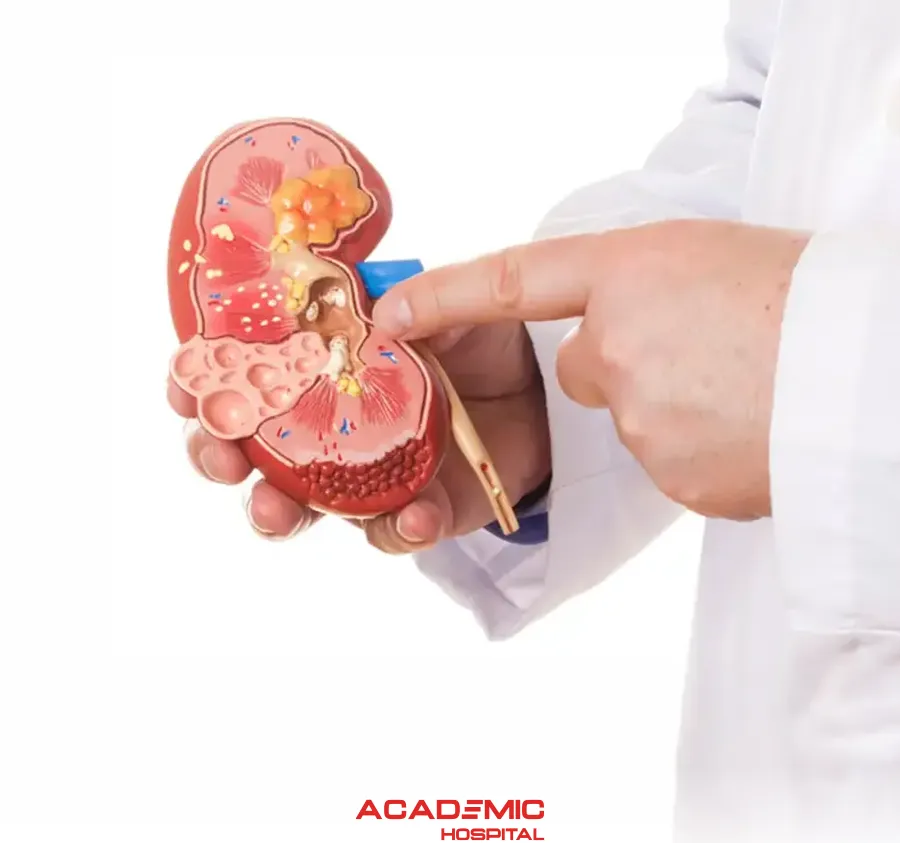
Urinary Stones: Symptoms, Causes and Treatment
Contents
What Are Urinary Stones?
Urinary stone disease, or urolithiasis, occurs when minerals and other substances in urine crystallise and form solid stones.
Stones most commonly form in the kidneys and may later move into the ureter, the tube that carries urine from the kidney to the bladder.
Small non-obstructing stones may cause no symptoms. Stones that enter the ureter or obstruct urinary drainage can cause severe pain and complications.
What Types of Kidney Stones Are There?
- Calcium oxalate stones
- Calcium phosphate stones
- Uric acid stones
- Struvite stones
- Cystine stones
Identifying stone composition can help guide treatment and future recurrence-prevention strategies.
What Causes Kidney Stones?
Stones can form when urine becomes concentrated with substances capable of forming crystals.
Risk factors can include low fluid intake, recurrent dehydration, high sodium intake, certain dietary patterns, family or personal history of stones, metabolic disorders, some gastrointestinal conditions, urinary infections and inherited conditions such as cystinuria.
What Are the Symptoms?
- Sudden severe pain in the side or back
- Pain radiating toward the lower abdomen or groin
- Pain occurring in waves
- Blood in the urine
- Urinary urgency or frequency
- Pain while urinating
- Nausea or vomiting
- Difficulty passing urine
When Is Urgent Assessment Needed?
Prompt medical assessment is particularly important for:
- Fever or chills together with stone symptoms
- Severe uncontrolled pain
- Persistent vomiting or dehydration
- Inability to pass urine
- Suspected obstruction in a person with a solitary functioning kidney
- Possible deterioration in kidney function
An obstructed urinary system with suspected infection is a urological emergency. Emergency drainage with a ureteral stent or nephrostomy may be required before definitive stone treatment.
How Are Kidney Stones Diagnosed?
Diagnosis can involve medical history, examination, urine and blood tests and appropriate imaging.
Ultrasound and non-contrast CT are commonly used depending on the clinical situation. CT can provide detailed information about stone size, location and density.
How Are Kidney Stones Treated?
Treatment depends on stone size, location and composition, degree of obstruction, infection, symptoms and kidney function.
Selected small ureteral stones may be managed with observation, pain control and, in appropriate patients, medical expulsive therapy.
Intervention may be required when spontaneous passage is unlikely or when there is persistent pain, obstruction, infection or impaired kidney function.
What Is Shock Wave Lithotripsy?
Shock wave lithotripsy (SWL/ESWL) uses focused shock waves from outside the body to break a stone into smaller fragments that may then pass through the urinary tract.
Suitability and success depend on stone size, location, density and patient anatomy. SWL is therefore not automatically the preferred treatment for every large stone.
What Is Ureteroscopy?
Ureteroscopy uses a thin scope passed through the natural urinary tract to reach a stone in the ureter or kidney.
The stone can be fragmented, commonly using laser energy, and fragments can be removed.
Flexible ureteroscopy can also be used to treat selected kidney stones and is often referred to as retrograde intrarenal surgery (RIRS).
What Is Percutaneous Nephrolithotomy?
Percutaneous nephrolithotomy (PCNL) is a minimally invasive procedure in which the kidney is accessed through a small tract created through the back or flank so that large or complex stones can be fragmented and removed.
Current international guidelines generally recommend PCNL as the preferred first-line treatment for kidney stones larger than 2 cm.
How Can Kidney Stone Recurrence Be Reduced?
There is no single diet that is appropriate for every person with kidney stones. Prevention should ideally be tailored to stone composition and metabolic risk.
General preventive measures can include:
- Maintaining adequate fluid intake, with water as the preferred fluid
- Reducing excessive sodium intake
- Maintaining normal dietary calcium rather than unnecessarily restricting it
- Moderating animal protein when appropriate
- Maintaining a healthy body weight
- Using stone analysis and metabolic testing to individualise prevention in recurrent stone formers
EAU guidance generally recommends approximately 2.5–3 litres of fluid per day for stone formers, aiming for adequate urine output. This should be individualised in people who require fluid restriction because of heart or kidney disease.
Kidney Stone Treatment Should Be Individualised
Stone size and location, obstruction, infection, kidney function and previous stone history should all be considered when planning treatment.
Frequently Asked Questions
References
- Academic Hospital. Urinary System Stones
- European Association of Urology. EAU Guidelines on Urolithiasis
- European Association of Urology. Metabolic Evaluation and Recurrence Prevention
- National Institute of Diabetes and Digestive and Kidney Diseases. Kidney Stones