
 WhatsApp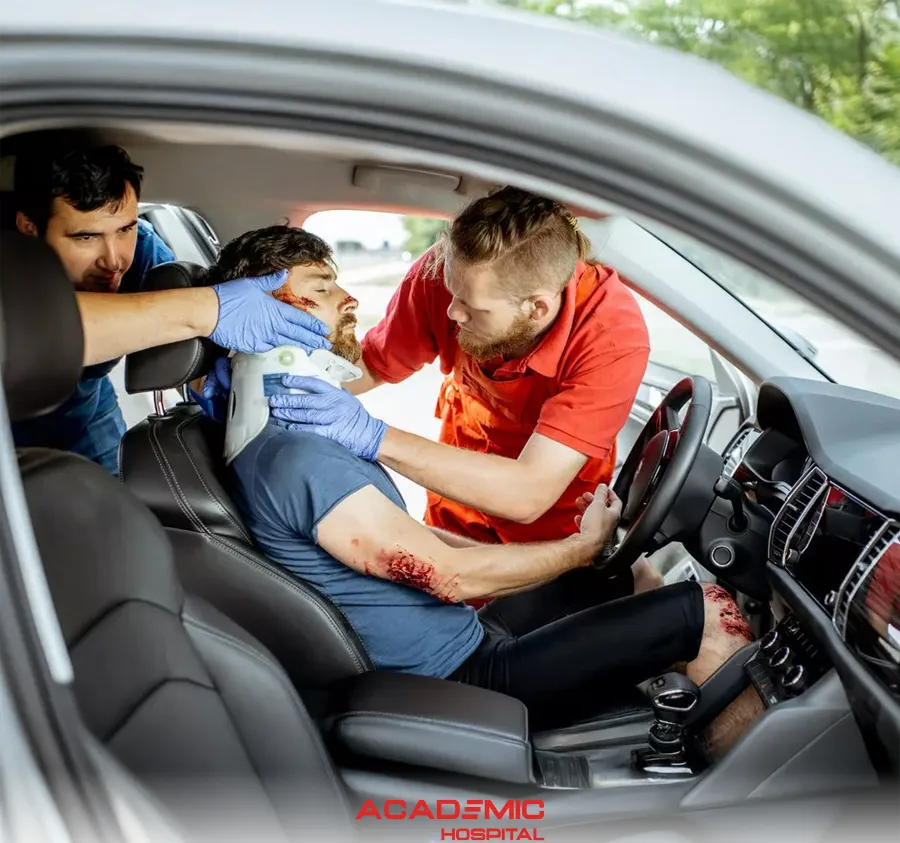
What Is the Rautek (Rentek) Maneuver? When and How Is It Used?
Contents
- What Is the Rautek (Rentek) Maneuver?
- When Is the Rautek Maneuver Used?
- When Should an Injured Person Not Be Moved?
- How Is the Rautek Maneuver Performed?
- What If the Casualty Is Not Breathing Normally?
- What Should You Do If a Spinal Injury Is Suspected?
- What Are the Risks of Incorrect Use?
- Who Should Perform the Maneuver?
- Frequently Asked Questions
After a road traffic collision, a person remaining inside a vehicle may have an injury involving the head, neck or spine. Unnecessary movement should therefore be avoided whenever possible.
There are, however, situations in which remaining inside the vehicle creates a greater immediate threat — for example fire, explosion risk, an unsafe vehicle location or the need to move an unresponsive person who is not breathing normally to a position where effective cardiopulmonary resuscitation can be performed.
The Rautek rescue maneuver, commonly referred to as the Rentek maneuver in Türkiye, is an emergency extraction technique used in such circumstances.
Scene safety always comes first. Do not enter an area where fire, explosion, electricity, moving traffic or another hazard makes rescue unsafe for you. In Türkiye, call 112 Emergency and follow the instructions of professional emergency services.
What Is the Rautek (Rentek) Maneuver?
The Rautek maneuver is an emergency moving technique intended for situations in which a casualty inside a vehicle must be removed immediately.
The aim is to remove the casualty while attempting to minimise unnecessary movement of the head, neck and trunk. It does not fully immobilise the spine and should not be considered a treatment for spinal injury.
Its role is limited to circumstances in which the risk of leaving the person where they are is greater than the risk associated with moving them.
When Is the Rautek Maneuver Used?
Emergency extraction may be necessary when remaining inside a vehicle poses an immediate threat or prevents lifesaving care.
Examples include:
- Fire or an immediate risk of fire
- Risk of explosion
- An unsafe vehicle or accident scene that creates an immediate threat
- A casualty who is not breathing normally when effective basic life support cannot be provided in the vehicle
- A situation in which movement to a safer and more suitable location is essential to provide lifesaving first aid
The maneuver is not indicated simply because a road traffic collision has occurred.
When Should an Injured Person Not Be Moved?
A cervical or spinal injury should be considered after mechanisms such as a serious road traffic collision, a fall or dive from height, crushing injury or certain sporting accidents.
If there is no immediate danger and movement is not required for lifesaving care:
- Ask the person to remain as still as possible.
- Do not make them stand or walk.
- Do not force the neck into a different position.
- Do not routinely remove them from a safe vehicle.
- Call emergency medical services.
- Remain with them and monitor normal breathing if it is safe to do so.
The important exceptions are an unsafe environment or the need to move the casualty to provide lifesaving care such as CPR.
How Is the Rautek Maneuver Performed?
The maneuver is best learned through practical first aid training. In a real emergency, activate emergency medical services first and follow dispatcher instructions whenever possible.
Based on the first aid procedure taught by the Turkish Ministry of Health, the main principles are:
- Assess scene safety.
Check for hazards including traffic, fire, fuel leakage, explosion risk and electricity. Do not expose yourself to an unacceptable danger. - Activate emergency medical services.
Ask someone to call 112 Emergency in Türkiye, or call yourself if no one else is available. - Check responsiveness and normal breathing.
Speak to the casualty and gently touch the shoulder to assess response. Observe whether normal breathing is present. - If emergency extraction is necessary, check for entrapment.
Make sure the casualty's feet or clothing are not trapped around the pedals or vehicle structure and release the seat belt safely. Do not attempt to pull out a person who is physically trapped in the vehicle structure. - Support the head and neck as much as possible.
The technique taught in Turkish first aid training uses control of the casualty's arm together with support around the jaw and head-neck area to minimise unnecessary movement. - Move the casualty out in a controlled manner.
Maintain close body contact and attempt to keep the head, neck and trunk aligned while moving the casualty towards a safe area. - Reassess the casualty once in a safe position.
Check normal breathing and continue appropriate first aid until trained emergency personnel arrive.
Do not attempt a dangerous vehicle rescue. If a casualty is physically trapped in damaged metal, the vehicle is actively burning or the scene cannot be made reasonably safe, specialist fire and rescue services may be required.
What If the Casualty Is Not Breathing Normally?
An unresponsive person who is not breathing normally should be treated as being in cardiac arrest.
If effective CPR cannot be performed while the person remains seated in the vehicle, they may need to be moved to a firm, flat and safe surface.
- Call emergency medical services immediately.
- If safe and necessary, move the casualty to a firm and flat surface.
- Begin CPR according to emergency dispatcher guidance.
- Use an automated external defibrillator (AED) as soon as one is available.
Although minimising spinal movement remains important after trauma, opening the airway and providing lifesaving breathing and circulation support take priority when necessary.
Loss of consciousness, absent normal breathing, fire or another immediate life-threatening hazard following a road traffic collision requires emergency action.
Call 112 EmergencyWhat Should You Do If a Spinal Injury Is Suspected?
The aim is to minimise unnecessary movement and obtain professional emergency care.
Mechanisms that may raise concern for a cervical or spinal injury include:
- Road traffic collisions
- Falls or dives from height
- Severe impact to the head or neck
- Crush injury
- Certain serious sporting accidents
If the casualty is awake and alert, encourage them to keep their head and neck in a comfortable, stable position and to remain still. Do not force the neck into alignment.
If the person is unresponsive, airway and breathing take priority. When movement or airway intervention is required, unnecessary cervical motion should still be minimised as much as possible.
What Are the Risks of Incorrect Use?
Moving a casualty unnecessarily or using an emergency extraction technique incorrectly may:
- Create unnecessary movement of the head and neck
- Aggravate existing spinal or other traumatic injuries
- Move an injured fracture or dislocation
- Cause the casualty to fall during extraction
- Cause back or musculoskeletal injury to the rescuer
- Delay emergency activation or CPR
- Expose the rescuer to traffic, fire or another environmental hazard
Who Should Perform the Rautek Maneuver?
The Rautek maneuver is a practical skill that is best learned through hands-on first aid training. Correct body mechanics, casualty handling and head-neck support are difficult to learn from written instructions alone.
Certified first aid education is therefore recommended for learning the technique properly.
In a real emergency, an untrained bystander should still call emergency medical services immediately and follow dispatcher instructions. The action required before professional help arrives depends on whether there is an immediate danger and whether the casualty is breathing normally.
Do Not Ignore Neck or Spinal Symptoms After Trauma
Persistent neck or back pain, numbness, weakness or other neurological symptoms after an accident may require medical evaluation. In an emergency, do not wait for an appointment — call 112.
Frequently Asked Questions
References
- Academic Hospital. Rentek Manevrası Nedir? Rentek Manevrası Nasıl Uygulanır?
- Republic of Türkiye Ministry of Health. Basic First Aid Training – Emergency Removal of a Casualty From a Vehicle (Rentek)
- American Heart Association & American Red Cross. 2024 Guidelines for First Aid
- Resuscitation Council UK. 2025 First Aid Guidelines – Cervical Spinal Motion Restriction
- American Red Cross. Head, Neck and Spinal Injury