
 WhatsApp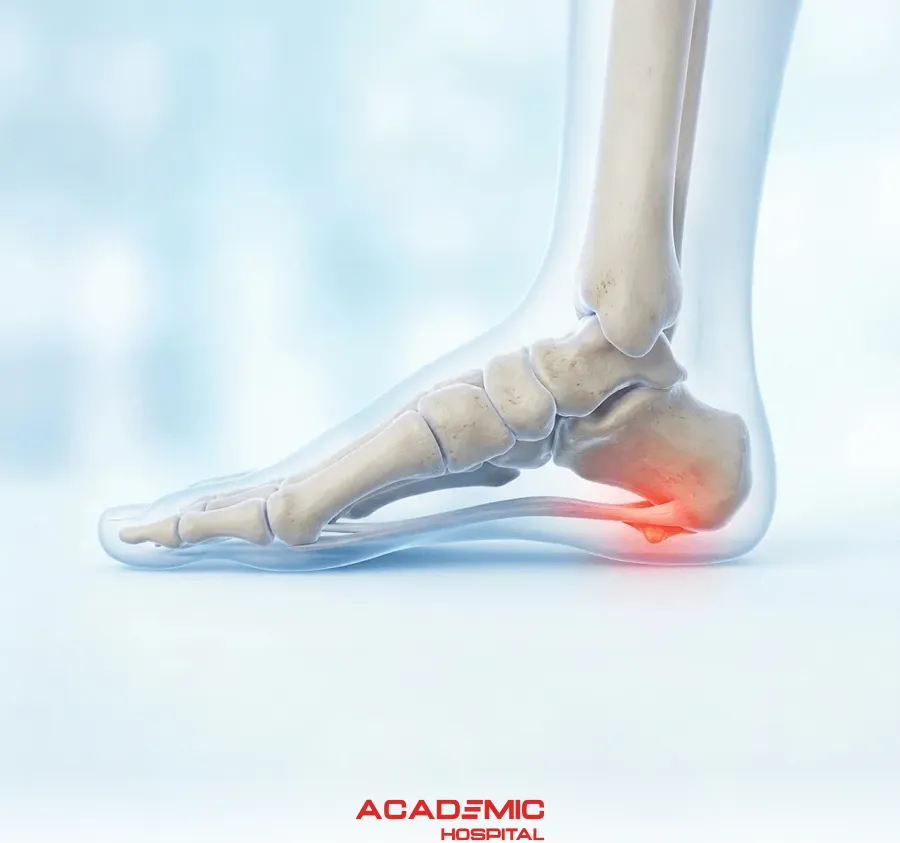
What Is a Heel Spur? Symptoms, Causes and Treatment
Contents
- What Is a Heel Spur?
- Are Heel Spurs and Plantar Fasciitis the Same?
- What Are the Symptoms?
- What Causes Plantar Heel Pain?
- What Are the Risk Factors?
- How Is It Diagnosed?
- Is Every Heel Pain Caused by a Heel Spur?
- How Is It Treated?
- Which Exercises Can Help?
- Footwear and Orthotics
- What Is Shockwave Therapy?
- When Are Injections Used?
- When Is Surgery Needed?
- How Long Does Recovery Take?
- When Should You Seek Medical Assessment?
- Frequently Asked Questions
What Is a Heel Spur?
A heel spur is a bony projection that can develop on the underside of the calcaneus near the attachment of the plantar fascia.
It can be visible on an X-ray, but the presence of a heel spur does not necessarily mean that it is causing pain.
One of the most common causes of pain on the bottom of the heel is plantar fasciitis, or plantar fasciopathy.
Are Heel Spurs and Plantar Fasciitis the Same?
No.
The plantar fascia is a strong band of tissue extending from the heel toward the toes and supporting the arch of the foot.
Repeated mechanical loading can make this tissue painful, particularly where it attaches to the heel bone.
A heel spur can develop over time at this attachment site, but the pain in plantar fasciopathy usually originates primarily from the plantar fascia and surrounding tissues rather than from the bony spur itself.
What Are the Symptoms?
A heel spur itself may be completely asymptomatic.
Typical symptoms of plantar fascia-related heel pain include:
- Marked pain with the first steps after getting out of bed
- Pain when standing after a long period of rest
- Tenderness on the bottom and inner side of the heel
- Pain after prolonged standing or walking
- Pain that becomes more noticeable after running or strenuous activity
The pain may ease after the first few steps and return after prolonged loading.
What Causes Plantar Heel Pain?
The plantar fascia absorbs substantial mechanical stress during standing, walking and running.
Repeated loading can lead to microscopic tissue injury and degenerative change, particularly near the plantar fascia's attachment to the heel bone.
For this reason, the term plantar fasciopathy is increasingly used for persistent cases rather than describing the condition purely as inflammation.
What Are the Risk Factors?
- A sudden increase in walking, running or exercise
- Repeated high-impact activity
- Prolonged standing on hard surfaces
- Excess body weight
- Tight calf muscles or Achilles tendon
- Limited ankle dorsiflexion
- Flat feet or a high arch
- Worn-out or poorly supportive footwear
How Is a Heel Spur or Plantar Fasciitis Diagnosed?
Diagnosis can often be made from the patient's history and physical examination.
The clinician assesses the location and pattern of pain, first-step pain, heel tenderness, foot structure, ankle movement and calf tightness.
Is an X-ray Necessary?
Not in every patient.
X-rays can be useful when pain is persistent or atypical or when another bone-related cause such as fracture or arthritis needs to be excluded.
A heel spur can be visible on X-ray, but its size does not necessarily correlate with the severity of symptoms.
Are Ultrasound or MRI Needed?
They are not routinely required for typical plantar fasciitis.
Ultrasound or MRI may be considered when the diagnosis is uncertain, symptoms do not improve as expected or another soft-tissue condition is suspected.
Is Every Heel Pain Caused by a Heel Spur?
No. Other causes can include:
- Achilles tendinopathy
- Calcaneal stress fracture
- Heel fat-pad disorders
- Nerve entrapment
- Arthritis or inflammatory rheumatic disease
- Traumatic injury
How Is Plantar Heel Pain Treated?
Non-surgical treatment is generally the first approach.
Management can include:
- Temporary reduction of aggravating activities
- Switching to lower-impact activities such as cycling or swimming
- Plantar fascia and calf stretching
- Supportive footwear
- Heel pads or appropriate orthoses
- Weight management when appropriate
- Short periods of cold application
- Appropriate pain or anti-inflammatory medication when medically suitable
- Physical therapy
- Night splints in selected patients
Which Exercises Can Help?
Stretching the plantar fascia and calf muscles is an important part of treatment.
A plantar fascia stretch can be performed while sitting by gently pulling the toes upward until a stretch is felt along the sole of the foot.
Calf and Achilles stretching can help improve ankle flexibility and reduce mechanical strain on the plantar fascia.
An individual exercise programme may be planned with a physiotherapist or physician according to symptoms and physical findings.
Footwear and Orthotics
Footwear should provide appropriate support and cushioning for the patient's activity rather than simply being soft.
Worn-out shoes that have lost their support should be replaced.
Prefabricated or custom orthotics may reduce symptoms in some patients, particularly when used together with stretching and exercise rather than as the only treatment.
What Is Extracorporeal Shockwave Therapy?
Extracorporeal shockwave therapy (ESWT) directs mechanical energy waves toward the painful plantar fascia region.
It may be considered in persistent plantar fasciopathy when exercise, activity modification and other conservative treatments have not provided sufficient relief.
It is non-surgical, but response varies between patients.
When Are Injections Used?
Injection therapies may be considered in selected patients with persistent symptoms despite appropriate conservative management.
Corticosteroid injections can provide short-term pain relief but should be used cautiously because repeated or inappropriate injections may be associated with complications such as plantar fascia rupture and damage to the heel fat pad.
Other injection treatments, including platelet-rich plasma, are also used in some settings, but evidence does not establish a single injection treatment as superior for every patient.
When Is Surgery Needed?
Surgery is rarely required.
It may be considered in carefully selected patients with persistent disabling pain despite months of structured non-surgical management.
Surgery generally focuses on partially releasing tension in the plantar fascia.
The presence of a heel spur on an X-ray alone is not an indication for surgery, and routine removal of the spur is generally unnecessary.
How Long Does Recovery Take?
Improvement is usually gradual.
Symptoms can begin to improve within weeks, but complete recovery may take several months.
The majority of patients improve with consistent non-surgical management.
When Should You Seek Medical Assessment?
Medical assessment is appropriate when heel pain persists for several weeks or significantly interferes with walking or everyday activity.
Earlier assessment is advisable if there is:
- Severe pain after trauma
- Inability to bear weight
- Marked redness, warmth or swelling
- Fever with heel pain
- Severe pain at rest or at night
- Numbness, burning or significant sensory loss
Have the Cause of Your Heel Pain Assessed
If you have first-step heel pain, tenderness when walking or persistent pain under the foot, an orthopaedic assessment can help identify the underlying cause.
Frequently Asked Questions
References
- Academic Hospital. Heel Spur: Symptoms, Causes and Treatment
- American Academy of Orthopaedic Surgeons. Plantar Fasciitis and Bone Spurs
- Koc TA Jr, et al. Heel Pain – Plantar Fasciitis: Revision 2023. J Orthop Sports Phys Ther.
- American College of Radiology. ACR Appropriateness Criteria – Chronic Foot Pain, Revised 2025