
 WhatsApp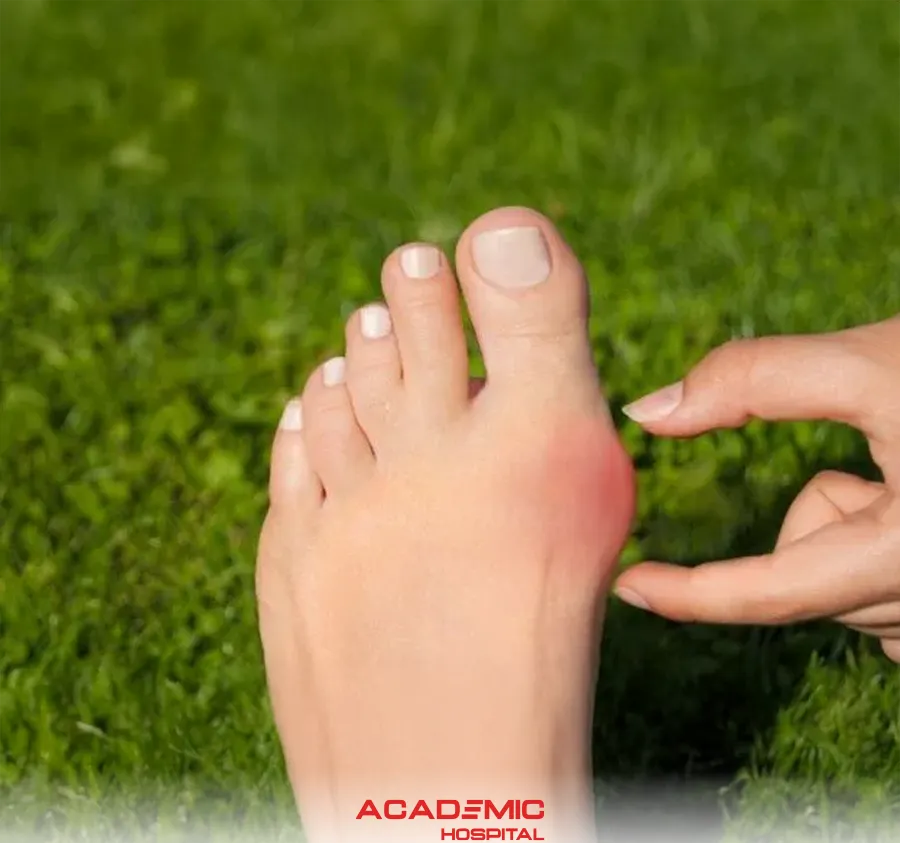
What Is Hallux Valgus (Bunion)? Symptoms, Causes and Treatment Methods
Contents
Hallux valgus, commonly known as a “bony bump on the big toe,” may cause both cosmetic concerns and, over time, pain, difficulty wearing shoes and walking problems.
What Is Hallux Valgus?
Hallux valgus is a common orthopedic condition characterized by the big toe drifting toward the second toe. A bony prominence develops at the base joint of the big toe, the metatarsophalangeal joint. This prominence is commonly called a bunion.
As the deformity progresses, the big toe may move closer to the second toe, friction inside shoes may increase and redness, tenderness and pain may develop at the base of the big toe.
What Are the Symptoms of Hallux Valgus?
Hallux valgus usually progresses slowly and may show mild symptoms in the early stages. Over time, the bony prominence at the base of the big toe may become more noticeable.
- Swelling and redness around the big toe
- A visible bony bump on the foot
- Pain while walking or standing for long periods
- Loss of flexibility and limited motion of the big toe
- Discomfort and pain when wearing shoes
- The big toe drifting toward or overlapping the second toe
- Calluses, skin irritation and pain on the ball of the foot due to altered loading
If these symptoms are present, especially if pain affects daily life, evaluation by an orthopedics and traumatology specialist is recommended.
What Causes Hallux Valgus?
Hallux valgus usually develops due to multiple contributing factors rather than a single cause. Foot structure, genetic predisposition, shoe choice and certain joint diseases may contribute to onset or progression.
- Genetic predisposition: People with a family history of hallux valgus may have a higher likelihood of developing it.
- Incorrect shoe choice: Narrow-toe, high-heeled or poorly fitting shoes may put pressure on the big toe and worsen symptoms or progression.
- Foot structure: Flat feet, excessive ligament laxity or anatomical features that alter load distribution may be associated with hallux valgus.
- Joint disorders: Diseases affecting the joints, such as rheumatoid arthritis, may contribute to hallux valgus formation.
You can contact us for evaluation if you have a bony bump, pain or difficulty wearing shoes due to your big toe.
Book an AppointmentHallux Valgus Diagnosis and Treatment Methods
Hallux valgus is usually diagnosed with physical examination and weight-bearing X-rays. During examination, the physician evaluates big toe alignment, joint motion, pain points, shoe fit, calluses and foot loading pattern. Treatment varies according to the severity of deformity, pain level, daily needs and X-ray findings.
Protective and Supportive Measures
In mild and moderate hallux valgus, nonsurgical methods may be used to reduce pain and improve shoe comfort. These methods may not fully correct the bony deformity, but they can help control symptoms.
- Appropriate shoe choice: Wide-toe, soft shoes that do not put pressure on the foot should be preferred.
- Toe spacers and supportive devices: These may support toe alignment and reduce friction inside shoes, but may not permanently correct the deformity.
- Insoles and pressure distribution support: Supports planned according to foot structure may help improve load distribution.
- Physiotherapy and exercises: Exercises that support foot muscles may help reduce pain and preserve function.
- Cold application and pain relievers: Cold compresses and pain-relieving/anti-inflammatory medicines may be used with medical advice to reduce swelling and pain.
Surgical Treatment
Surgery may be needed if pain and deformity are advanced, shoe wearing is significantly difficult and nonsurgical methods do not provide sufficient relief. Surgical technique is planned individually according to deformity type and joint condition.
- Bone cutting and correction (osteotomy): The bone is cut and realigned appropriately.
- Soft tissue and joint balancing procedures: Techniques may be used to reduce imbalance around the big toe joint.
- Arthrodesis (joint fusion): In severe deformity, joint arthritis or selected advanced cases, the joint may be fused to control pain and deformity.
Can Hallux Valgus Be Prevented?
It may not always be possible to completely prevent hallux valgus, but certain measures may reduce the risk of formation or worsening symptoms.
- Wear properly fitting, wide-toe and supportive shoes
- Avoid wearing high-heeled and narrow-toe shoes for long periods
- Do exercises that strengthen foot muscles
- Pay attention to early signs if there is a family history of hallux valgus
- Have a foot evaluation when pain, swelling or shoe-fitting problems begin
With early diagnosis and appropriate treatment, pain may be reduced and deformity progression may be slowed. Orthopedic evaluation is important if you have a bony bump and pain in the foot.
Personalized Treatment Planning Is Important in Hallux Valgus
Big toe alignment, pain level, shoe fit, foot loading pattern and X-ray findings should be evaluated together.
Frequently Asked Questions
References
- Academic Hospital. Halluks Valgus (Ayakta Kemik Çıkıntısı) Nedir? Belirtileri, Nedenleri ve Tedavi Yöntemleri
- AAOS OrthoInfo. Bunions
- AAOS OrthoInfo. Bunion Surgery
- Mayo Clinic. Bunions - Symptoms and Causes
- Mayo Clinic. Bunions - Diagnosis and Treatment
- Cleveland Clinic. Bunions: Symptoms, Causes and Treatment