
 WhatsApp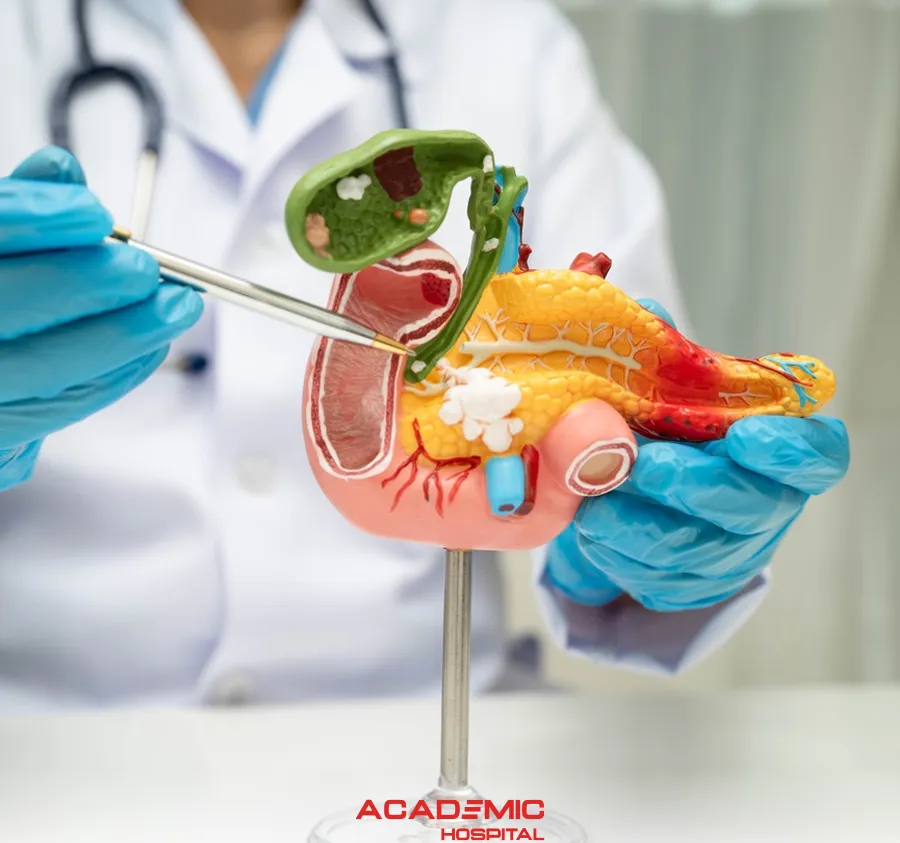
What Is the Gallbladder? Gallstones, Cholecystitis and Bile Duct Disorders
Contents
- What Is Bile?
- What Does the Gallbladder Do?
- Where Is the Gallbladder?
- What Are Gallstones?
- What Are the Symptoms of Gallstones?
- Do Asymptomatic Gallstones Need Treatment?
- What Is Cholecystitis?
- What Is Choledocholithiasis?
- What Is Cholangitis?
- Can Gallstones Cause Pancreatitis?
- How Are Gallbladder Disorders Diagnosed?
- What Are MRCP and ERCP?
- How Are Gallstones Treated?
- What Is Cholecystectomy?
- What Happens After Gallbladder Removal?
- Gallbladder Polyps and Cancer
- When Is Urgent Assessment Required?
- Frequently Asked Questions
What Is Bile?
Bile is a digestive fluid continuously produced by the liver. It plays an important role in the digestion and absorption of dietary fats.
Bile contains bile acids, cholesterol, phospholipids, bilirubin, electrolytes and water.
Bile acids help disperse dietary fat into smaller droplets and support absorption of fats and the fat-soluble vitamins A, D, E and K.
What Does the Gallbladder Do?
The gallbladder is a small pear-shaped organ that stores and concentrates bile produced by the liver.
After a meal, particularly one containing fat, the gallbladder contracts and releases bile through the bile ducts into the duodenum.
The gallbladder is not essential for life. After surgical removal, bile continues to flow directly from the liver through the bile ducts into the intestine.
Where Is the Gallbladder Located?
The gallbladder is located beneath the liver in the right upper part of the abdomen.
It connects to the biliary system through the cystic duct, which joins the hepatic ducts and ultimately the common bile duct.
What Are Gallstones?
Cholelithiasis means that stones are present within the gallbladder.
Most gallstones are cholesterol-predominant. Pigment stones containing bilirubin and calcium salts also occur.
Many gallstones cause no symptoms. Problems occur when stones obstruct the gallbladder outlet or bile ducts, potentially causing biliary pain, cholecystitis, jaundice, cholangitis or pancreatitis.
What Are the Symptoms of Gallstones?
Symptomatic gallstones commonly cause biliary pain.
Pain is usually felt in the right upper abdomen or upper central abdomen and may radiate to the back or right shoulder blade.
Nausea and vomiting may accompany the pain.
Indigestion, bloating and gas alone are not specific for gallstone disease.
Do Asymptomatic Gallstones Need Treatment?
Gallstones discovered incidentally in a normal gallbladder and biliary tree usually do not require treatment if they have never caused symptoms.
What Is Cholecystitis?
Cholecystitis is inflammation of the gallbladder.
Acute cholecystitis is most commonly caused by obstruction of the cystic duct by a gallstone.
Persistent right-upper-abdominal pain, tenderness, nausea, vomiting and fever may occur.
Early laparoscopic cholecystectomy is an important treatment option for suitable patients with acute cholecystitis.
What Is Choledocholithiasis?
Choledocholithiasis means that stones are present in the common bile duct.
These stones usually originate in the gallbladder and migrate into the bile duct.
They can obstruct bile flow and cause jaundice, acute cholangitis or pancreatitis.
What Is Cholangitis?
Acute cholangitis is a potentially serious infection associated with obstruction of the biliary tract.
Gallstones in the common bile duct are an important cause.
Fever, right-upper-abdominal pain and jaundice may occur. Severe disease may lead to low blood pressure, altered consciousness and sepsis.
Can Gallstones Cause Pancreatitis?
Yes. A gallstone can obstruct the region where the bile duct and pancreatic duct drain into the intestine and trigger acute gallstone pancreatitis.
Severe persistent upper-abdominal pain, often radiating to the back, together with nausea and vomiting may occur.
How Are Gallbladder Disorders Diagnosed?
Assessment generally begins with the clinical history and physical examination.
Ultrasound and liver blood tests are commonly used when gallstone disease is suspected.
Depending on the presentation, bilirubin, blood count, inflammatory markers and pancreatic enzymes may also be assessed.
What Are MRCP and ERCP?
MRCP is a non-invasive MRI technique used to visualise the bile and pancreatic ducts.
It can be considered when a common-bile-duct stone is suspected despite an inconclusive ultrasound, particularly when the bile duct is dilated or liver blood tests are abnormal.
ERCP is an invasive endoscopic procedure used mainly for therapeutic intervention, including removing common-bile-duct stones or relieving biliary obstruction.
ERCP carries risks such as pancreatitis, bleeding, infection and perforation, so it is not performed merely because gallstones are present inside the gallbladder.
How Are Gallstones Treated?
Management depends on symptoms and the location of the stones.
Asymptomatic gallbladder stones often require no treatment.
Symptomatic gallstones are commonly treated with laparoscopic cholecystectomy.
Acute cholecystitis may require early laparoscopic surgery in suitable patients.
Common-bile-duct stones generally require duct clearance by ERCP or surgical techniques.
What Is Cholecystectomy?
Cholecystectomy is surgical removal of the gallbladder.
For suitable patients, it is most commonly performed laparoscopically using small abdominal incisions.
Common indications include symptomatic gallstones, acute or recurrent cholecystitis and selected gallstone-related complications.
What Happens After Gallbladder Removal?
People can live normally without a gallbladder.
The liver continues to produce bile, which flows directly through the bile ducts into the intestine.
Most people do not require a permanent special diet. Some may experience temporary bowel changes or intolerance of large fatty meals during the early recovery period.
Gallbladder Polyps and Cancer
Gallbladder polyps are sometimes found incidentally during ultrasound examinations.
Most are benign. Management depends on size, growth, imaging appearance and individual risk factors.
Gallbladder cancer is uncommon but potentially serious.
Gallstones are associated with gallbladder cancer risk, but the vast majority of people with gallstones do not develop gallbladder cancer.
When Is Urgent Assessment Required?
- Persistent or worsening right-upper-abdominal pain
- Abdominal pain with fever or chills
- Yellowing of the skin or eyes
- Dark urine or markedly pale stools
- Persistent vomiting
- Severe upper-abdominal pain radiating to the back
- Jaundice together with fever and abdominal pain
- Low blood pressure, altered consciousness or severe deterioration
Not Every Gallstone Requires Surgery
Management depends on whether the stones cause symptoms and whether cholecystitis, common-bile-duct stones or other complications are present.
Frequently Asked Questions
References
- Academic Hospital. Gallbladder
- National Institute for Health and Care Excellence. Gallstone Disease: Diagnosis and Management
- Society of American Gastrointestinal and Endoscopic Surgeons. Laparoscopic Biliary Tract Surgery Guideline
- American Society for Gastrointestinal Endoscopy. Guideline on Choledocholithiasis