
 WhatsApp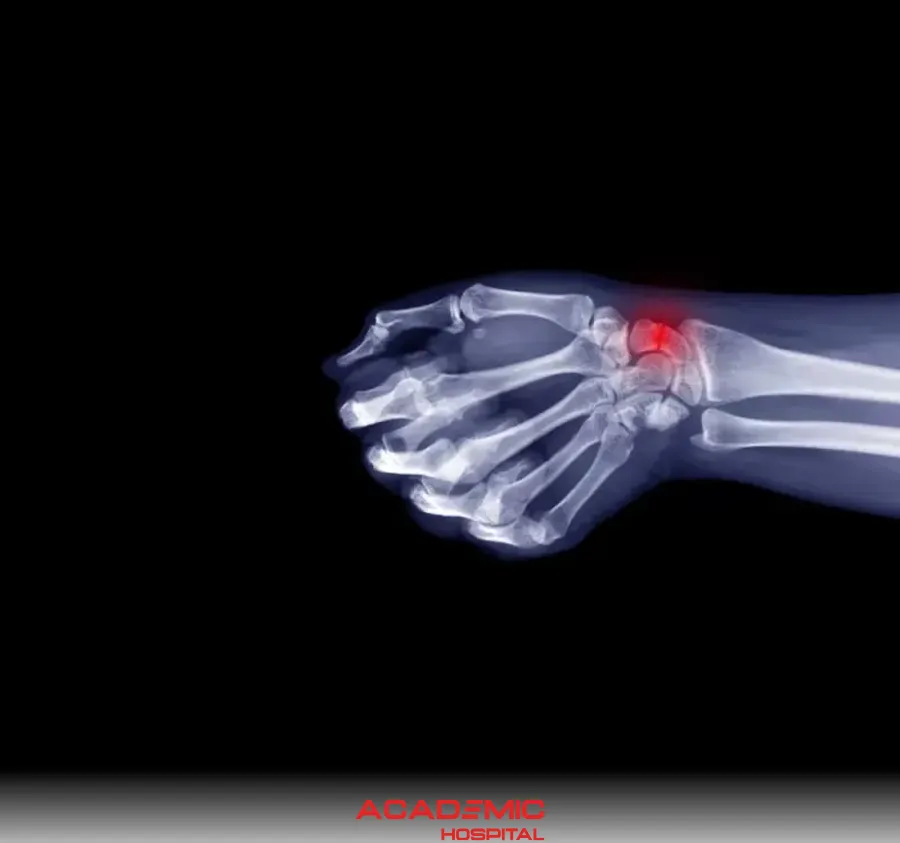
What Is a Scaphoid Fracture? Symptoms, Diagnosis and Treatment Methods
Contents
Your wrist pain may be caused by a scaphoid fracture.
The Scaphoid Bone
The scaphoid is a small but important bone located on the thumb side of the wrist. It contributes to wrist stability and plays an important role in movement. Because its blood supply is limited in some regions, a fracture may require careful follow-up for delayed healing, nonunion or avascular necrosis.
What Is a Scaphoid Fracture?
A scaphoid fracture is an injury to the scaphoid bone, one of the most commonly fractured bones in the wrist. It often occurs after a fall onto an outstretched hand.
You can contact us for evaluation if you have wrist pain, swelling or tenderness on the thumb side after a fall.
Book an AppointmentHow Does a Scaphoid Fracture Occur?
The most common mechanism is extending the hand reflexively during a fall. In this position, the wrist bends backward and a sudden load is transferred to the scaphoid bone.
- Sports injuries
- Falls from height
- Traffic accidents
- Unbalanced falls during daily life
What Are the Symptoms of a Scaphoid Fracture?
In some cases, the fracture may not be noticed at first. Pain may start mildly or be mistaken for a simple wrist sprain.
- Wrist pain on the thumb side
- Swelling and tenderness
- Difficulty moving the wrist
- Pain during gripping, squeezing or loading the wrist
- Pain that increases over time or does not improve
If pain persists even though the fracture is not clearly visible on X-ray, an orthopedic specialist should be consulted.
How Is a Scaphoid Fracture Diagnosed?
Initial evaluation includes physical examination and X-rays; however, some fractures may not be visible immediately on X-ray. In such cases, the physician may request advanced imaging such as MRI or CT when needed.
In suspicious cases, the wrist may need to be protected and immobilized until a fracture is ruled out. The location of pain, mechanism of injury, examination findings and imaging results are evaluated together.
How Is a Scaphoid Fracture Treated?
Treatment depends on fracture location, displacement, blood supply risk and the patient’s needs.
- Cast or splint treatment: In nondisplaced fractures, the wrist and thumb region may be immobilized for the duration determined by the physician. Healing time varies according to fracture location and may take weeks or months.
- Surgical intervention: If the fracture is displaced, unstable, high risk for impaired blood supply or does not heal as expected, surgical fixation with a screw or suitable implant may be required.
- Additional treatment for nonunion: If nonunion develops, bone grafting, surgical fixation or specialized reconstructive methods may be considered.
Why Is Early Treatment Important in Scaphoid Fracture?
Because the blood supply of the scaphoid is limited in some areas, delayed healing may occur after fracture. If treatment is delayed, nonunion or avascular necrosis may develop. These complications may lead to chronic pain, limited motion and wrist arthritis over time.
What Should Be Done During Recovery?
Regular follow-up should not be neglected after casting, splinting or surgery. When recommended by the physician, physical therapy and rehabilitation may help restore mobility. Most importantly, movements that strain the wrist should be avoided until healing is complete.
If pain on the thumb side continues after a fall, an orthopedic specialist should be consulted. Early diagnosis and appropriate treatment may help prevent permanent wrist problems.
Do Not Assume Wrist Pain Is Just a Sprain
If pain persists on the thumb side after a fall, examination and, when necessary, advanced imaging may be needed for possible scaphoid fracture.
Frequently Asked Questions
References
- American Academy of Orthopaedic Surgeons. Scaphoid Fracture of the Wrist
- Cleveland Clinic. Scaphoid Fracture: Symptoms, Causes & Treatment
- American Academy of Orthopaedic Surgeons. Nonunions
- NCBI Bookshelf. Scaphoid Wrist Fracture