
 WhatsApp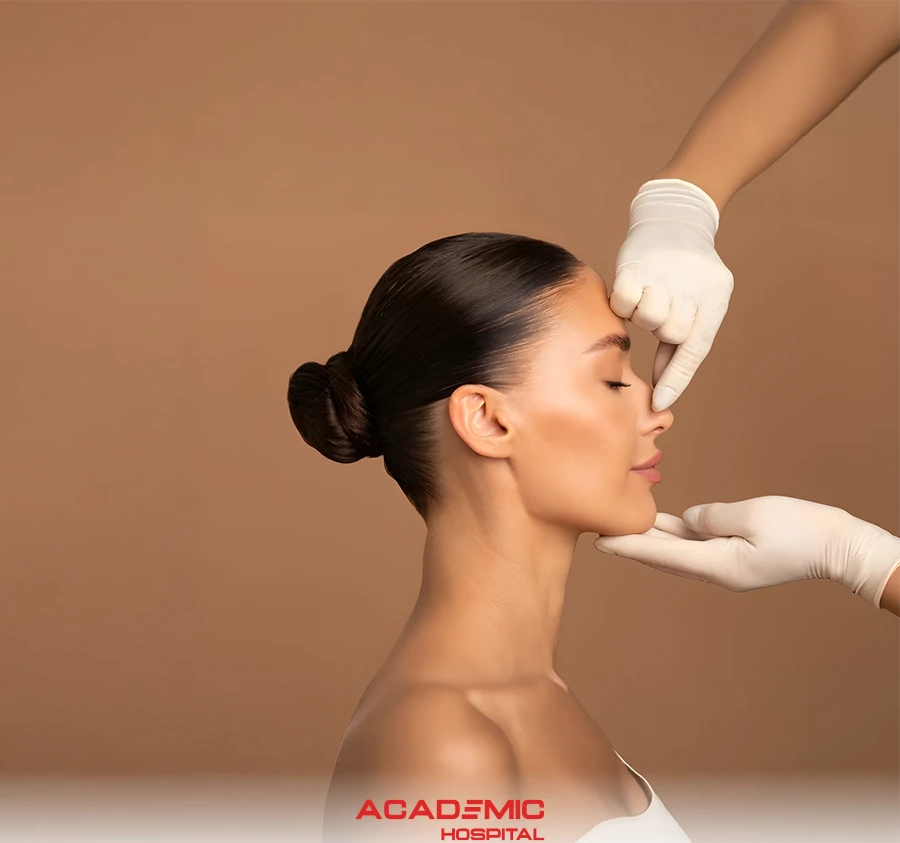
What Is Natural Rhinoplasty? Who Is It Suitable For?
Contents
In aesthetic procedures today, the most preferred approach is to achieve a natural appearance without exaggeration. But what exactly does “natural appearance” mean?
The most common question asked by people considering rhinoplasty is:
“Will the result look artificial?”
Today, the goal of a successful rhinoplasty is not to create an obvious change, but to provide an appearance that is balanced and harmonious with facial features and does not look like an aesthetic intervention has been performed from the outside.
Who Is Rhinoplasty Suitable For?
Rhinoplasty may be preferred for both aesthetic and functional reasons.
- People with breathing problems, such as septal deviation
- People with an asymmetric nasal structure
- Those who develop deformity after trauma, fracture or impact
- People with a nasal hump
- People with a drooping nasal tip
- Those who want a nose that is more harmonious and balanced with their face
You can contact us for rhinoplasty and nose surgery evaluation.
Book an AppointmentWhat Is Natural Appearance in Rhinoplasty?
It is the design of a nose that preserves the characteristic structure of the face, follows proportion and balance, does not look operated from the outside, and at the same time supports breathing functions and fully harmonizes with the face.
- It is harmonious with facial features.
- It is not overly upturned or overly small.
- It does not impair breathing function.
- It does not look “operated” from the outside.
When Does Natural Appearance Develop After Surgery?
A natural appearance after rhinoplasty does not appear immediately; it develops gradually. Swelling usually resolves later in the nasal tip area.
- First 1-2 weeks: Swelling and edema are prominent.
- 1st month: The shape of the nose begins to appear.
- 3-6 months: A more natural and softer appearance develops.
- 6-12 months: The nose approaches its final form.
What Are the Key Features of Natural Rhinoplasty?
- Personalized planning and facial analysis
- Soft and natural lines
- Functional health and breathing
- A non-exaggerated approach
- Proportion and balance harmonious with the face
- The surgical effect not being noticeable
Get Evaluated for Natural Rhinoplasty
In rhinoplasty planning, facial proportions, nasal structure, skin characteristics and breathing function are evaluated together.
Frequently Asked Questions
References
- Mayo Clinic. Rhinoplasty
- Cleveland Clinic. Rhinoplasty: Surgery, Recovery, Before & After
- American Society of Plastic Surgeons. Rhinoplasty Candidates
- American Society of Plastic Surgeons. Rhinoplasty Recovery