
 WhatsApp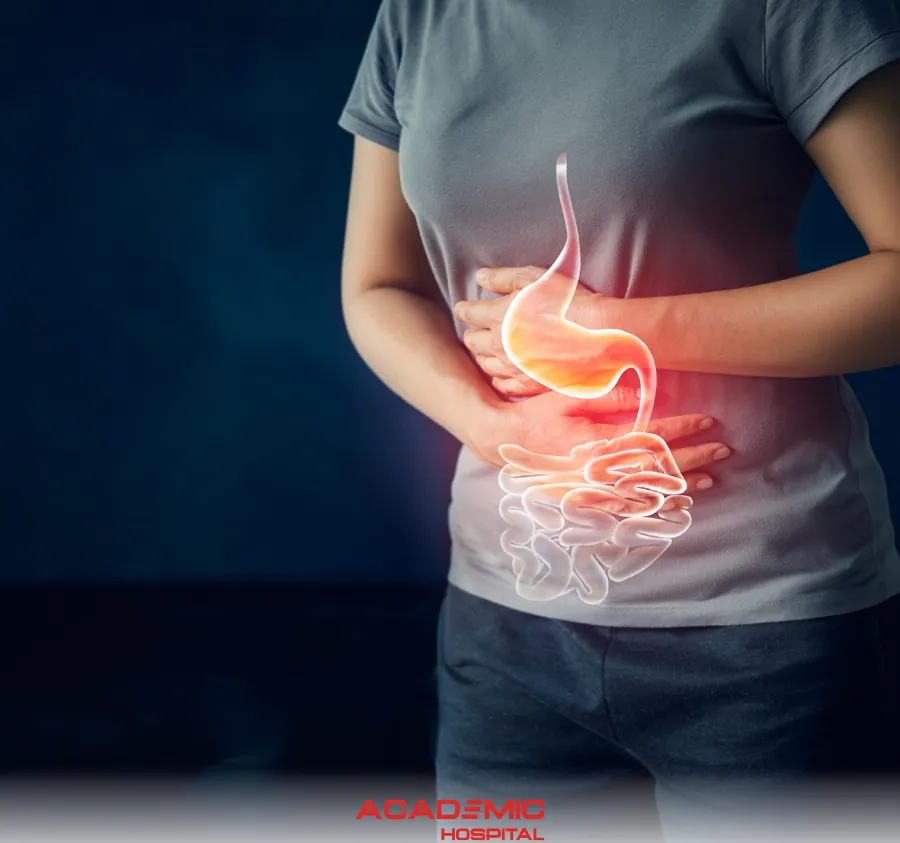
What Are Gastrointestinal (GI) Bleeds?
Contents
Gastrointestinal (GI) bleeding is one of the common reasons for presentation to the emergency department. It is usually seen together with various symptoms such as fatigue, tiredness, dizziness, or fainting.
What Are GI Bleeds?
Gastrointestinal system (GI) bleeding is generally divided into two groups: upper GI bleeding and lower GI bleeding.
You can contact Academic Hospital for evaluation and appointment regarding gastrointestinal bleeding.
Book an AppointmentSymptoms in the Upper and Lower Gastrointestinal Tract
Black, foul-smelling stools, coffee-ground-like vomiting, or vomiting blood are signs of upper GI bleeding, while bright red blood in the stool is a sign of lower GI bleeding.
In addition, if the amount of bleeding is small, it may present with a positive fecal occult blood test, iron deficiency, fatigue, and tiredness. A positive fecal occult blood test may be the first sign of gastrointestinal cancers, especially in men over the age of 40 and in postmenopausal women.
Approximately 80-85% of GI bleeds are upper GI bleeds. In 80% of these cases, bleeding stops spontaneously; in 20%, bleeding continues or recurs.
What Causes Upper GI Bleeding?
Stomach ulcer, duodenal ulcer, erosive gastritis, esophagitis, esophageal varices, tears at the lower end of the esophagus caused by retching, erosions in the stomach and duodenum, tumors of the esophagus, stomach, or duodenum, rarely esophageal ulcers, and vascular ruptures in the stomach may be among the causes of upper GI bleeding.
What Causes Lower GI Bleeding?
Hemorrhoids, anal fissures, anal fistulas, diverticular disease of the bowel, vascular abnormalities in the intestine, intestinal polyps, intestinal tumors, inflammatory bowel diseases, rarely colitis caused by insufficient blood supply to the bowel, and radiation-induced colitis may be among the causes of lower GI bleeding. The majority of lower GI bleeds (80%) stop spontaneously within 24-48 hours.
Early detection of GI bleeding symptoms and appropriate intervention are important to prevent the patient from experiencing more serious problems in the future.
You can contact Academic Hospital for early evaluation of GI bleeding symptoms.
Book an AppointmentHow Should GI Bleeding Be Managed?
In the emergency department, the priority should be airway, breathing, and circulation stabilization, as well as initiation of fluid and blood resuscitation.
Endoscopy must be performed in upper GI bleeding, and colonoscopy must be performed in lower GI bleeding. Endoscopy is both a diagnostic and therapeutic tool in upper GI bleeding. Although there are no strict rules regarding timing, it is recommended to be performed within 24 hours.
When endoscopic treatments are insufficient, angiographic interventions and surgery play an effective role.
Surgical treatment may be considered in patients with high-risk endoscopic findings, in patients for whom endoscopic treatment is not possible, or in patients whose bleeding recurs despite endoscopic treatment.
Do Not Delay Evaluation If GI Bleeding Is Suspected
Black stools, vomiting blood, bright red blood in stool, dizziness, or fainting require medical assessment.
Frequently Asked Questions
References
- National Institute of Diabetes and Digestive and Kidney Diseases (NIDDK). Symptoms & Causes of GI Bleeding
- NIDDK. Treatment for GI Bleeding
- Mayo Clinic. Gastrointestinal bleeding - Symptoms and causes
- Cleveland Clinic. Gastrointestinal (GI) Bleeding