
 WhatsApp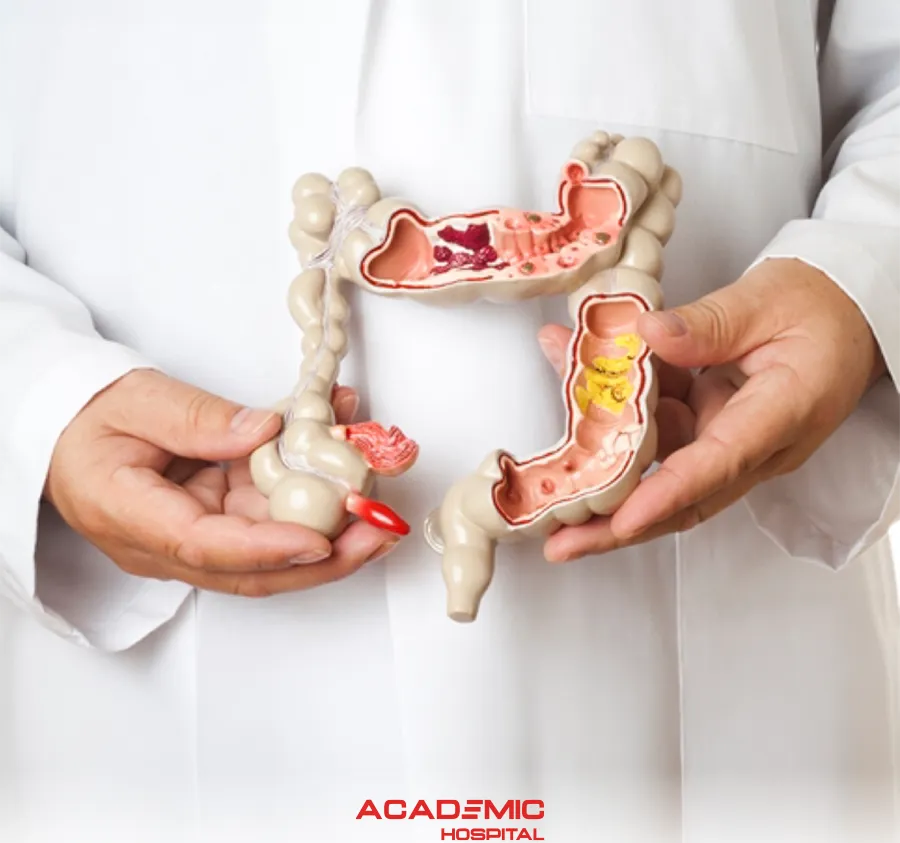
What Is Crohn's Disease? Symptoms, Causes, Diagnosis and Treatment
Contents
- What Is Crohn's Disease?
- What Are the Symptoms?
- Can Crohn's Disease Affect Other Parts of the Body?
- What Causes Crohn's Disease?
- What Are the Risk Factors?
- How Is Crohn's Disease Diagnosed?
- What Is the Role of Colonoscopy and Biopsy?
- What Do Blood and Stool Tests Show?
- When Are MR and CT Enterography Used?
- How Is Crohn's Disease Treated?
- Which Medicines Are Used?
- When Is Surgery Needed?
- What Is the Role of Diet and Lifestyle?
- What Are the Complications?
- How Is Crohn's Disease Monitored?
- When Is Urgent Assessment Needed?
- Frequently Asked Questions
What Is Crohn's Disease?
Crohn's disease is a chronic inflammatory bowel disease associated with an abnormal immune response that causes recurrent inflammation within the digestive tract.
It can affect any part of the gastrointestinal tract from the mouth to the anus. The terminal ileum and the beginning of the large intestine are among the most commonly affected areas.
Inflammation in Crohn's disease can extend through deeper layers of the bowel wall and may occur in separated segments with areas of normal bowel between them.
The disease typically follows a course of flares and remission. Treatment aims not only to reduce symptoms but also to control intestinal inflammation, prevent complications and maintain long-term remission.
What Are the Symptoms of Crohn's Disease?
Symptoms vary according to the location and severity of inflammation.
- Persistent or recurrent diarrhoea
- Abdominal pain and cramping
- Weight loss
- Loss of appetite
- Fatigue
- Fever
- Blood or mucus in the stool
- Nausea or vomiting
- Anaemia
Can Crohn's Disease Affect Other Parts of the Body?
Yes. Crohn's disease can cause manifestations outside the digestive tract.
These may include joint pain or arthritis, inflammatory eye problems, skin lesions, recurrent oral ulcers and certain liver or biliary disorders.
What Causes Crohn's Disease?
There is no single known cause.
Current evidence suggests that Crohn's disease develops through interaction between genetic susceptibility, abnormal immune responses to intestinal microorganisms, changes in the gut microbiome and environmental factors.
What Are the Risk Factors?
Important risk factors include family history and genetic susceptibility.
Smoking is particularly important because it is a modifiable risk factor associated with Crohn's disease and can worsen disease course and complications.
Some medicines, particularly nonsteroidal anti-inflammatory drugs, can aggravate gastrointestinal symptoms in patients with established Crohn's disease but are not considered a single direct cause of the disease.
How Is Crohn's Disease Diagnosed?
There is no single test that confirms Crohn's disease in every patient.
Diagnosis generally combines:
- Medical history and symptoms
- Physical examination
- Blood tests
- Stool tests
- Ileocolonoscopy and biopsy
- Cross-sectional imaging such as MR or CT enterography
Upper gastrointestinal endoscopy, capsule endoscopy or other investigations may be used in selected patients.
What Is the Role of Colonoscopy and Biopsy?
Ileocolonoscopy is an important investigation in suspected Crohn's disease.
The colon and, when possible, the terminal ileum are examined and multiple biopsies are obtained.
Endoscopic findings can include aphthous or deeper ulcers, segmental inflammation, areas of normal mucosa between affected segments and strictures.
What Do Blood and Stool Tests Show?
Blood tests can help assess inflammation, anaemia, nutritional deficiencies and the effect of disease or treatment on other organs.
Tests may include complete blood count, CRP, iron studies, vitamin B12, folate, albumin, liver tests and kidney-function tests.
Faecal calprotectin is a useful non-invasive marker of intestinal inflammation and can also be used during disease monitoring.
Stool testing may also be required to exclude infections that can mimic an inflammatory bowel disease flare.
When Are MR and CT Enterography Used?
Because Crohn's disease can affect deeper layers of the bowel wall and areas of the small intestine beyond the reach of colonoscopy, cross-sectional imaging is important.
MR enterography or CT enterography may identify inflammation, bowel-wall thickening, strictures, fistulas and abscesses.
How Is Crohn's Disease Treated?
Treatment is individualised according to disease location, severity, complications, previous therapies and the patient's overall health.
The goals are to control active inflammation, induce and maintain remission, prevent complications and preserve bowel function.
Which Medicines Are Used?
Corticosteroids
Budesonide or systemic corticosteroids can be used for short-term control of active disease in selected patients.
Corticosteroids should not be used as long-term maintenance therapy.
Immunomodulators
Thiopurines or methotrexate can be considered in selected patients and require appropriate monitoring.
Biologic and Advanced Therapies
For moderate-to-severe Crohn's disease, current treatment options can include:
- Anti-TNF therapies
- Anti-integrin therapy
- IL-12/23 or IL-23 pathway-targeted biologic therapies
- Selected oral small-molecule therapies
The choice of therapy depends on disease characteristics, previous treatment exposure, safety factors and individual clinical goals.
When Is Surgery Needed?
Surgery does not cure Crohn's disease permanently, because inflammation can recur after the operation.
However, surgery may be required for:
- Strictures causing bowel obstruction
- Fistulas
- Abscesses
- Life-threatening bleeding
- Dysplasia or colorectal cancer
- Disease that remains uncontrolled despite appropriate medical therapy
Medical and surgical treatment should therefore be viewed as complementary rather than mutually exclusive approaches.
What Is the Role of Diet and Lifestyle?
There is no single diet that cures Crohn's disease or works for every patient.
Nutrition should be individualised according to disease activity, bowel strictures, weight loss, nutritional deficiencies and personal food tolerance.
Smoking cessation is an important component of management in patients who smoke.
What Are the Complications of Crohn's Disease?
Potential complications include:
- Bowel strictures and obstruction
- Fistulas
- Abscesses
- Perianal disease
- Malnutrition
- Vitamin and mineral deficiencies
- Anaemia
- Bone-health problems
- Increased colorectal-cancer risk in selected patients with longstanding colonic involvement
How Is Crohn's Disease Monitored?
Feeling well does not always mean that intestinal inflammation has completely resolved.
Monitoring can include symptoms, CRP, faecal calprotectin, blood counts and nutritional parameters, with repeat ileocolonoscopy or enterography when appropriate.
The long-term goal is to minimise steroid exposure, control inflammation and reduce the risk of progressive structural bowel damage.
When Is Urgent Medical Assessment Needed?
Seek prompt medical assessment if you develop:
- Severe or increasing abdominal pain
- Marked abdominal distension with inability to pass stool or gas
- Persistent vomiting
- High fever or chills
- Severe pain, swelling or discharge around the anus
- Heavy gastrointestinal bleeding
- Severe dehydration, fainting or rapid deterioration
Have Persistent Bowel Symptoms Assessed
Persistent diarrhoea, abdominal pain, unexplained weight loss, anaemia or blood in the stool may require evaluation for inflammatory bowel disease.
Frequently Asked Questions
References
- Academic Hospital. Crohn's Disease
- National Institute of Diabetes and Digestive and Kidney Diseases. Crohn's Disease
- European Crohn's and Colitis Organisation. ECCO Guidelines on Therapeutics in Crohn's Disease: Medical Treatment. 2024.
- European Crohn's and Colitis Organisation. ECCO Guidelines on Therapeutics in Crohn's Disease: Surgical Treatment. 2024.
- American Gastroenterological Association. Living Clinical Practice Guideline on the Pharmacologic Management of Moderate-to-Severe Crohn's Disease. 2025.